Obaa Akua Konadu-Osei

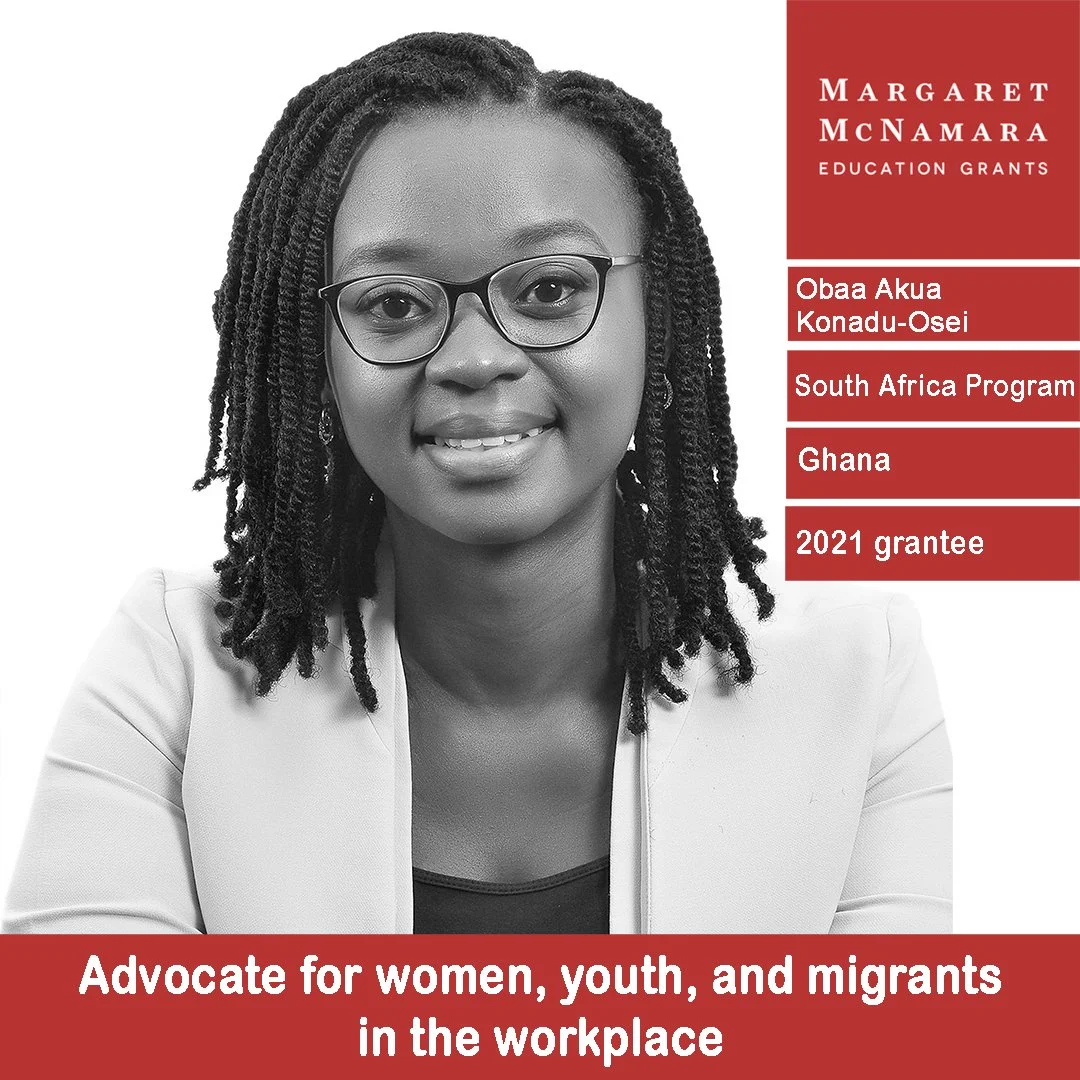
When I received the Margaret McNamara Education Grant in 2021, I was a Ghanaian doctoral student in the final stages of my PhD program at Stellenbosch University in South Africa. I was far from home, navigating the complexities arising from COVID-19, and driven by a singular conviction: that research on gender, youth, and development in Africa needed to center more African voices. The MMEG grant not only provided financial resources to further my research; it also validated my conviction and gave me the confidence to pursue my work with renewed purpose.

Completing the PhD

I completed my PhD in business management and administration in 2023. My doctoral research, titled “The development of positive work identities of women in male-dominated jobs,” explored how women navigate (multiple) marginalized identities in traditionally male-dominated workspaces. The study made three key contributions: i) challenged dominant research paradigms, arguing for methodological decolonization and the centering of local epistemologies, ii) highlighted the non-linear, fluid, and complex processes women engage in as they create alternative ways of existing in traditionally male-dominated spaces, and iii) demonstrated how formal and informal workplace structures are necessary (and also potentially limiting) in ensuring women’s upward career mobility in the workplace.

My work on methodological decolonization has since been published in the Journal of Business Ethics and, most recently, in Qualitative Studies (2026); a continuation of my commitment to reshaping how research is done, not just what it studies. I have co-authored an article on women's identity in male-dominated workplaces, published in Gender, Work & Organization (2025). These publications reflect my belief that academic work must speak to real-world inequalities.

Post-PhD

Since graduating, I have been a teaching fellow at Maastricht University in The Netherlands, tutoring courses such as Urban Development and Poverty, Migration and Citizenship, Gender and Development, and Qualitative Research Methods. I also sit on the Global Studies’ Board of Admissions.

Teaching at a European university has been both a rewarding and thought-provoking experience. I am conscious of what I bring to the classroom—not just the content I teach, but the perspectives I carry as someone trained in Ghana, the United Kingdom, and South Africa. I work to ensure that African contexts and ways of knowing are treated as substantive contributions to global conversations, rather than as illustrations.

Policy, advocacy, and applied research

The MMEG grant came at a moment when I was already deeply involved in policy-relevant research. In 2022, I worked as a gender and youth specialist consultant for the World Bank, contributing to the Gambia Human Capital Review and informing the country's 2023–2032 strategic plan for women's economic empowerment. That experience reinforced for me that the gap between academic research and policy action is not inevitable; it is a choice, and I choose to bridge it.

In 2023, I received an independent research grant from the European Partnership for Democracy to study youth political participation in Ghana. More specifically, I explored the cost of politics in Ghana using an intersectional lens that considers youth, gender, and political-party membership of parliamentary aspirants. In 2025, I also served as a country consultant for Ghana, contributing data across political, civic, and social dimensions to the Global Youth Participation Index. I currently consult for the Governance and Development Advisory, leading their gender, youth, and migration research portfolio.

Continued academic research and fellowship

I have been awarded research grants from Maastricht University's Faculty of Arts and Social Sciences Research Stimulation Fund and the Nanne de Vries Professor's Fund toward a research project that explores cultural and religious influencing on parenting practices among highly skilled African migrants in the Netherlands.

I have presented my work at the World Bank, the Gender, Work & Organization Conference, the Dutch Black Scholar and Expert Conference, MACIMIDE Annual Work Conference, and MMEG Talks (2024 and 2025). I have also given back as a reviewer for a number of academic journals.

What the grant meant and still means

The MMEG grant came at an important moment in my academic journey; providing not just financial support, but also a meaningful vote of confidence in the work I was pursuing. Being selected by an institution that invests in women from developing countries reinforced my commitment to research that is rigorous, relevant, and grounded in the communities it seeks to serve.

That sense of purpose continues to guide my work; whether in the classroom, in research, or in the advisory spaces I occupy. There is still much to do, but I am grateful for the contribution of the grant.
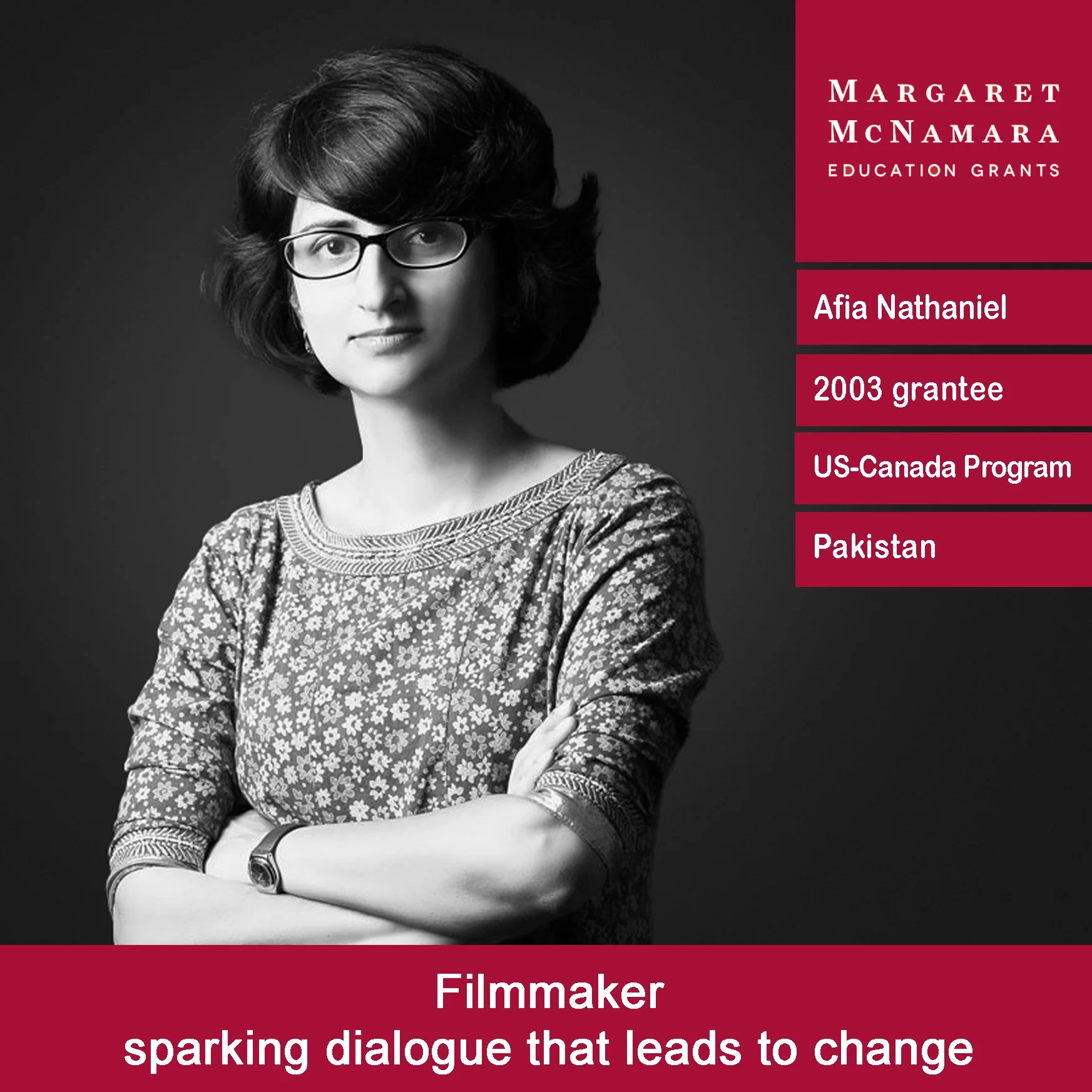
Afia Nathaniel

“Thanks to MMEG, I not only found my voice as a storyteller, I found a way to spark dialogue and conversations that can lead to change.”

Raised and educated in Pakistan by two grandmothers and a great-grandmother, Afia Nathaniel grew up with stories of women hiding in plain sight. Their everyday sacrifices were seared in her mind as she left Pakistan for an internship with the World YWCA in Switzerland. Working with an international women’s non-profit further opened her eyes to the power of women’s stories, inspiring her to think about filmmaking as a career. She became a student of light and life, training herself as a photographer and a screenwriter. In 2001, she was accepted in Columbia University’s MFA Directing program as a Dean’s Fellow and has since then focused on telling women’s stories for the big and small screen.

 MMEG awarded Afia a $15,000 grant in 2003 to support the pursuit of her studies at Columbia University. Afia says: “being able to complete my MFA in film directing was a life-changing experience. I not only found my voice as a storyteller, I found a way to spark dialogue and conversations that can lead to change.” 

 Afia explores pressing social justice issues of our time, often difficult ones like child marriage, fundamentalism, and gender-based violence in the context of patriarchal cultures and how it affects identity of the self and humanity. 

 Afia’s debut feature film, Dukhtar (Daughter) – a road trip thriller about a child bride –  premiered at the Toronto International Film Festival in 2014 and was Pakistan’s Official Submission for Foreign Language Film at the 87th Academy Awards®. It played to critical acclaim in over 20 countries and became the Critics’ Pick (Village Voice) and the People Magazine’s Pick of the Week. 

Her latest film, “Don’t Be Late, Myra,” has won several awards and is now Oscar®️ qualified. The film takes an unflinching look at the issue of sexual assault of children. The protagonist’s journey makes us aware of the stigmas surrounding gendered sexual violence in patriarchal societies and poses larger questions about how women and girls can break this cycle of violence.

Since receiving a MMEG grant, Afia has won numerous awards and honors, including from the Hubert Bals Fund (2008), Geri Ashur Screenwriting Award NYFA (2010), Sørfond Grant (2012), New York State Council for the Arts (2013), Princeton Arts Fellow (2016–18), NBCU Launch Female Forward Fellow (2020), and Disability Belongs Lab Fellow (2025).

Alfia is currently working on several projects, all focused on the theme of patriarchy, the overt and covert ways women resist it, and how women find their agency on their own terms. Her powerful stories of resistance and resilience will continue to inspire women and children worldwide and help dismantle the barriers of patriarchy, one film at a time.

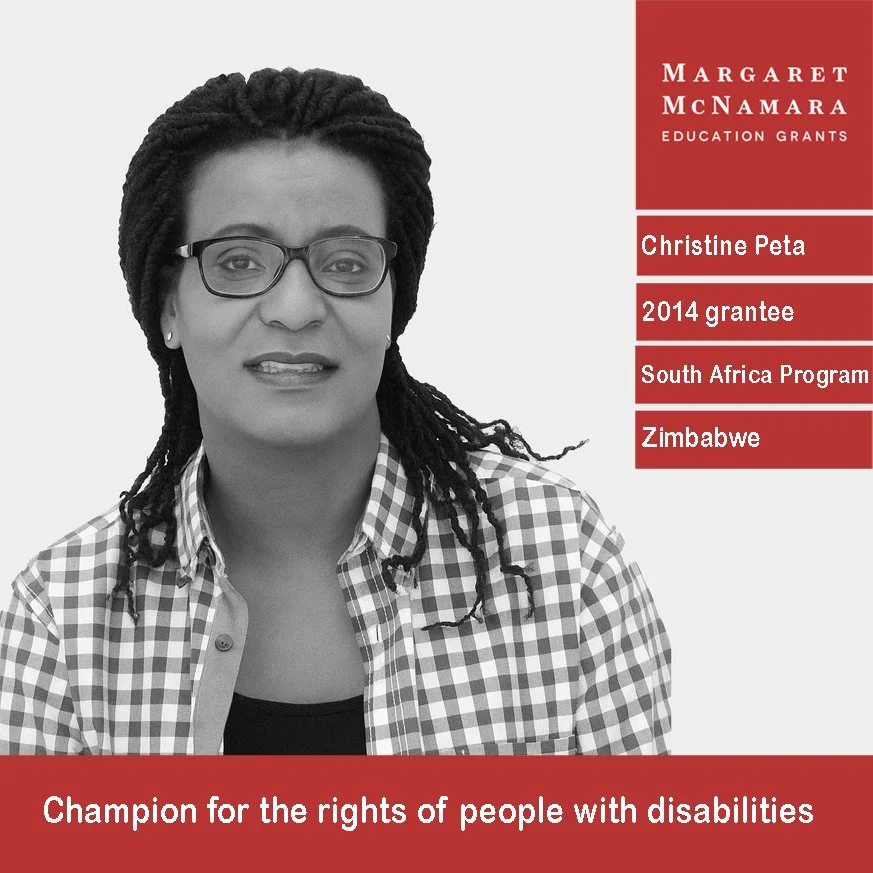
Christine Peta

Christine Peta, a 2014 MMEG grantee from Zimbabwe, completed a PhD in Disability Studies at University of Cape Town’s Department of Health and Rehabilitation Sciences, Faculty of Health Sciences, in 2016. She is now a powerful and passionate advocate for people with disabilities, in venues from UN headquarters and national government offices to rural villages in Zimbabwe.

 Christine says “without support from MMEG, it would have been difficult for me to cover the costs of my PhD. I gained exceptional knowledge and skills that play a great role in the work that I do today, making a positive difference in the lives of persons with disabilities, including my participation in international discourse on disability rights. I will forever be grateful to MMEG.”

She was the first Zimbabwean to graduate with a PhD in Disability Studies, and the third person on the continent of Africa to hold such a qualification.

After completing a post-doc at Stellenbosch University in 2018, Christine returned to Zimbabwe under a Government of Zimbabwe–UNICEF partnership to lead the creation of Zimbabwe’s first National Disability Policy. The policy, launched in 2021 by Zimbabwe’s president, provided a clear roadmap for disability practice in the country.

 Christine became Zimbabwe’s first substantive National Director of Disability Affairs and the first national focal person of the UN Partnership on the Rights of Persons with Disabilities (UNPRPD), now the Global Disability Fund.

 Christine champions the rights of persons with disabilities through the media as well as via interactions with diverse stakeholders. She has authored books, book chapters, and scientific journal articles that are used as learning resources in universities throughout the world. Christine also writes a weekly column for Zimbabwe’s Sunday Mail, raising awareness on disability rights. 

 Christine’s interest in disability issues dates back to her childhood. She was raised in a big family with parents who were always ready to welcome persons with disabilities into their small home, despite their meager resources.

 Christine has devoted her life to working with and for persons with disabilities in rural and urban areas, including in such difficult circumstances as the 2019 Cyclone Idai and COVID-19. During both these events, Christine interacted with and assisted affected persons, including at the grassroots level, and worked to enhance the well-being of children and adults with disabilities.

 Christine negotiates the complexities of the multilayered and multidimensional disability and development terrain with empathy, passion, humility, flexibility, expertise, and determination. She is just as likely to be found sitting under a tree talking to children with disabilities, their parents, or landmine victims in a rural community as making a presentation to executives in a city boardroom or participating in international dialogue on disability rights at UN headquarters in New York.

 Other positions Christine has held since completing her PhD include Chairperson of the State Service Disablement Benefits Board under the State Service (Disability Benefits) Act, ex-officio member of the National Disability Board under the Disabled Persons Act, Chairperson of the National Technical Committee on Disability Rights, Co-chairperson of the Central Bank Persons with Disabilities Thematic Working Group (Financial Inclusion Strategy), Co-chairperson of the National Technical Working Group on Disability and Sexual and Reproductive Health (SRH), gender-based violence (GBV), HIV/AIDS and harmful practices (HP) under the Ministry of Health and Child Care.

 Asserting that disability is a cross-cutting interdisciplinary issue, Christine has been instrumental in forming a National Technical Committee on Disability Rights, which includes representatives from organizations of and for persons with disabilities; government; international development agencies; the private sector; and civil society and other stakeholders, thus creating a place of convergence for diverse actors to advance disability rights.

 Christine works closely with the African Union Southern Africa Youth Council-Disability Chapter, which focuses on enhancing the well-being of youth with disabilities by using a twin-track approach of mainstreaming disability in various thematic areas, as well as establishing targeted disability projects.

 Christine collaborates with Enable India on an international program to recognize innovative grassroots solutions of persons with disabilities. She is also making a significant contribution in developing the SADC Disability Protocol, which aims to ensure that states effectively cooperate in addressing issues affecting persons with disabilities in the SADC region.

Today, Christine is a world-renowned disability, policy, research and international development expert, with experience working in and with governments, academia, international development organizations, UN agencies, organizations of and for persons with disabilities, private sector, civil society, and additional stakeholders in diverse countries.

 Christine’s experience enables her to advance the disability inclusive sustainable development agenda. Her achievements inspire and pave the way for diverse stakeholders  to scale new heights in advancing disability rights across sectors and countries.

 Christine is appealing for any kind of support and/or collaboration with diverse stakeholders, including other grantees in a wide range of sectors and countries, to collaboratively push forward the disability agenda. She can be contacted at developafrica2020@gmail.com

Diana Carolina Rodríguez Rincón

Diana Carolina Rodríguez Rincón, a 2014 MMEG grantee from Colombia, holds a master's degree in gender studies and women's human rights from the National University of Colombia.

Diana is a lawyer with experience in lobbying, research, and legal monitoring in administrative, disciplinary, and criminal justice, and family law. She specializes in public health, labor and social security law, women's human rights, family welfare, and ethnic rights.

Receiving financial support from MMEG was crucial not only for her to complete her studies, but also for her to continue working tirelessly in the pursuit of justice for Colombian women and to lead the call for action for better education, security, and female representation in the public sphere.

Women in Colombia continue to be underrepresented and at risk, despite constituting a significant portion of and actively participating in grassroots political party activities, and despite the social, legal, and cultural transformations of recent decades that have favored women's legal position and education.

Carolina is currently the head of the Legal Office at the National Pedagogical University (UPN). Previously, she has held various positions, including legal advisor and legislative coordinator for the Colombian Senate; family commissioner for the Mayor's Office of Soacha; lawyer and judicial representative in criminal justice for women victims of gender violence at the District Secretariat for Women of the Capital District; attorney for the Sisma Mujer Corporation; and teaching assistant at the National University of Colombia.

Carolina is committed to incorporating women's human rights into public service. She has been implementing a gender perspective in disciplinary decisions for faculty, students, and administrators at the UPN and supported the issuance of the university's gender policy. She is also committed to supporting youth movements to strengthen intergenerational alliances, demanding the full implementation of public policies that support social rights, and use her creativity to mobilize more people toward collective action.

Diana Carolina Rodríguez Rincón, becaria colombiana de MMEG en 2014, posee una maestría en estudios de género y derechos humanos de las mujeres por la Universidad Nacional de Colombia.

Es abogada con experiencia en cabildeo, investigación y seguimiento legal en justicia administrativa, disciplinaria y penal, y derecho de familia. Se especializa en salud pública, legislación laboral y de seguridad social, derechos humanos de las mujeres, bienestar familiar y derechos étnicos.

Recibir el apoyo financiero de MMEG fue crucial no sólo para completar sus estudios, sino también para seguir trabajando incansablemente en la búsqueda de justicia para las mujeres colombianas y liderar el llamado a la acción para una mejor educación, seguridad y representación femenina en la esfera pública.

Las mujeres en Colombia continúan subrepresentadas y en riesgo, a pesar de constituir una parte importante y participar activamente en las actividades de base de los partidos, y a pesar de las transformaciones sociales, jurídicas y culturales de las últimas décadas, que han favorecido la posición jurídica y la educación de las mujeres.

Actualmente, Carolina es jefe de la Oficina Jurídica de la Universidad Pedagógica Nacional (UPN). Anteriormente, ha ocupado diversos cargos, entre ellos, asesora legal y coordinadora del trabajo legislativo del Senado de Colombia; comisionada de familia de la Alcaldía de Soacha; abogada y representante judicial en justicia penal para mujeres víctimas de violencia de género en la Secretaría Distrital de la Mujer del Distrito Capital; abogada de la Corporación Sisma Mujer; y asistente de cátedra en la Universidad Nacional de Colombia.

Carolina está comprometida con la incorporación de los derechos humanos de las mujeres en la función pública, viene implementando el enfoque de género en las decisiones disciplinarias de docentes estudiantes y administrativos de la UPN y apoyó la expedición de la política de género en la Universidad. Además, tiene un compromiso con apoyar a los movimientos juveniles para fortalecer alianzas intergeneracionales, exigir la plena implementación de políticas públicas que apoyen los derechos sociales y usar su creatividad para movilizar a más personas hacia la acción colectiva.

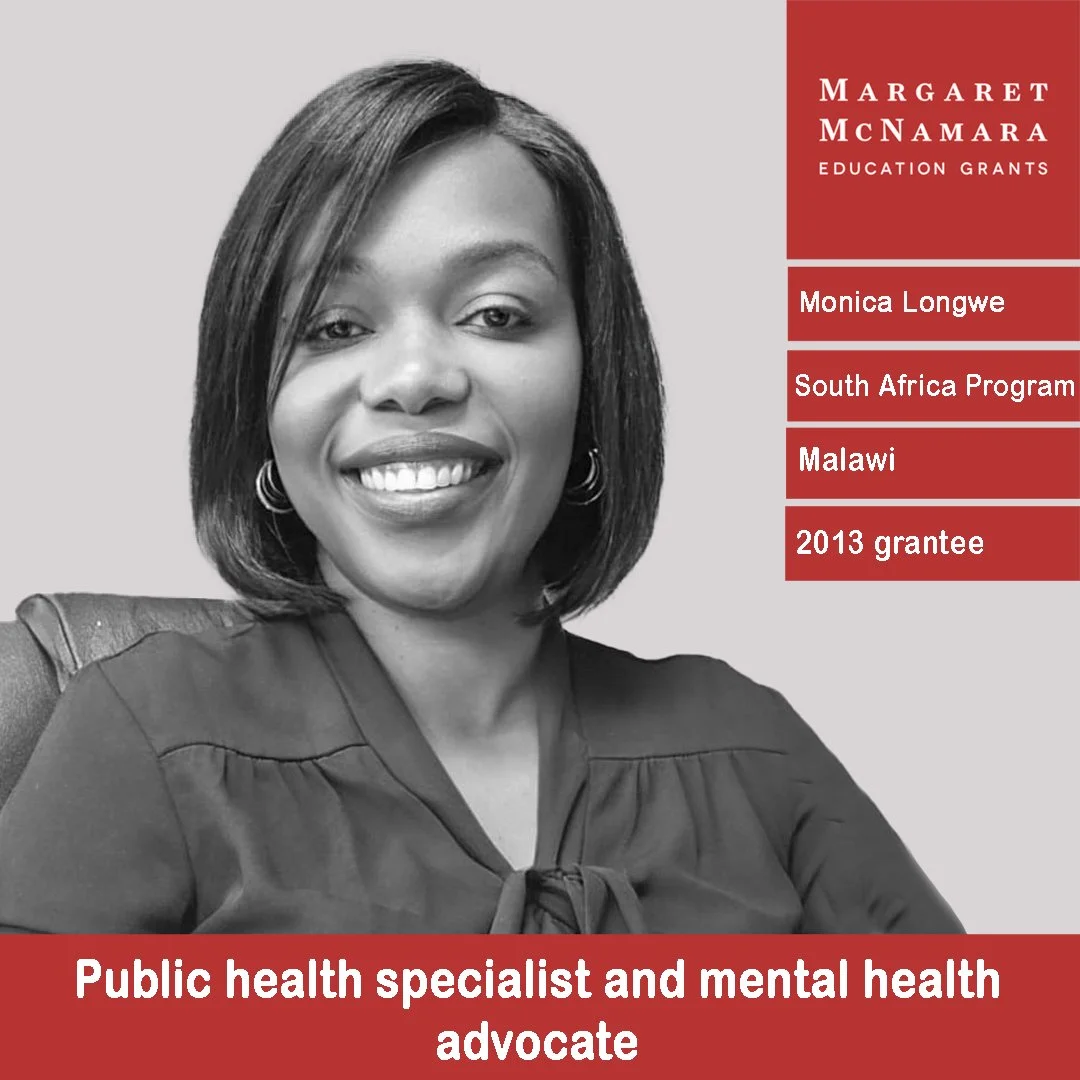
MONICA BRENDA LONGWE

I am a Malawian public health specialist with a strong background in public health research, health communication, and capacity strengthening. Currently based in South Africa, where I have lived with my three children for the past decade. I was raised by one very strong and zealous woman (Rank Charity Nkosi) who raised five girls after the loss of my father in 1997. If I could describe myself in one sentence, I would say I am a mother, a fighter, a survivor, and my mother’s daughter: she taught me how to fight and survive.

I hold a Master of Public Health (MPH) from the University of the Witwatersrand, South Africa, with a specialization in Social and Behavior Change Communication (SBCC)—a degree made possible through the grant I received from Margaret McNamara Education Grants (MMEG) in 2013. This grant was more than financial support; it was an affirmation of my life’s purpose: to serve women and children through public health.

Receiving the MMEG grant in 2013 was not just a financial lifeline, but a turning point. It validated my mission to advocate for women and children through public health and empowered me to pursue my MPH.

Currently, I serve as the Social and Behaviour Change Communication (SBCC) Lead, seconded to South Africa’s National Department of Health TB Control Programme, where I play a key role of providing technical guidance for the implementation of the National End TB Campaign, ensuring that TB messaging is impactful, evidence-based, and reaches the communities that need it most. The End TB Campaign was officially launched by South Africa’s Deputy President and Minister of Health on World TB Day, March 24, 2025. Through strategic communication efforts, we aim to raise awareness, reduce stigma, and mobilize action to find and treat the missing people with TB, bringing South Africa closer to ending TB as a public health threat.

Since graduating in 2015, I have worked across sub-Saharan Africa, designing and implementing social and behavior change communication (SBCC) programs that impact the lives of women, children, youth and other marginalized groups across sub-Saharan Africa. I’ve worked with major global health organizations such as Save the Children, UNAIDS, USAID, and FHI360 on maternal, newborn, and child health, HIV prevention, TB programming, sexual and reproductive health, and adolescent health.

In Malawi, I successfully led the design and implementation of the newborn health behavior change strategy, Khanda ndi Mphatso (A Baby Is a Gift), implemented by Save the Children International. I also spearheaded the development of the HIV Prevention SBCC Strategy that forms part of the National Strategy for HIV Prevention in Malawi (2021–2025).

Beyond my professional achievements, my most transformative journey has been a personal one. From 2017, faced a series of traumatic life events, including emotional abuse, which deeply impacted mental health. Navigating the darkness of depression and trauma became a defining chapter of adult life—one that taught resilience, healing, and how to turn pain into purpose.

This journey through trauma and recovery has reshaped my understanding of public health, placing mental well-being at the center of advocacy. Out of personal struggle, I co-founded The Fight Club Initiative (FCI)—a women-led empowerment collective working across South Africa and Malawi. FCI supports women who have experienced cycles of gender-based violence, emotional abuse (especially narcissistic abuse), and systemic injustices. Our mission is to break cycles of silence and pain, using traditional, social, and participatory media to foster dialogue, healing, and transformation. We are a sisterhood that believe in helping one another to rise. Our core belief is that women thrive when they are mentally well, economically independent, socially supported, and legally protected. We have support groups in South Africa and Malawi, where we work to support victims and survivors of abuse.

FCI is grounded in a culturally informed “Ladder of Change” framework that guides women from the point of breaking to awakening, empowerment, and renewal. Through support groups, mental health workshops, leadership coaching, and legal advocacy, we help women rebuild their lives and reclaim their voices.

My story of pain and recovery has been featured in two volumes of the Outlive Labels book series—Volume IV: International Sisterhood of Survivors (Africa) and Volume V: Gracefully Broken, Wonderfully Made—both collections of powerful stories from women across the continent who have turned their heartbreaks, their pain, and their suffering into powerful lessons of how to overcome, recover, and regain hope for a better life.

As part of my healing and recovery journey, in an effort to regain my confidence and independence, I established Tumoji Afrika, an online boutique (www.tumojiafrika.com) that sells African-inspired fashion clothing and accessories.

I am deeply grateful to MMEG for believing and investing in my dream at a time when all had was potential and purpose. That belief continues to fuel every life I touch, every program I’ve designed, every initiative I’ve led, every woman I’ve mentored and supported, and every community I’ve served. It continues to inspire me to invest in a new generation of empowered, liberated African women—leaders, survivors, and changemakers. MMEG is the gift that keeps giving!”

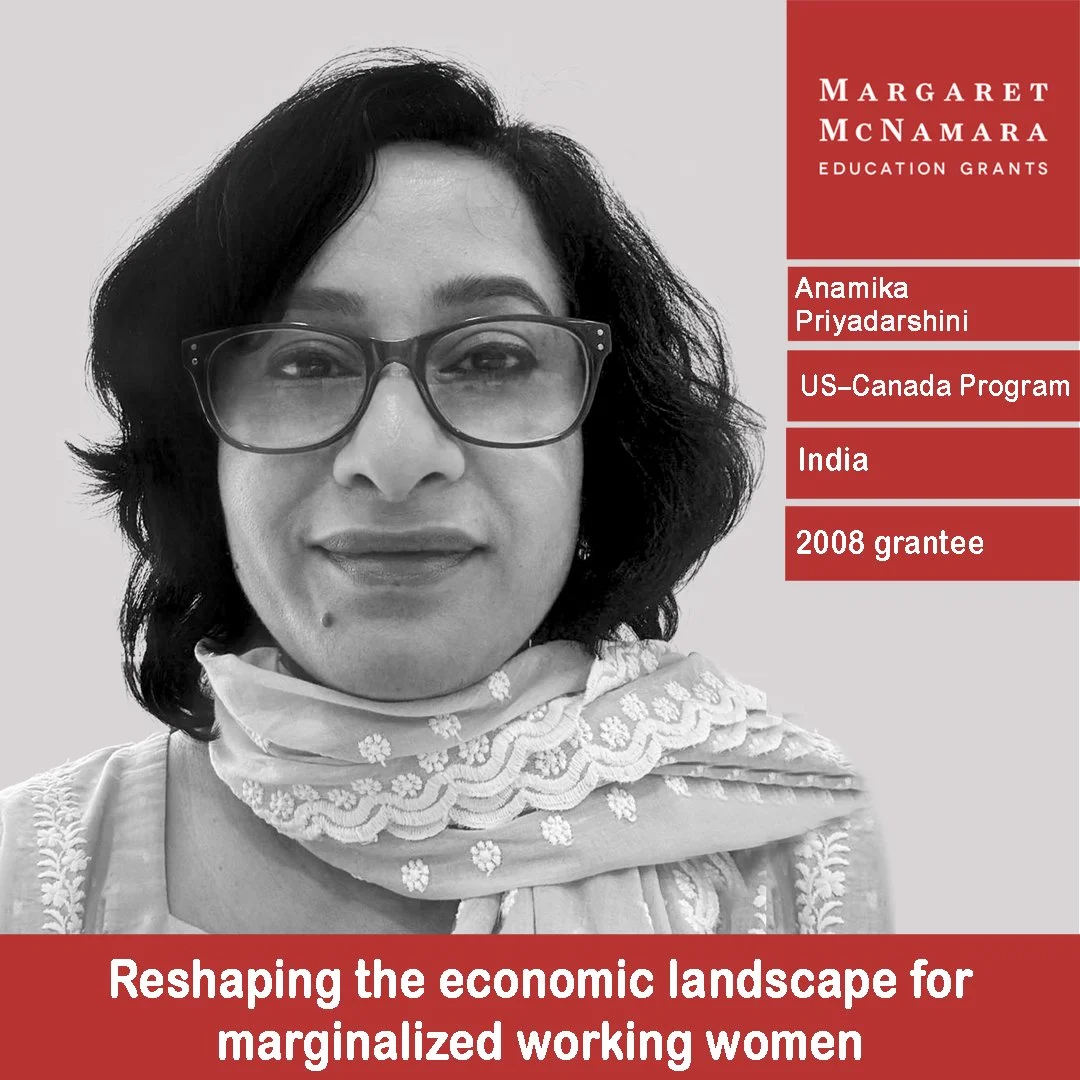
Anamika Priyadarshini

Be Inspired by Anamika Priyadarshini: A Purpose-Driven Commitment to Women’s Economic Empowerment

 “My story spans both the development sector and academia, showing how personal inspiration—from my mother's influence to my volunteering experiences—can shape a professional path that makes a meaningful difference in the world.”

In the heart of India, among some of the most economically marginalized communities, Anamika Priyadarshini’s journey is not just a personal narrative, but a testament to the transformative power of education, passion, and unwavering commitment. Through her work with women home-based workers, silk spinners, rural farmers, and entrepreneurs, Anamika has reshaped the economic landscape for countless women, providing them not only with income opportunities but also with dignity and recognition for their labor. Central to her journey was a 2008 grant from Margaret McNamara Education Grants (MMEG), which enabled her to pursue her doctoral research and remain committed in her passion for women’s economic empowerment.

A Legacy of Social Work: Inspired by Her Mother

Anamika’s commitment to social justice was nurtured from an early age by her mother, a dedicated social worker affiliated with Sulabh International and various grassroots organizations. “As a college student, I accompanied her to the office as well as the communities she worked with, witnessing firsthand impact of her work,” Anamika recalls. Her mother was leading a center that provided decent livelihood opportunities to extremely marginalized communities traditionally engaged in sanitation work, including the manual cleaning of public spaces and toilets. While most of the community members made cane furniture in small collectives and cooperatives, some were also running small home-based production units. Observing her mother’s dedication to facilitate access to decent work and dignified life to people from extremely marginalized households ignited her passion for socioeconomic justice. This experience became the foundation for her undergraduate project at Patna University, where she focused on home-based women workers. She realized that these laborers, despite their economic contributions, were invisible in the workforce. They lacked recognition, fair wages, and access to markets.

Bridging Academia and Development

Anamika’s academic journey began with an undergraduate degree in economics, followed by hands-on training sessions on gender and work and gender and reproductive health—critical concerns in India, where high birth rates and limited healthcare access disproportionately affect women. Determined to bridge research with real-world change, she pursued a Master’s in International Development at Cornell University with a Ford Foundation Fellowship. Here, she deepened her understanding of academia’s role in shaping policy and advocacy for marginalized women. “I realized that I wanted to teach gender and development, to influence future generations and shape policies that truly address women’s economic realities,” she explains.

Her resolve was tested when she embarked on a PhD in Gender Global and Sexuality Studies at the University at Buffalo. With limited departmental funding, her ability to conduct archival research on 19th-century home-based women workers in Bihar was at risk. It was the MMEG grant that changed everything, allowing her to return to India, collect essential data, and complete her doctoral dissertation. “MMEG enabled me to stay true to my passion, to gather the insights I needed, and to turn my research into actionable change,” she says.

From Research to Impact: Advancing Women’s Economic Stability

Anamika’s research has had profound real-world implications. Through policy analysis, impact assessments, and on-the-ground interventions, she has helped rural women secure fair wages, improved working conditions, and sustainable economic opportunities. Her involvement with the World Bank’s JEEViKA project in Bihar allowed her to refine strategies that directly increased women’s earnings and economic resilience. By seamlessly integrating academic research with development practice, she ensures that women’s voices and contributions are both recognized and rewarded. In the past ten years, Anamika specifically focused on underscoring women’s contribution to the society and economy through her research while working with think tanks like Council for Social Development and organizations like the Centre for Catalyzing Change (C3). She had primarily been interested in unravelling complex nuances of socio-economic norms that shape women’s preparedness to work and other leadership roles.

From Weaving to Farming: Strengthening Women’s Livelihoods

Currently working with Heifer International and its subsidiary, Passing Gifts, Anamika supports women farmers in diversifying their agricultural practices, from goatry and poultry farming to regenerative agriculture. “Women constitute 63% of India’s agricultural workforce, yet most remain marginal or landless farmers. Economic stability requires diversification. Even five to ten goats alongside a small agricultural plot can provide a sustainable living income,” she emphasizes. Her goal is to facilitate Passing Gifts in creating direct, tangible impact by equipping women with the tools they need to achieve financial independence.

Building Knowledge for Lasting Change

As Director of Knowledge Management, Research and Design at Passing Gifts- Heifer International, Anamika plays a pivotal role in translating grassroots insights into impact briefs and programmatic strategies. “Along with envisioning need-based research concepts and projects, we create knowledge briefs that amplify rural women’s voices, ensuring that interventions are rooted in real challenges and solutions from the field,” she explains.

Anamika’s influence extends beyond development practice to academia. She has taught at premier institutions, including the Tata Institute of Social Sciences and the State University of New York at Buffalo, and contributed to government-commissioned research on migration studies in Indian states like Karnataka and Bihar; post-disaster development planning in the ecologically fragile Himalayan state of Uttarakhand; and women’s workforce participation in India. Balancing academia and practice allows her to inform students—the leaders of tomorrow—about pressing social issues while designing data-driven, effective development programs.

A Vision for the Future: Mentorship and Advocacy

Despite her extensive contributions, Anamika remains most passionate about mentoring the next generation. “I have a deep connection with young minds and students,” she shares, underscoring her commitment to bridging academic knowledge with real-world change.

The Transformative Power of One

Anamika’s story is a powerful reminder that one person’s dedication, when supported by the right opportunities, can create exponential impact. The MMEG grant was not just an investment in her education—it was an investment in the thousands of women she has facilitated through her work.

By documenting the struggles of home-based workers, advocating for better economic policies, and shaping the perspectives of future leaders, Anamika has redefined the economic trajectory for some of India’s most vulnerable women.

Her journey proves that empowering one woman can enable several communities, making “The Power of One” a reality for many.

Yet, as Anamika acknowledges, systemic barriers, economic inequality, and gender-based discrimination persist. “The world is still plagued by war, displacement, and hunger,” she reflects. “But grants like MMEG’s enable people like me to dream—to stay committed to meaningful work rather than just surviving.”

Despite these challenges, she remains unwavering in her mission. “I have a cause, a reason, a dream to live for—and that matters.”

Anamika’s journey is a compelling reminder that investing in women is not just about economic inclusion—it is about recognizing them as leaders, changemakers, and visionaries. When women are empowered to pursue their passions, they enable communities, driving the world toward a more just and equitable future.

Mekhribon (Mika) ABDULLAEVA

Mekhribon (Mika) ABDULLAEVA

Uzbekistan

The Margaret McNamara Memorial Fund (MMMF), now MMEG, supported me at a pivotal moment in my life, enabling me to pursue an education that laid the foundation for my career and passion for social impact. With the generous support of a MMEG grant, I obtained a master’s in intercultural service, leadership and management at the School for International Training (SIT) in Vermont, an inspiring campus where I formed lifelong friendships with peers from across the United States and around the globe. This rich intercultural experience expanded my horizons and deepened my commitment to creating meaningful change.

My academic journey at SIT culminated in a practicum in Washington, DC, where I served as a policy fellow with the National Organization for Women (NOW). This transformative opportunity allowed me to engage directly with policymakers, meet with members of Congress, and advocate for policies aimed at improving the lives of the most vulnerable populations. Through NOW, I also participated in the United Nations Commission on the Status of Women (UN Women), amplifying my advocacy efforts on a global scale to champion women's rights and gender equity.

 Building on these experiences, I pursued a PhD in international education from the University of Massachusetts, further deepening my expertise on advocacy and policy. My dissertation focused on the vital role of parental engagement in immigrant communities, reflecting my deep-seated commitment to supporting marginalized groups. Since then, I have dedicated my career to improving the lives of vulnerable populations across Central Asia, Eastern Europe, and the Balkans. My work has included designing and managing programs that:

  • Empower youth through social entrepreneurship initiatives;

  • Improve the lives of women and girls by providing shelters, basic services, and pathways to independence;

  • Advocate for and support people with disabilities, fostering inclusion and equal opportunities;

  • Support prevention, protection, and prosecution of trafficking in persons globally.

My journey led me to the U.S. Department of State’s Office to Monitor and Combat Trafficking in Persons, where I contribute to shaping policies to prevent trafficking, prosecute offenders, and protect victims. My role spans Southeast Asia, Africa, and the Western Hemisphere, where I lead anti-trafficking projects, conduct research, and collaborate with local stakeholders to drive impactful change.The support I received from MMEG was not just financial—it was a profound affirmation of my capacity and my desire to create a better world. I am forever grateful for the MMEG’s belief in me and for their continued inspiration and support. Their investment in education exponentially increases our power to affect the course of the international community by empowering others committed to improving the lives of people everywhere.

Thank you, MMEG, for being a catalyst for my journey. Your support transformed my life and, through my work, continues to touch the lives of many others.

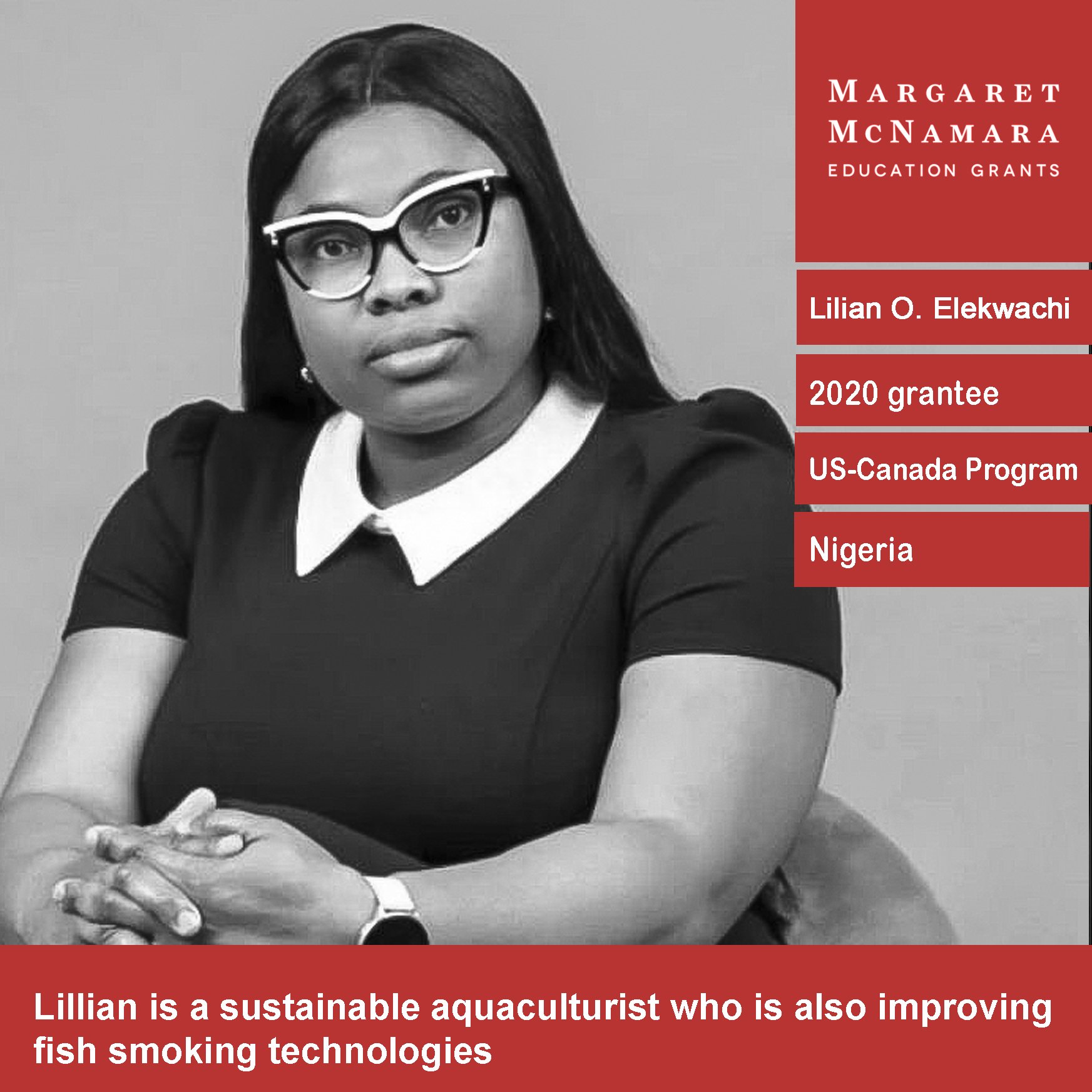
Lilian O. Elekwachi

Aquaculture Innovator Lilian O. Elekwachi

“I aim to preserve cultural traditions while promoting innovation.”

Lilian O. Elekwachi is a pioneering researcher and catfish farmer and processor from Nigeria who is deeply committed to transforming the aquaculture sector. Inspired by the memory of her grandmother, a fish farmer and fish smoker who died of lung cancer, Lilian is driven to create safe and environmentally sustainable solutions that improve livelihoods—especially for women.  Lilian’s story exemplifies MMEG’s mission: identify and support exceptional women to acquire the tools provided by higher education to pursue their goals and catalyze change. 

MMEG awarded Lilian a $15,000 grant in 2020 to support her pursuit of a PhD at the University of Massachusetts Boston. Lilian says the grant “provided crucial support for my doctoral work.” Her groundbreaking PhD research focused on developing a novel hybrid fish smoking technology that integrates solar energy and biomass, improving both the efficiency and safety of fish processing while addressing pressing environmental issues. 

Lilian says “my project aims to implement a hybrid fish smoking technology that not only improves the quality and safety of smoked fish but also supports economic development and food security in Nigeria. I aim to preserve cultural traditions while promoting innovation in fish processing.” This innovation is particularly significant in Nigeria, where about 90% of fish smokers are women.

Since completing her PhD, Lilian has developed her technology to smoke fish faster than traditional methods while maintaining the quality and taste of the fish, eliminating harmful residues, and boosting fish processors’ export prospects. Among other considerations, her technology focuses on economic viability, environmental impact, and compliance with international food safety standards. 

Lilian has garnered numerous accolades, including the 2024 AAUW American Dissertation Fellowship and the 2023 John A Knauss Marine Policy Fellowship from MIT Sea Grant. At a MMEG Talk at the World Bank in 2024, she impressed World Bank and other attendees with an explanation of her work. 

With a clear vision for scaling up her hybrid smoking technology, Lilian is dedicated to enhancing food security and economic development in Nigeria. She says, “Empowering women through sustainable aquaculture is not just an investment in their future but in the future of our communities and our planet.”

Zainab Olaitan

Zainab Monisola Olaitan, from Nigeria, is a 2022 MMEG grantee who used the award to complete her doctoral degree at the University of Pretoria in record time (2.5 years) by the age of 27. She is currently a post-doctoral fellow at the Centre for Human Rights at the University of Pretoria.

Zainab’s research spans several areas, with an overall focus on women’s representation across different spheres. For her master’s, she investigated how women transformed  themselves from victims of war in Sierra Leone into participants in peace building, as well as the limitations to that involvement often created by male-dominated institutions.

In her doctoral thesis, she examined the impact that gender quotas and female numeric participation in politics has on women’s lives in South Africa and Botswana. Her research questioned the assumption that the involvement of politically engaged women has an obvious positive effect on women generally. She appreciates the value of applied research, creating connections between research at the local level and the development of regional and national policies.

Finally, Zainab’s current research as a post-doctoral fellow focuses on the role of women’s political participation in the implementation of sexual and reproductive health and rights across Africa.

During her career as a scholar, Zainab has received scholarships from the Mandela Rhodes Foundation, the Mastercard Foundation, and the University of Pretoria Postgraduate Doctoral Scholarship to support her academic and research journey. She is a prolific writer, with many academic articles to her credit.

Zainab is deeply concerned by the current growth of anti-human rights legislation on the continent, for example the new laws against LGBTQ people in Uganda and Ghana and the attempt in The Gambia to reverse the prohibition against FGM. In 2023 she presented a paper on the role of parliamentarians in repealing anti-rights legislation at a conference on the protection of sexual and gender minorities organized by the Centre for Human Rights. She intends to do further research on the negative consequences of anti-rights legislation in Africa.

Zainab says that the MMEG grant was instrumental in enabling her to complete her PhD in record time. This has consolidated her academic career especially in the human rights space, where she engages in research, teaching, and publishing to advance the protection and promotion of human rights in an environment that can seem increasingly hostile. MMEG is proud to have supported the early stages of what we believe will be a long and illustrious career.

Zainab keeps in touch with her high school, Ogijo Community High School, via the school’s alumni association, which raises money for new facilities and organizes extra-curricular talks for the students. Importantly, she serves as a role model for girls of what is possible in their futures and visits in person when she visits her home town of Oglijo in Nigeria’s Ogun state.  She was a star debater at school and was the best female debater at the 2015 and 2016 All-Nigeria Universities Debating Championships (ANUDC). This skill has served her well in all her public-speaking engagements, notably at academic conferences and lectures.

During the pandemic lockdown in 2020, Zainab and her friend Simotwo Zainabu launched AfroTada (Africa Awakening), an online platform that aims to curate and preserve African stories and content. The whole project is currently volunteer-managed and -run, with the ambition of keeping the digital library access free and available to everyone.  The easy-to-navigate platform AfroTada is not only a knowledge library but also a learning space for volunteers to develop and consolidate their technical skills, which has translated into them getting jobs in the tech world. The latest iteration of the website was launched in early 2024, and it is open to contributions from all over Africa. Writers can sign up on the system and write/upload their articles, which are then reviewed for suitability by a team of editors. Zainab observes that Afro Tada’s vision is “audacious” in scale, so different categories are being introduced incrementally to achieve the original broad vision. Additionally, to sustain AfroTada, Zainab and Simotwo are working on getting grants and funding.

Zainab is a dynamo, already excelling in many areas at a young age. MMEG looks forward to seeing what she will do next.

Eileen Contreras Cerdeña

Using Art to Empower Amazonian Women

Eileen Contreras Cerdeña is a psychology professor, artist mediator, and social activist from Peru. In an interview, she shared how funding from Margaret McNamara Education Grants (MMEG) enabled her to complete her graduate studies and created opportunities for her to give back to her community, break taboos about sexual violence, and accompany Amazonian women to build a safer and more inclusive future.

Eileen grew up in Iquitos, the largest city in the Peruvian Amazon. She completed her bachelor's degree in psychology in Iquitos and then moved to Lima to pursue her master's degree in community psychology at the Pontificia Universidad Católica del Perú. Eileen chose to specialize in community psychology because she saw that social conditions of poverty and violence were instrumental in creating and affecting an individual's psychological state. It was during this second degree that she was awarded a MMEG grant in 2018. She is now a professor at the university, teaching a variety of courses, including instructing students on psychosocial interventions that they put into practice in concrete situations.

While she was working on this master's degree, she became involved in several NGOs, collaborating with women and young people. Eileen's career, combining academics and activism,  integrates social/community psychology and art creation to effect social transformation.

She is a founding member of the Alharaca Cultural Organization, which through the Imilla and Wayna projects works with young people in juvenile detention centers. These youngsters are both victims and perpetrators of crimes. Alharaca is dedicated to cultural and social projects, using audiovisual media, teaching children to be creators and not just consumers of culture. The young people of the Imilla and Wayna projects have made short films on various topics: for example, many are scarred by abuse and also have tattoos. Their film talked about the scars as part of their pain and their past. Their tattoos, their choices, were a way to reclaim pain and re-signify their stories, a way to draw on the body to tell a story.

As a result of her academic success and social activism, Eileen was awarded a scholarship from the University of Barcelona to study for a master’s in artistic mediation with a specialization in art for social transformation, inclusion and community development," which she completed in 2023.

She returned to Peru after completing this degree to continue her teaching position and to develop a new project in her hometown, Iquitos, with and for Amazonian women. A significant dimension of her own identity is as an Amazonian woman and she has always been aware of the vulnerability and marginalization of women in her community. Much of their sexual exploitation is hidden or socially acceptable. For example, it is not unusual for an adolescent girl to have a "godfather" who will pay her family to take her out. Or there is human trafficking where young Indigenous women are taken to the city to be sexually exploited.

As part of her master’s degree, Eileen developed a project based on the Amazonian legend of the Runamula: when a man and a woman sin, they become a beast that is a woman from the waist up and a mule from the waist down. In Eileen's words: "I take this myth and give it a new meaning. ... One of the problems in the Amazon is that violence has been naturalized and everyone wants to silence it. Nobody wants to talk about the godfather, nobody wants to talk about the uncle who starts touching them, nobody wants to talk about why they felt insecure since they were 12 years old, when they started walking down the street. ... The idea of the project is for women to start talking about this violence and realize that it is violence.” “Stories of the Runamula” will incorporate diverse media: film, painting, performance, and photography, and is a vivid way of displaying the different experiences of Amazonian women compared to women in Lima, for example.

Eileen feels deeply privileged to be engaged in the work she does, as a teacher and activist using art as an instrument of transformation. Every project she has worked on has brought her more tools to understand and affect the world. She has come to better appreciate the role of community development in accompanying women and has seen the results of her work in the ways that isolated women have come together to challenge violent partners; the young people involved in the Alharaca project have improved their skills in preparation for social reintegration. She would like other women to appreciate the range of skills that different types of psychology can develop, and the way that the discipline interacts with other topics, as well as the importance of intersectionality in creating a fuller grasp of Indigenous women’s position in the world.

Eileen is a powerful example of MMEG's ability to offer early career support to an exceptional and visionary woman who will continue to expand opportunities for other women to be seen and heard.

Utilizando el Arte para Empoderar a las Mujeres Amazónicas

Eileen Contreras Cerdeña es una profesora de Psicología, mediadora artista y activista social de Perú. Durante  una entrevista, compartió cómo la financiación de las Becas de Educación Margaret McNamara (MMEG) le permitió completar sus estudios de posgrado y creó oportunidades para que retribuyera a su comunidad, rompiera los tabúes sobre la violencia sexual y acompañara a las mujeres amazónicas para construir un futuro más seguro e inclusivo.

Eileen  creció en Iquitos, la ciudad más grande de la Amazonía Peruana. Completó su licenciatura en Psicología en Iquitos y se mudó a Lima para obtener su Maestría en Psicología Comunitaria en la Pontificia Universidad Católica del Perú. Eileen eligió especializarse en psicología comunitaria porque vio cómo las condiciones sociales de pobreza y violencia eran fundamentales para crear y afectar el estado psicológico de un individuo. Fue durante este segundo grado que se le otorgó una beca MMEG en 2018. Ahora es profesora en la universidad, dictando una variedad de cursos, incluyendo la instrucción de los estudiantes sobre intervenciones psicosociales que pueden poner en práctica en situaciones concretas.

Mientras trabajaba en esta maestría, se involucró en varias ONGs, trabajando con mujeres y jóvenes. Lo que muestra la carrera de Eileen en términos académicos y activistas es el desarrollo de la integración de la psicología social/comunitaria con la creación de arte para la transformación social.

Es miembro fundador de la Organización Cultural Alharaca, que mediante el proyecto Imilla y Wayna trabajan con jóvenes que se encuentran en centros de detención juvenil, los cuales muchas veces son víctimas y autores de delitos. Alharaca se dedica a proyectos culturales y sociales, utilizando medios audiovisuales y enseñando a los niños a ser creadores y no solo consumidores de cultura. Los jóvenes del proyecto Imilla y Wayna han hecho cortometrajes sobre diversos temas: por ejemplo, muchos están marcados por el abuso y también tienen tatuajes. Su película hablaba de las cicatrices como parte de su pasado. Sus tatuajes, sus elecciones, eran una forma de reclamar el dolor y volver a significar sus historias, una forma de dibujar en el cuerpo para contar una historia.

Como resultado de su éxito académico y activismo social, Eileen recibió una beca de la Universidad de Barcelona para estudiar un "Máster en Mediación Artística: Arte para la Transformación Social, la Inclusión y el Desarrollo Comunitario", que completó en 2023.

Ella regresó a Perú después de completar este posgrado para continuar su puesto de profesora y desarrollar un nuevo proyecto en su ciudad natal, Iquitos, con y para mujeres amazónicas. Una dimensión significativa de su identidad propia es como mujer Amazónica y siempre ha sido consciente de la vulnerabilidad y marginación de las mujeres de su comunidad. Gran parte de su explotación sexual es oculta o socialmente aceptable. Por ejemplo, no es inusual que una adolescente tenga un "padrino" que le pague a su familia para llevarla de paseo. También hay casos de trata de personas donde las jóvenes mujeres indígenas son llevadas a la ciudad para ser explotadas sexualmente.

Como parte del Máster que está cursando, Eileen ha desarrollado un proyecto basado en la leyenda Amazónica de la Runamula; cuando un hombre y una mujer pecan, se convierten en esta bestia que es una mujer de la cintura para arriba y una mula de la cintura para abajo. En palabras de Eileen: "Tomo este mito y le doy un nuevo significado... uno de los problemas en la Amazonía es que se ha naturalizado la violencia y todo el mundo quiere silenciarla. Nadie quiere hablar del padrino, nadie quiere hablar del tío que comienza a tocarlos, nadie quiere hablar de por qué se sintieron inseguros desde que tenían doce años, cuando comenzaron a caminar por la calle... la idea del proyecto es que las mujeres comiencen a hablar de esta violencia y se den cuenta de que es violencia". "Historias de la Runamula" incorporará diversos medios: cine, pintura, performance y fotografía, y es una forma vívida de mostrar las diferentes experiencias de las mujeres amazónicas comparadas con mujeres en Lima, por ejemplo.

Eileen se siente profundamente privilegiada de participar en el trabajo que hace, como profesora y activista que utiliza el arte como instrumento de transformación. Cada proyecto en el que ha trabajado le ha traído más herramientas para comprender y afectar al mundo. Ella ha llegado a apreciar mejor el papel del desarrollo comunitario en el acompañamiento de las mujeres y ha visto los resultados de su trabajo en las formas en que las mujeres aisladas se han unido para desafiar a las parejas violentas; los jóvenes involucrados en el proyecto de Alharaca han mejorado sus habilidades en preparación para la reintegración social. Le gustaría que otras mujeres apreciaran la gama de habilidades que diferentes tipos de psicología pueden desarrollar, y la forma en que la disciplina interactúa con otros temas, así como la importancia de la interseccionalidad para crear una comprensión más completa de la posición de las mujeres indígenas en el mundo.

Eileen es un poderoso ejemplo de la capacidad de MMEG para ofrecer apoyo profesional temprano a una mujer excepcional y visionaria que continuará ampliando las oportunidades para que otras mujeres sean vistas y escuchadas.

Rubina Feroze Bhatti

Rubina was born in Sargodha, Pakistan, into a Christian family. As a girl from a small village and a minority community, she battled the odds to obtain a BSc in chemistry and become a lecturer in chemistry at the Government Girls College in her hometown. Later, Rubina moved to take on human rights work and improving the situation of minority women in Pakistan.

MMEG awarded Rubina a $15,000 grant in 2013 to support her pursuit of a PhD in leadership studies at the University of San Diego, California. Rubina says the PhD raised her profile, gave her transferrable skills, and increased her influence and credibility.

Rubina’s story perfectly exemplifies what MMEG seeks to do: identify and support exceptional women to acquire the tools provided by higher education to continue to pursue their goals. Today, Rubina is an internationally recognized human rights professional, community leader, researcher, and leadership consultant.

Since 2009, Rubina has worked with and served as Executive Director of the Taangh Wasaib Organization (TWO) in Sargodha, supporting and promoting marginalized communities. TWO’s achievements under Rubina’s leadership include:

• introducing human rights education programming in over 200 schools;

• training women’s groups to report violence against women;

• supporting over 500 victims with counseling and legal aid;

• initiating income-generating and leadership skill programs for women;

• launching “16 Days of Activism against Gender-Based Violence” campaigns;

• developing and supervising flooding relief projects for more than 1,000 families; and

• producing documentary films and theater on domestic violence.

Rubina was the first minority woman appointed, in 2020, to Pakistan’s National Commission on the Rights of the Child. Today, she works as a catalyst for change: developing community leaders, breaking the cycle of poverty for many through increased employment opportunities, and providing a strong role model for women in her community.

Rubina’s goals include improving access to employment and education reserve quotas for minorities, bringing minorities into all levels of political decision making, and developing regional and national policies in support of minority children.

A grant from MMEG made a difference in Rubina’s life and, through her, continues to change the lives of numerous women and children.

Ananya Tiwari

Ananya Tiwari is passionate about girls’ education.

At the age of 34, she has already supported thousands of girl students and teachers in the poorest and most remote parts of her native India. Ananya obtained a PhD in educational psychology from the University of Illinois Urbana-Champaign in 2023, where she was the recipient of the outstanding doctoral medallion. Sense of belonging and intrinsic motivation is the focus of her research and a concept that she has introduced to hundreds of teachers in India’s government-owned schools.

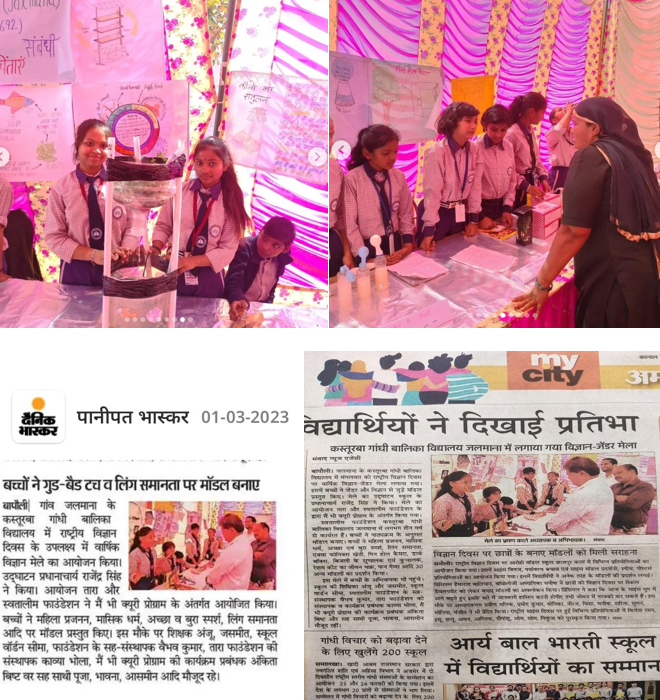
Ananya was awarded a MMEG grant in 2022 to support completion of her graduate studies, which was enabled by multiple scholarships.  Most girls in India are less fortunate. Affordable quality secondary education is out of reach for millions of girls in India and dropout rates are high. An unfortunate result is millions of child-age brides. Ananya is helping break this cycle by improving the quality of education the government provides to the poorest of the poor via residential schools for minority girls, known as Kasturba Gandhi Balikpapan Vidylaya or KGBVs.

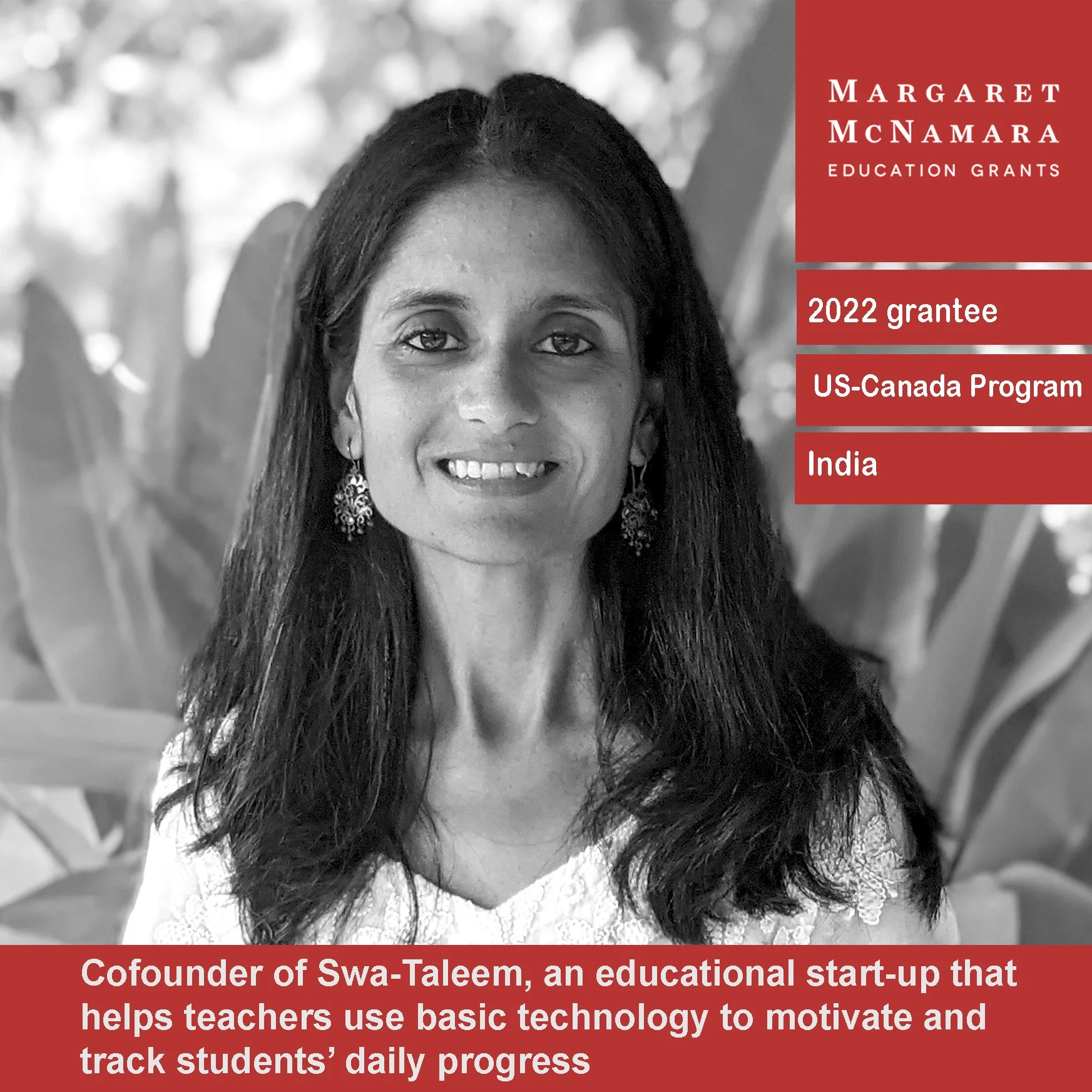
Ananya co-founded SwaTaleem, an educational startup that helps teachers in clusters of 4–5 KGBVs address pedagogical challenges using intrinsic motivation and social emotional learning while reinforcing the government curriculum. She launched SwaTaleem in Haryana, an Indian state with one of the lowest educational achievement levels and literacy rates for girls. SwaTaleem now works with 31 KGBVs, reaching over 5,000 underrepresented girls.

SwaTaleem uses basic technology to motivate and track students’ daily progress. For example, each student receives a weekly text (coupled with daily in-person sessions) with a learning-based task. Students and their parents are prompted via text to track the completion of those assignments. The assignments reinforce what is being studied in school, and the tracking provides data on how best to change the design of the program before expanding.

Increasing government support of SwaTaleem and improved test scores attest to the effectiveness of SwaTaleem, as does the securing of a long-term Google Impact Challenge for Women and Girls grant. In 2022, Google named Ananya one of seven rising changemakers as a Leader to Watch. 
Ananya plans to eventually expand SwaTaleem’s innovative educational services to all Indian states with KGBVs and keep hundreds of thousands of girls enrolled in school, motivated, and learning.

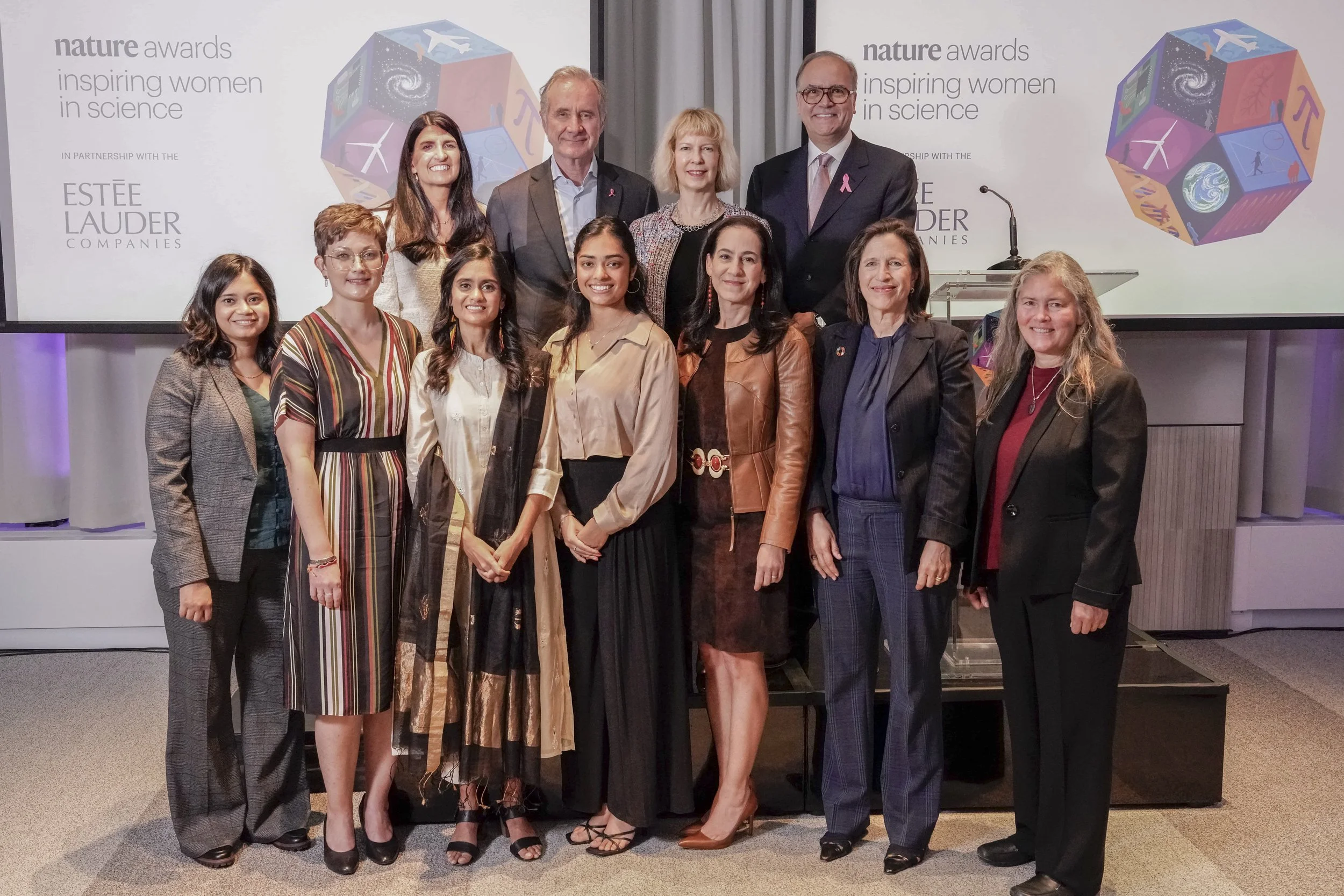
In 2023 SwaTaleem won a Nature Award for Inspiring Women in Science, in partnership with The Estée Lauder Companies.

This prize recognized the organization’s work encouraging historically underrepresented girls in New Delhi, India, to study natural sciences and increase their retention in STEM areas.

Ananya Tiwari: “It is our honor to be awarded the 2023 Nature Inspiring Women in Science Award for our work focusing on increasing STEM participation and retention in adolescent rural girls in India.

The award hosted by Nature Portfolio and The Estée Lauder Companies Inc. in the presence of UN Under-Secretary-General for Global Communications Melissa Fleming, had nominations spanning 45 countries across 6 continents for this year.”

\

Elizabeth Vargas Castellanos

Elizabeth Vargas Castellanos is a woman with a mission: to help improve access to medicine and treatment for underserved populations in Colombia. And she is getting results.

A MMEG grant in 2013 allowed Elizabeth to complete her master’s degree in biological science with honors at the Pontificia Universidad Javeriana in Bogota. In 2017, with the aid of a government grant, she began her PhD there. Her thesis, based on the mutational profile in the BRCA1 and BRCA2 genes associated with hereditary breast and ovarian cancer, revealed a unique mutation in the Afro-Colombian women of the San Andres Islands (Caribbean Sea), in contrast to those found in the other two Afro-Colombian communities on the Pacific coast. Researchers have concluded this mutation is a result of different colonization of the San Andres islands, which are 470 miles north of the Colombian mainland and were initially settled by the British and Dutch and enslaved Africans from Jamaica, before the arrivalof Spanish colonizers.

Elizabeth’s research has aided in the treatment and prevention of breast and ovarian cancers in Afro-Colombian women, who suffer from extremely poor healthcare availability. Geneticists are now able to follow up with families of these patients and perform closer preventive check-ups, as well as offer treatments or interventions.

Elizabeth’s PhD required an internship abroad, which she fulfilled by spending five months at the DKFZ German Cancer Research Center in Heidelberg. Elizabeth says she benefitted greatly from her work in Heidelberg, and she graduated magna cum laude for academic excellence in 2021.

Elizabeth began her career at the Faculty of Sciences at the Universidad del Rosario. She then moved from teaching to medical research. She was appointed coordinator of the molecular biology laboratory at the Caimed Medical Research and Care Center, an organization dedicated to clinical research, information, and knowledge management to generate health solutions. Elizabeth was in charge of building a highly bio-safe molecular biology laboratory for Caimed in Colombia. Ninety percent of Caimed’s employees are women, but Elizabeth was the only woman and one of only two employees with a doctorate.

As a complement to her breast and ovarian cancer research, Elizabeth has helped create a registry of BRCA1/2 variants in Colombian patients with breast and ovarian cancer, to identify mutations in the regional population and complement similar registries in other countries.

Elizabeth has a passion for teaching. Her long-term goal was to work at a large cancer research facility while teaching doctoral students, and she is well on her way. Elizabeth is now doing a post-doctorate at Colombia’s National Cancer Institute, researching prostate cancer in Colombian patients. This is only the beginning of what Elizabeth hopes to accomplish.

Fatima Lawson

Fatima Lawson, a 1994 MMEG grantee, is a global citizen whose professional, academic, and civic leadership in education extends over decades and across continents.

Fatima was born and raised in Kano, Nigeria, where western education (Boko Haram) was forbidden or discouraged, particularly for girls. She managed to attend Nigeria’s University of Ife, where she completed undergraduate and graduate degrees in French/Portuguese and linguistics, respectively. She earned a PhD in education policy and administration at the University of Minnesota in 1995, supported by her MMEG grant. Her intention to return to Nigeria to continue her career was thwarted by the precarious political situation at the time and Fatima and her husband decided to stay in the United States for the sake of their children.

Fatima has been an educator for over 30 years, most often working with and for disadvantaged children. She is now principal of a school in Saint Paul, Minnesota, where 89% of the children are from economically disadvantaged backgrounds and many are from immigrant families. A highlight of her career was helping start one of the most successful language immersion schools in the city, where she served as principal for 12 years. She has worked in local universities as an adjunct professor and on a university committee seeking accreditation for doctoral degree program. She is also active in the National Principals’ Leadership Conference. As an educator, Fatima leads with sympathy for—and a deep understanding of—the issues faced by immigrants and their families.

Fatima has remained connected to the wider African diaspora and her Nigerian roots. She is Vice President of the Minnesota Institute for Nigeria’s Development (MIND) and served two terms on the Governor’s Council for Minnesotans of African Heritage. She is Secretary to the Board of Directors for the nonprofit Books for Africa and was instrumental in organizing a shipment of 50,000 books to mainly girls’ secondary schools in Kano. Through Books for Africa Fatima also sent eReaders to health NGOs such as Mercy International, which conduct regular medical missions to rural areas in Nigeria.

In 2020 Fatima received a Mandela-Washington Reciprocal Exchange Fellowship to partner with ministries of education in Nigeria to develop sustainable education goals and attended an alumni symposium in South Africa in 2023.

Fatima continues to focus on a multitude of objectives, all united by her commitment to education in its broadest sense.

Sister Elizabeth Namazzi

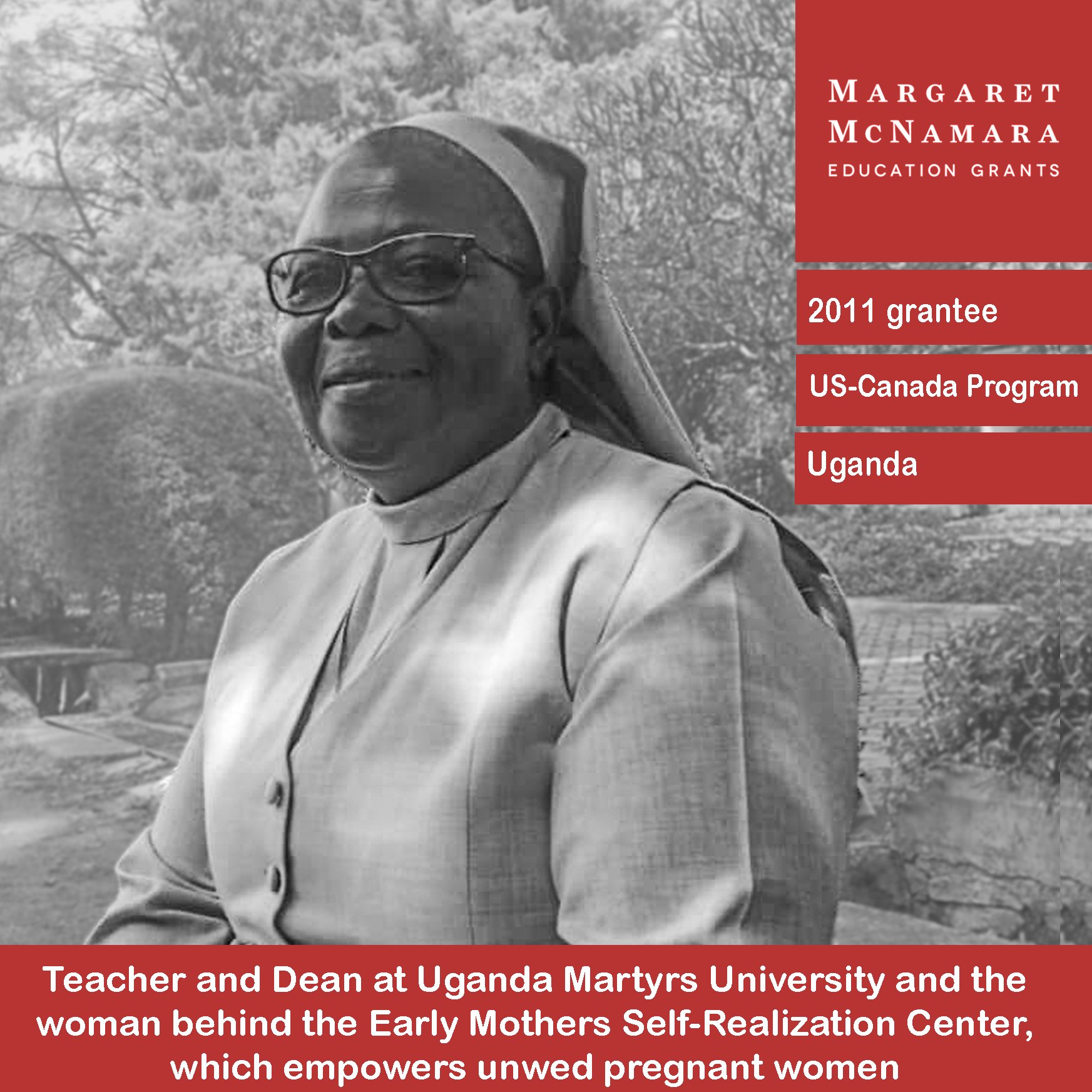
Sister Elizabeth Namazzi was inspired to help ostracized unwed teenage mothers in her homeland, Uganda, after witnessing firsthand how a hopeless pregnant girl’s life was transformed with practical support. After teaching secondary school for many years, Sister Elizabeth completed a PhD in curriculum studies at the University of British Columbia (UBC), Canada, supported by a MMEG grant in 2011, and then returned to Uganda. She is now changing the lives of young people, both at the university where she works and through a center to support and empower young mothers.

While studying in Canada, Sister Elizabeth also worked to advance her ambition to help young unwed mothers. In Uganda’s conservative society, pregnant girls are often expelled from their homes and communities and left to fend for themselves. Homeless and helpless, the girls struggle to survive and too often lose their unborn babies. Sister Elizabeth’s vision was to build a center that could offer the young women a safe place to give birth, provide them and their babies with healthcare, teach them skills that promote self-reliance, and work with their families and communities to end ostracism of pregnant girls and reintegrate unwed mothers into society.

Upon graduation, Sister Elizabeth returned to Uganda Martyrs University, southwest of Kampala, where she is now Dean of the School of Postgraduate Studies and Research. As well teaching, supervising graduate research, and conducting innovative research herself, Sister Elizabeth is responsible for the School’s administration and co-ordination. She also designed the Curriculum of Educational Administration and Management program, a recent addition to the university’s offerings.

While studying at UBC, Sister Elizabeth persuaded engineering students in nearby Seattle to design the center she was dreaming of, based on her hand-drawn sketches. The prize-winning design for the Early Mothers Self-Realization Center is now becoming a reality. The center is being constructed in Sister Elizabeth’s home town with funds raised from well-wishers near and far. (Donors can contribute via https://www.gofundme.com/uganda-mothers-shelter). As of mid-2022, the first building was 80% complete and was already accommodating the urgent needs of young mothers. Once finished, the center will house a dormitory, an education center, and a medical clinic, and the girls will receive training in parenting, childcare and nutrition, and self-reliance skills. The clinic will also provide pre- and postnatal health services.

The center is eventually expected to accommodate and train up to 100 girls a year, supported by 15 staff members. In mid-2022, 18 girls and babies were housed at the Center and 26 others had been assisted with food and clothing. The center grows some of its own food, and plans to start rearing pigs and poultry and train the girls in animal farming as a potential source of income. Girls are also taught sewing skills, on donated machines.  

In her formal role as instructor and dean at Uganda Martyrs University, Sister Elizabeth saw student enrollment grow by 25% since her return in 2015 to 6,189 students in 2019. Sadly, the COVID pandemic has since caused enrollment to drop to 4,632 students, of which some 45% are women. Her own research has focused on child-led households and children’s perspectives on HIV/AIDS.

MMEG’s investment in Sister Elizabeth is having an exponential impact as she supports and empowers young unwed women while working to change community biases against them, researches a range of child-focused issues, and trains future educators.

Sandra Jatoonah

SANDRA JATOONAH, ANTI-POVERTY ADVOCATE

This is the story of a remarkable woman, Sandra Jatoonah from Mauritius, who earned a master’s degree in social development in South Africa and returned to her home country to offer social services to disadvantaged families.

With financial support from MMEG, Sandra completed a master’s degree at the University of Cape Town in 2013.  Upon graduation, she returned to Mauritius determined to make a difference in the lives of others. During her first year back home, she worked with the International Organisation for Migration (IOM) as a labour migration and client service assistant. Through IOM’s various programmes, Sandra provided support to locals who were stranded abroad, assisting their repatriation and reintegration into society after they returned to Mauritius. Many were women, some with children, who were very grateful to return with IOM support. Sandra also supported workers and their families who were leaving to work abroad, helping with applications for entry visas and training to help them adapt to life in a new country.

Sandra then worked for four and a half years at the Decentralised Cooperation Programme (DCP), funded by the European Union (EU), facilitating the distribution of EU grants to non-profit organizations and ensuring the funds were properly used to implement social development projects. Her work at the DCP gave Sandra the opportunity to monitor projects of various NGOs and non-state actors in Mauritius and its surrounding islands, while also providing training in project implementation, follow-up, and budgeting. Some of these programs were focused on women’s empowerment, assistance for people with disabilities, women’s health, agriculture, water harvesting, and education.

With this deep understanding of the landscape of social service organizations in Mauritius, in 2018 Sandra joined Lovebridge, a local non-profit that provides services to vulnerable populations and aims to reduce extreme poverty, as a senior social worker. 

Sandra now works closely with about 20, mostly female-headed, households in the most impoverished rural areas, giving them guidance to access the available social services that will support their empowerment end eventual economic independence. Her work with each family addresses six fundamental pillars: education, housing, health, employment, food & nutrition, and MASCO (motivation, attitude, skills and courage). Issues Sandra commonly faces are the lack of basic amenities (electricity, sanitation), illiteracy, the emotional and physical abuse of women and children, disabilities, health issues, and, often, the advanced ages of key household members that make finding adequate employment very difficult. Helping family members find adequate employment is a crucial service, among others, that Sandra provides.   

With its holistic and multifaceted approach to family support, Sandra believes her work with Lovebridge can make a real difference. With time and consistent support, she hopes the families under her guidance and care will graduate from Lovebridge programs and lift themselves out of extreme poverty.     

Bishnu Pariyar

Bishnu Pariyar, from a village to academia 

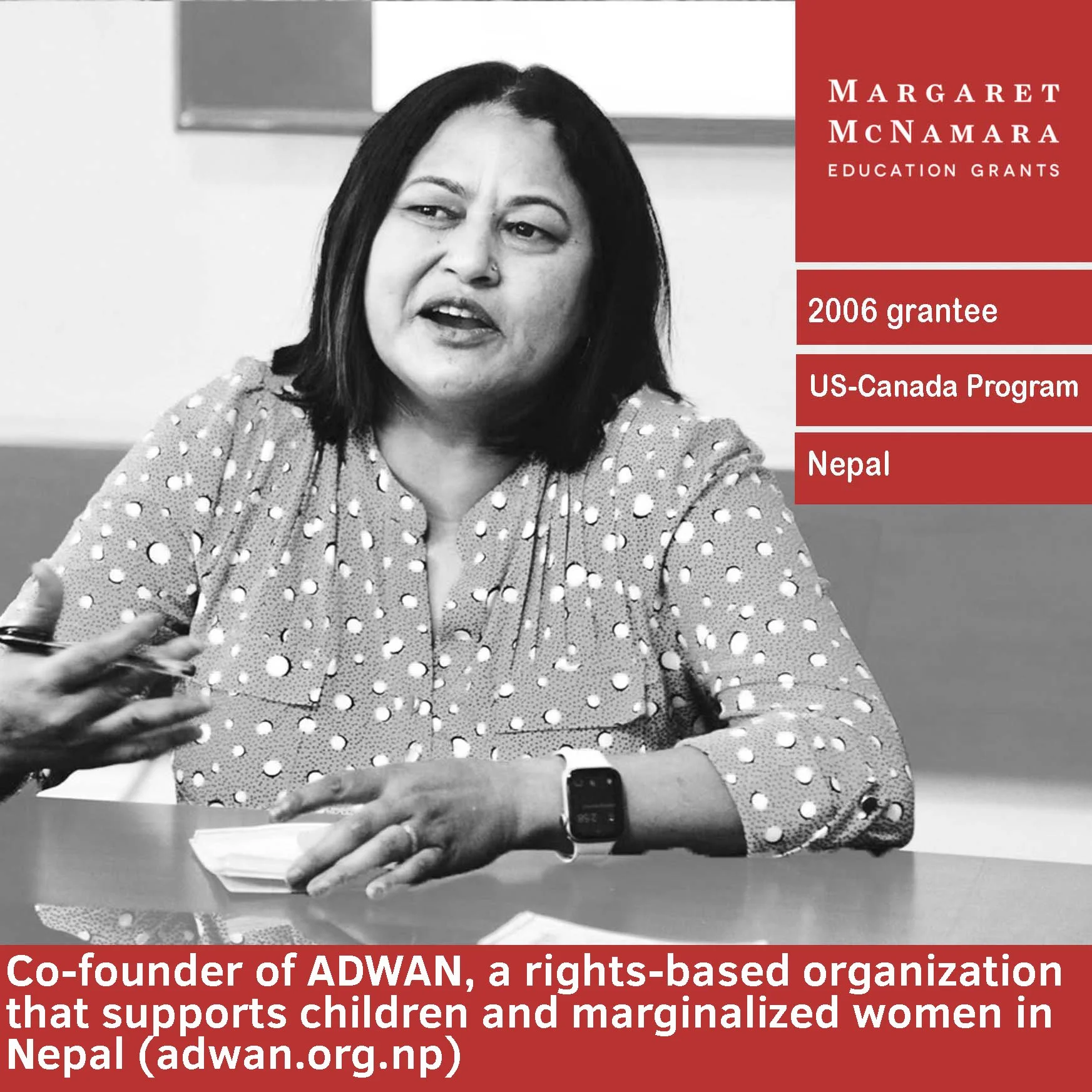
Bishnu Maya Pariyar, a 2006 US-Canada MMEG grantee, tells a  remarkable story of her transition from a subsistence farming existence in a remote village in western Nepal to co-founding a rights based organization that supports children and Dalit (“untouchable” caste) and marginalized women in Nepal and working on anti-gender  violence in New Jersey. 

Bishnu was born into a poor Dalit family of 10 children whose labor was  essential for the family’s survival as subsistence farmers. 

They had no access to electricity, sanitation, healthcare, or roads, and she was shunned by other children. “Being a  Dalit girl, I experienced discrimination every day and every moment,” recalls Bishnu.  

However, with help from the US Peace Corps, Bishnu earned a BA in Nepal in social and political systems. She then  traveled to the US to study international development and social change at Clark University, Massachusette, where a MMEG  grant help her complete a master’s degree in 2007. 

Bishnu stood out to MMEG for having co-founded, at age 20, a social integration organization, Association for Dalit  Women’s Advancement of Nepal (ADWAN), to foster economic independence, boost self-esteem and dignity, and  instill solidarity among the diverse Dalit community members. ADWAN does so through three main programs— education, income generation and advocacy, and awareness—creating mixed-caste women’s solidarity groups that  became role models for rural community development and social transformation.  

ADWAN has: 

• organized 119 saving and loan groups with more than 2,200 women members; 

• helped over 1,500 high-school students with stipends, some of whom are individually sponsored by US citizens; • assisted 21 female college students via a scholarship program called the “Ambitious Girls’ Fund;”  • provided microloans to 126 women from 20 groups, now engaged in micro enterprises; and • organized 4 ongoing literacy classes and 6 pre-school classes.  

Under Bishnu’s leadership, ADWAN has supported more than 60,000 Dalit and marginalized women and their family  members in Nepal, covering over 390 groups, 35 schools, 25,000 students, and 35,000 family members. Caste and  gender discrimination and domestic violence have dropped. All Dalit children belonging to women’s groups attend  school and their performance in school has improved. Dalit women are increasingly involved in business initiatives,  participating in community development initiatives, and involved in civic and political organizations. ADWAN has  also seen improvements in participants’ economic conditions, home environments, hygiene, mind sets, and social  awareness. 

In 2013, Bishnu was awarded an honorary Doctor of Letters by her undergrad alma mater, Pine Manor College, MA,  for her pioneering social contributions. She now works in New Jersey as a case manager for survivors of domestic  and sexual violence, while continuing to fundraise for and promote ADWAN’s mission. She has helped hundreds of  South Asian American domestic and sexual violence victims, and has given cultural sensitivity training to local  officials, police, and law enforcement officers in Boston, MA, and Jersey City, NJ. 

MMEG is proud of having identified Bishnu as an extraordinary woman and of supporting her to change the lives of  women and children.  

Source pages: 

https://www.adwan.org/founding-president--dr-bishnu-m-pariyar 

https://clarknow.clarku.edu/2022/02/15/clark-alumna-confronts-gender-and-caste-based-disc

Silvana Andrea del Valle Bustos

Silvana Andrea del Valle Bustos, a lawyer, is a member of the National Coordination of the Chilean Network against Violence against Women and director of the Law School of the University Academy of Christian Humanism. She has written and spoken out with intensity about the deficiencies in Chilean law that fail to protect women from domestic harm, especially during the COVID quarantine, when such violence greatly increased.

She received her MMEG grant in 2013 while completing her PhD in law at the Washington University in St. Louis.

Siglia Camargo

Siglia Camargo_insta copy.jpg

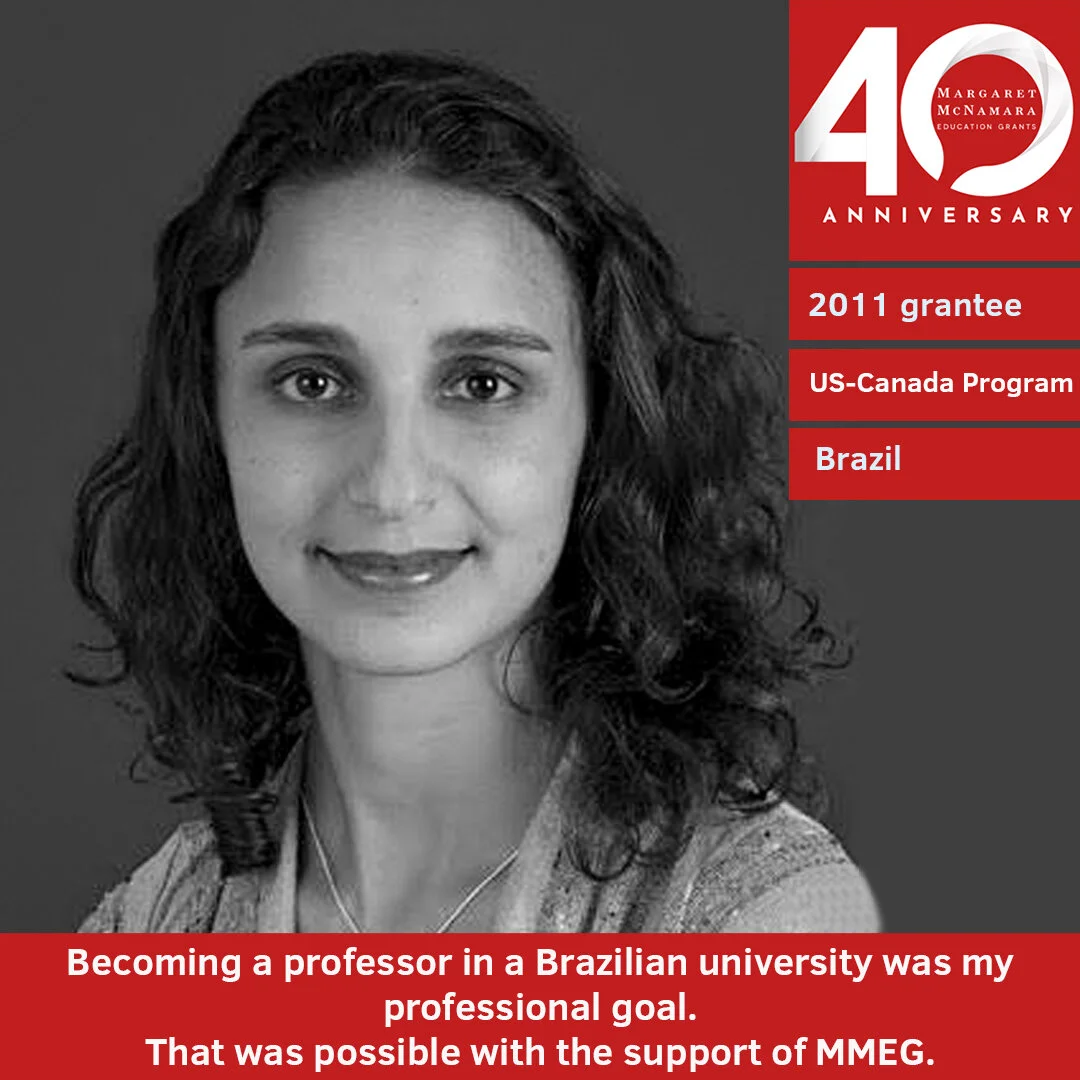
Siglia Camargo Brazil 2011 Grantee US-Canada Program PhD Special Education Texas A & M from College Station in Texas Associate Professor - Universidade Federal de Pelotas, Brazil

Siglia is an educator of elementary school teachers, furthering their  training and qualifications.

The research groups Siglia coordinates develop guides for preschool and elementary school teachers regarding best educational practices to teach students with autism within inclusive, mainstreaming settings. 

Awards:

Distinguished Honor Graduate at Texas A&M University (Fall 2012)

Examples of her work:

CAMARGO, S.P.H.; SILVA, G. L. ; CRESPO, R. ; OLIVEIRA, C. R. ; MAGALHAES, S. L. . DESAFIOS NO PROCESSO DE ESCOLARIZAÇÃO DE CRIANÇAS COM AUTISMO NO CONTEXTO INCLUSIVO: DIRETRIZES PARA FORMAÇÃO CONTINUADA NA PERSPECTIVA DOS PROFESSORES. EDUCAÇÃO EM REVISTA (ONLINE), v. 36, p. 1-22, 2020.

LEAO, A. T. ; CAMARGO, S. P. H. ; FRISON, L. M. B. . Communication of students with ASD: A self-regulation of learning based intervention. Psicologia. Teoria e Prática, v. 21, p. 473-500, 2019.

CAMARGO, S. P. H.; RISPOLI, MANDY ; GANZ, J. B. ; HONG, E. ; DAVIS, H. S. ; Mason, R. Behaviorally-based interventions for teaching social interaction skills to children with ASD in inclusive settings: A meta-analysis. Journal of Behavioral Education, v. 25, p. 223-248, 2016.

CAMARGO, S.P.H.; RISPOLI, M. ; GANZ, J. B. ; HONG, E. ; DAVIS, H. ; Mason, R. . A review of the quality of behaviorally-based intervention research to improve social interaction skills of children with ASD in inclusive settings. Journal of Autism and Developmental Disorders, v. 44, p. 2096-2116, 2014.

RISPOLI, M. ; CAMARGO, S. P. ; Machalicek, W. ; LANG, R. ; SIGAFOOS, J. . Functional Communication Training in the Treatment of Challenging Behavior Maintained by Access to Rituals. Journal of Applied Behavior Analysis, v. 47, p. 1-14, 2014.

CAMARGO, S. P. H.; RISPOLI, M. ; GANZ, J. B. ; HONG, E. ; DAVIS, H. ; Mason, R. . A review of the quality of behaviorally-based intervention research to improve social interaction skills of children with ASD in inclusive settings. Journal of Autism and Developmental Disorders, v. 44, p. 2096-2116, 2014.

NEELY, L. ; RISPOLI, M. ; CAMARGO, S. P. ; DAVIS, H. ; BOLES, M. . The effect of instructional use of an iPad® on challenging behavior and academic engagement for two students with autism. Research in Autism Spectrum Disorders, v. 7, p. 509-516, 2013.

GANZ, J. B. ; HEATH, A. K. ; LUND, E. M. ; CAMARGO, S. P. ; RISPOLI, M. J. ; BOLES, M. ; PLAISANCE, L. . Effects of Peer-Mediated Implementation of Visual Scripts in Middle School. Behavior Modification, v. 36, p. 378-398, 2012.


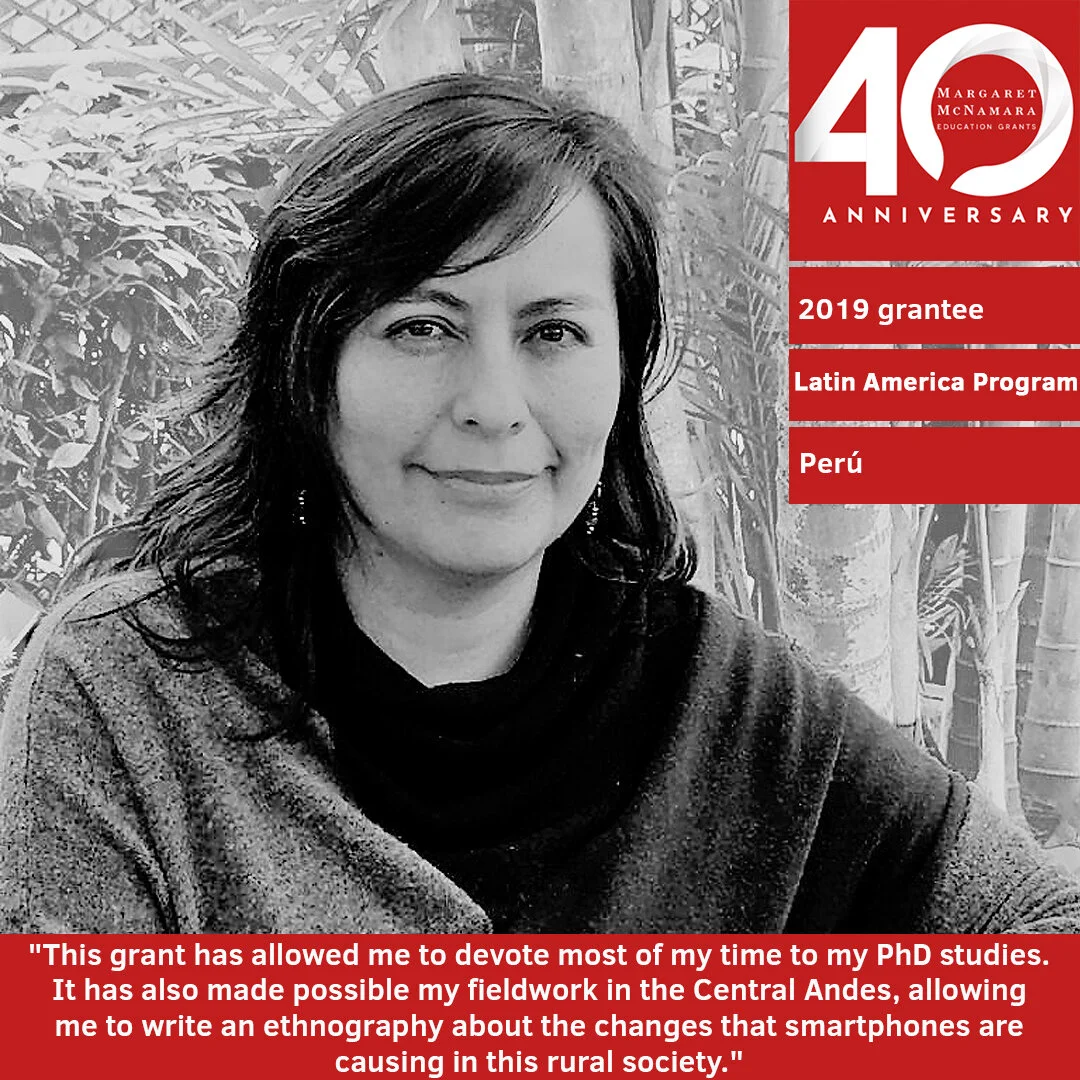
Yina Rivera Brios

Yina Rivero.jpg

Peru

2019 grantee

Master of Arts in Sociology of Education and International, Comparative and Development education from OISE at the University of Toronto

BA in Secondary Education from Pontificia Universidad Catolica del Peru (PUCP)

 Yina is part of the first generation in her family to have been born in Lima. Her grandmother taught in a rural school in Sierra Ancash and her mother taught at a public school. After getting her BA in secondary education from PUCP, she taught Spanish at schools in Peru and Holy Cross College in Massachusetts, through a Fulbright Teacher Exchange Scholarship. In her pursuit to teach Spanish at Peruvian rural schools with an intercultural focus, she completed a master’s degree in education at the University of Toronto, thanks to a Rotary International scholarship. Her thesis presented the emergence of the Cajamarca Quechua Academy (Peru) and the path that the regional community members had to take in order to lead the institution, as well as their strategies to teach Quechua as a political act.

Back in Peru, Yina ventured into the field of educational policy, working as an advisor for the National Council of Education, where she promoted an inter-institutional project for the formulation of national criteria for proficient teacher performance, as well as the design and implementation of a biannual national teacher survey. At the same time, she worked as a consultant for the Social Responsibility area of Pepsi & Co, designing and implementing a project to create a school system in an agricultural area in the Central Andes, where the public educational system had no coverage. Upon the project’s completion, she has continued working with the families and the school of Pichipampa up to now.

Currently, she is about to obtain a PhD in anthropology of education from the Andean Studies Program at PUCP, she works as a consultant for the Peruvian Ministry of Education and Unesco, and coordinates the implementation of a project on democracy, philosophy and education with teachers and children from a network of single-teacher rural schools, to which Pichipampa belongs. The latter has been made possible by the Federal Assistance Awards for Community Development Projects funded by the U.S. Embassy and Department of State.