Visit by Valeria Neh Angu (MMEG FY18 grantee)

_MG_5990.jpg

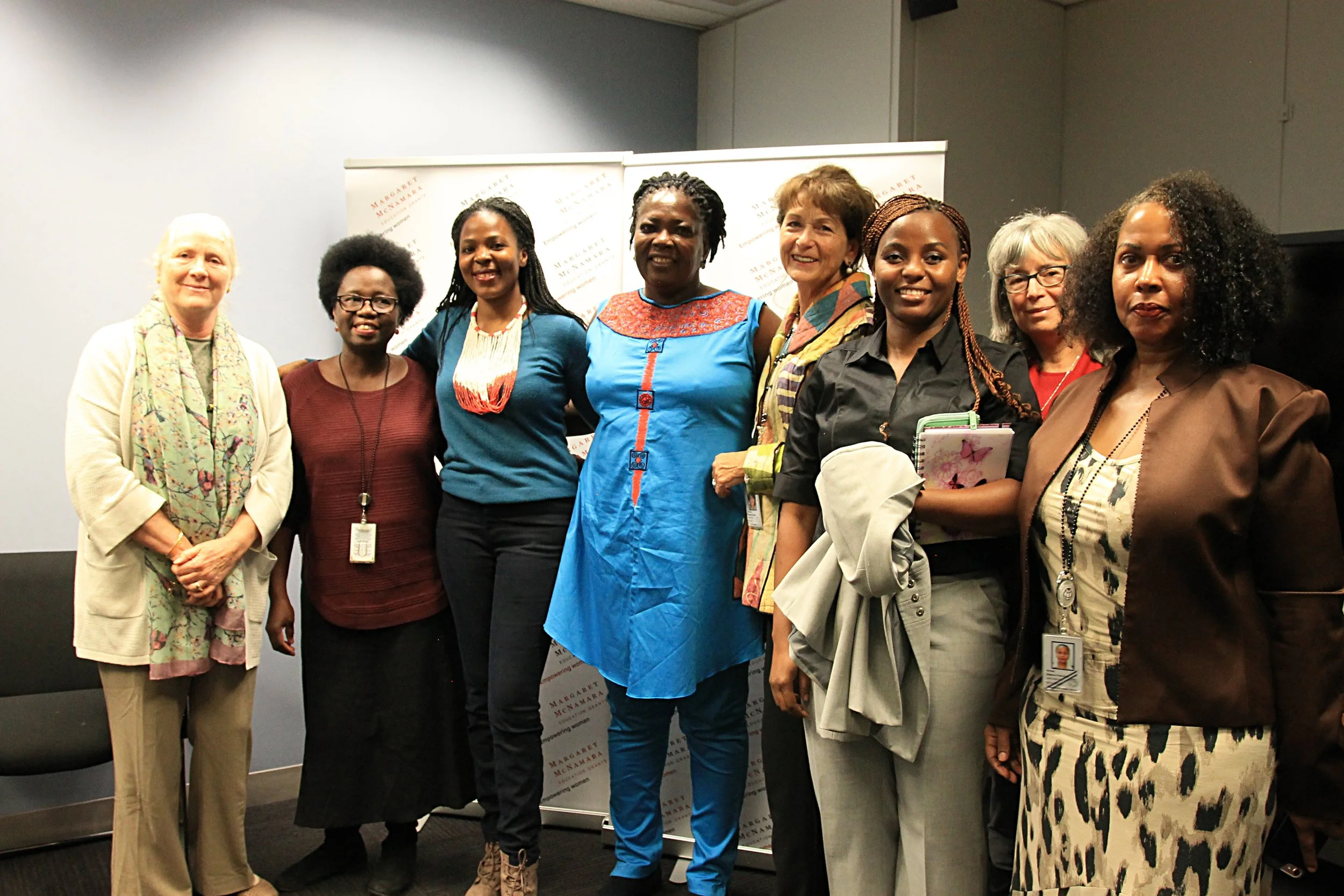
It’s a great day at the MMEG office when one of our grantee visits!  On April 4, Valeria Neh Angu came to see us in Washington.   A native of Cameroon, Valeria received a MMEG grant last year to pursue a master’s degree in Health Science, specializing in Community and Global Health at Clark University in Massachusetts, USA.    Valeria had told us in her MMEG application that she has a passion for justice and equity and boy did that prove to be true!

 Valeria’s belief in the power of women is electrifying as shown in her own story.  Born into a poor polygamous family, Valeria was one of 16 children.  While she was able to go to school while her father lived, her half-brothers closed that door when he died because she was a female child from another woman. This frustration pushed her into early marriage without any asset, where she was mistreated.  However, Valeria believes that a woman should “Never go into a marriage as a liability” expecting another to support you or take care of you; women must be self-reliant to meet their dreams, not making plans subject to their husband’s support.  She believes that if women “want to go ahead, they must do it themselves.”  She was as good as her word and left her husband’s family to go to school, enjoining him to wait for her.  He did wait as she pursued her dream.  

In order to undertake a double undergraduate major in Women’s Studies/Sociology and Anthropology at the University of Buea in Cameroon, Valeria made ends meet by selling doughnuts at the roadside.   She also then acted on another strong belief which is in the power of community.  “Sharing is caring.” So, she shared, her ambitions, her struggles and her story within her community and was able to find an educational mentor who supports her studying to this day.  Combine this ability to reach out to her community with her self-determination, persistence, and ambition and you have success in the form of Valeria’s achievements. 

After finishing school in 2004, Valeria continued to walk the talk and worked in community and livelihood development with Heifer International and a local activist group -- Women in Action Against Gender-based Violence.  She decided then to take her passion further and work in the broader area of global health and women’s empowerment. 

We asked Valeria, how she came to MMEG and she noted that she is an internet “guru,” searching and scrubbing the net.  She had identified the International Development Community and Environment department in Clark University which perfectly combines two programs (international development and public health) in the US and other programs in Europe.  “When I want to find something, I go for it.” She said “I want [to have] opportunities.  Then I choose.”  She chose Clark University and then received a MMEG grant.  “You people saved me” she said, noting that being a grant recipient has increased her already-formidable, self-assurance and determination.   

We asked Valeria how she wants to pay her work forward.  She plans on returning to Africa where she will continue her professional career as a project manager for any development organization that needs a passionate change agent.  There she will work toward equality and justice for women and on global health issues.  “Women’s empowerment means strengthening women’s capacity to use their innate abilities” she says.  She will work toward improving women’s livelihood outcomes such as increasing their access to income which, in turn, gives them the means to become self-sustaining with access to life improvements like – education, better clothing, improved housing, higher quality food choices, vaccinations and better medical treatment.   Valeria says” This would contribute in achieving the sustainable development goals especially for women and girls in all sectors of their lives. Her five years career plan is to lead a non-profit organization in Africa where she will collaborate with other partners to advocate for the voiceless underprivileged--especially women, girls and all children.

Valeria is also creating a legacy with her two daughters.  Not only is she a model of a successful woman to her husband and in today’s global world, she is providing her girls with the foundation of success; “Quality education is the key” she says.   Her elder daughter is studying computer engineering and the younger is still in grammar school.  By Valeria’s account, they are both determined, driven, feisty and opinionated girls.  They sound a lot like their Mother!
FY19 grantees for US-Canada & Trinity Washington university programs announced

Congratulations to our US-Canada and Trinity Washington University grantees, listed here. Successful candidates were informed personally.

Many thanks to our volunteers in the Selection Committee who reviewed the applications and recommended these exceptional women!

Stories of our new grantees coming soon through our social media accounts. Follow us there! 

FY19 Latin America Program Grantees were announced

Congratulations to our Latin America program grantees, listed here. Many thanks to our volunteers in the Selection Committee who reviewed the applications and recommended these exceptional women!

Felicitaciones a nuestras becarias del Programa de America Latina, enumeradas aquí
Muchas gracias a nuestros voluntarios del Comité de Selección, quienes evaluaron  y recomendaron a todas estas mujeres excepcionales.

Stories of our new grantees coming soon through our social media accounts. Follow us there!

Las historias de nuestras nuevas becarias serán publicadas en breve por nuestras redes de comunicación social. Síguenos allí!

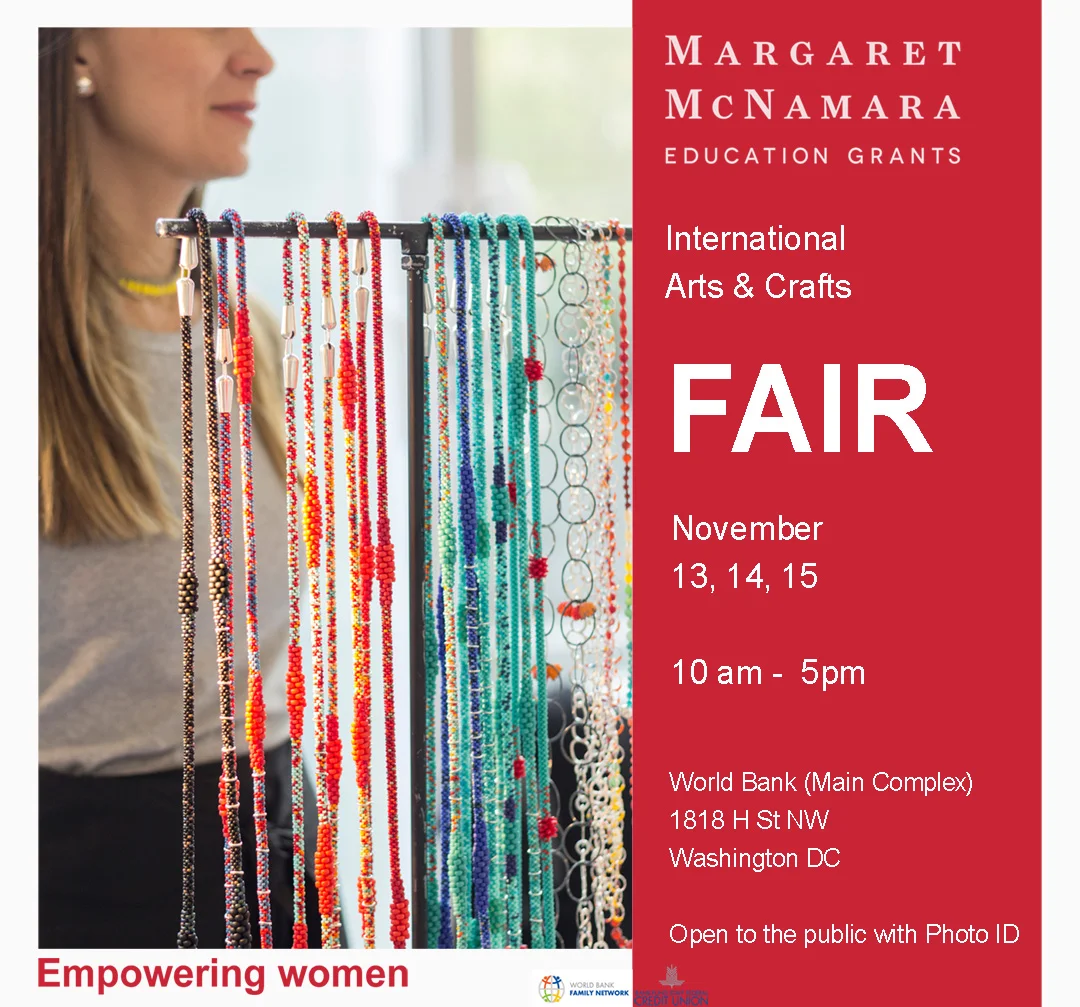
MMEG International Arts and Crafts Fair was a great success!

MMEG INTERNATIONAL ARTS& CRAFTS FAIR

BFSFCU_Fair_Poster_BFSFCU.jpg

Our heartfelt thanks go to the 100+ volunteers, US Executive Director’s office, Office of the President, WBFN, Global Corporate Solutions (Security Operations Support, Food and Conference Services, JK Moving Services, Mail and Shipping office, and Parking Services), BFSFCU, the Global Wealth Management Group of Raymond James, vendors, shoppers, and MMEG supporters for making this spectacular event a success this year and every year!

2009 grantee, Vida N. Yakong (RN, MSN, PhD), on October 30, 2018

Vida Yakong, founder of Project GROW in northern Ghana, shared her community based strategies for poverty alleviation and women’s empowerment. Some audience members at this event have been moved to donate goats to Project GROW after heraing her speak!

We awarded Vida a grant in 2009 while she was studying medical anthropology at University of British Columbia Okanagan. She is now Head of Department at Midwifery School of Allied Health Sciences at University for Development Studies (Ghana).

IMG_5934.JPG

What I learned from my mother that I bring to my work with MMEG...

Mother's day Post image.jpg

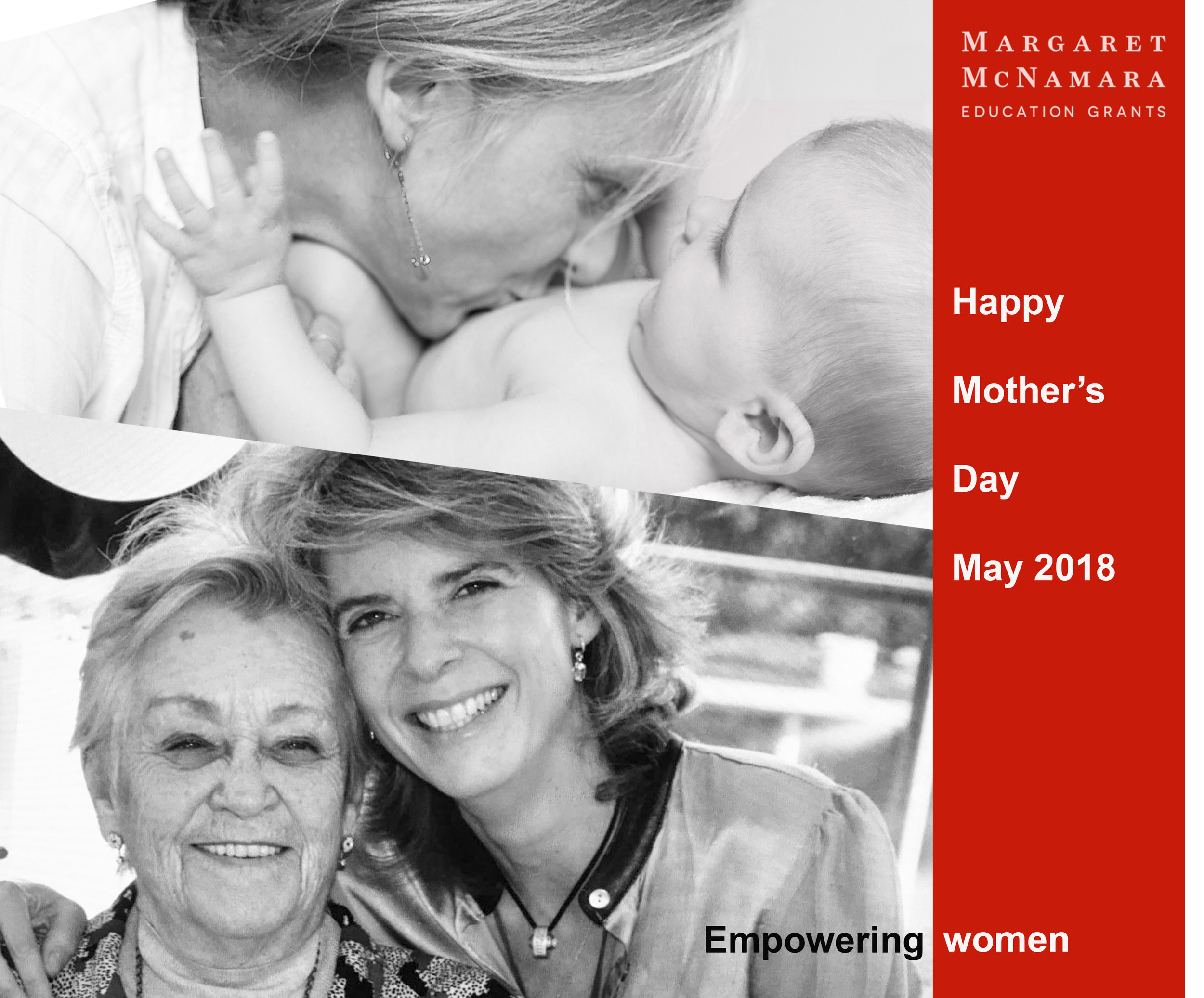
Our mothers play a unique role in our lives. The words of wisdom and inspiration they offer us come from experience and the lucidity of perspective. To mark Mother’s Day, a few MMEG volunteers and contributors are sharing valuable lessons learned from their mothers, which they continue to hold dear, and bring to their work with Margaret McNamara Education Grants:

“My mother kept trying new recipes until she lost her sight, and never spoke unkindly about anyone. She reminds me to keep trying to stay open to new possibilities, and to watch my tongue!” -Reiko (Japan, MMEG President)

“The value of an education and a great sense of compassion…” -Brinda (India, MMEG Board member)

 “My mother always told me to listen to others and learn from their thoughts and comments. Give some kindness and you will receive some in return. She was a no nonsense person. I like to think I have followed this advice and have certainly received kindness together with interesting experiences from MMEG Board members and many candidates over the years.” -Alison (UK, MMEG Board member)

“My mother kept many sayings close to her heart and imparted them to us.  One of them was:  "Keep a green tree in your heart, and one day the singing bird will come!"  And this has brought a special spirit to my work” -Anthea (USA, MMEG Board member)

 “My mother always taught me the importance of education in acquiring true independence. An educated woman can decide more freely about her life and follow her interests and passions. Providing education grants to women, MMEG contributes to women's independence. I am very proud to be a part of this organization” -Ewelina (Poland, MMEG Fair Committee Chair)

“Honesty about yourself and towards other was the one great value she held dearly. Part of the logic was that if you do not lie you have less to remember!” -Madeleine (South Africa, MMEG Board member)

 “My mother got married at 17 and had me when she was 20, as they did in WWII.  No college for her.  When I wanted to apply to college years later, to study international relations in Washington, DC, my guidance counselors could only find Georgetown, which, at that time, was only admitting males.  With no such thing as internet, my mom mobilized and tracked down a friend [who knew] the dean of American U’s School of International Service.  Five years later, I had my AU SIS BA in hand.  What did that teach me?  Never underestimate the skills of a challenged mother.   I believe I read the applicants’ essays differently because of my experience.  I understand their struggles, and their stories about their own mothers or grandmothers or aunties fighting for them to study”   -Charlotte (USA, Selection Committee Chair)

“Growing up, my mother constantly reinforced to me that achieving brilliant grades in school and getting the best education I could was just as important for me as it was for my two brothers. In spite of the very patriarchal context in which she herself grew up, she never let me forget that as a girl I could and should excel as much as the boys around me and that it was through my education - and not someone else’s status – that I would be able to live a fulfilled life in future. This is something I firmly believe for all women” -Vesna (Ghana, MMEG Board member)

“From her experience as an immigrant to the UK, and subsequently to Brazil, I absorbed from my mother a love of learning about other cultures and languages, and the importance of welcoming strangers into mine” -Colin (UK, MMEG Board member)

“My mother taught me, through her example, the importance of always making one’s self available to all people around us” -Ana (Peru, MMEG Board member)

 “I learnt from my mother that education not only promotes social status, confidence, and independence for women but also helps us to be more efficient and creative both at work and at home” -Pelin (Turkey, MMEG Coordinator)

“The passion for education, everything is possible if you work hard - but it is more enjoyable when you learn in the process” -Ledda (Peru, MMEG Board member)

 “My mother volunteered and served on the boards of charities and institutions that existed to help women and families.  Her work for such causes as the United Way, the Visiting Nurses Association and the local hospital, inspired me through her example, to walk the walk of supporting women -- in this case to help women from around the world further their education.  She also taught me how to fold clothes beautifully--thank you Mother!! -Brigid (USA, MMEG Board member)

From Pakistan: Women storytellers changing the face of the game, one film at a time – Afia Nathaniel

Afia Nathaniel

Afia Nathaniel

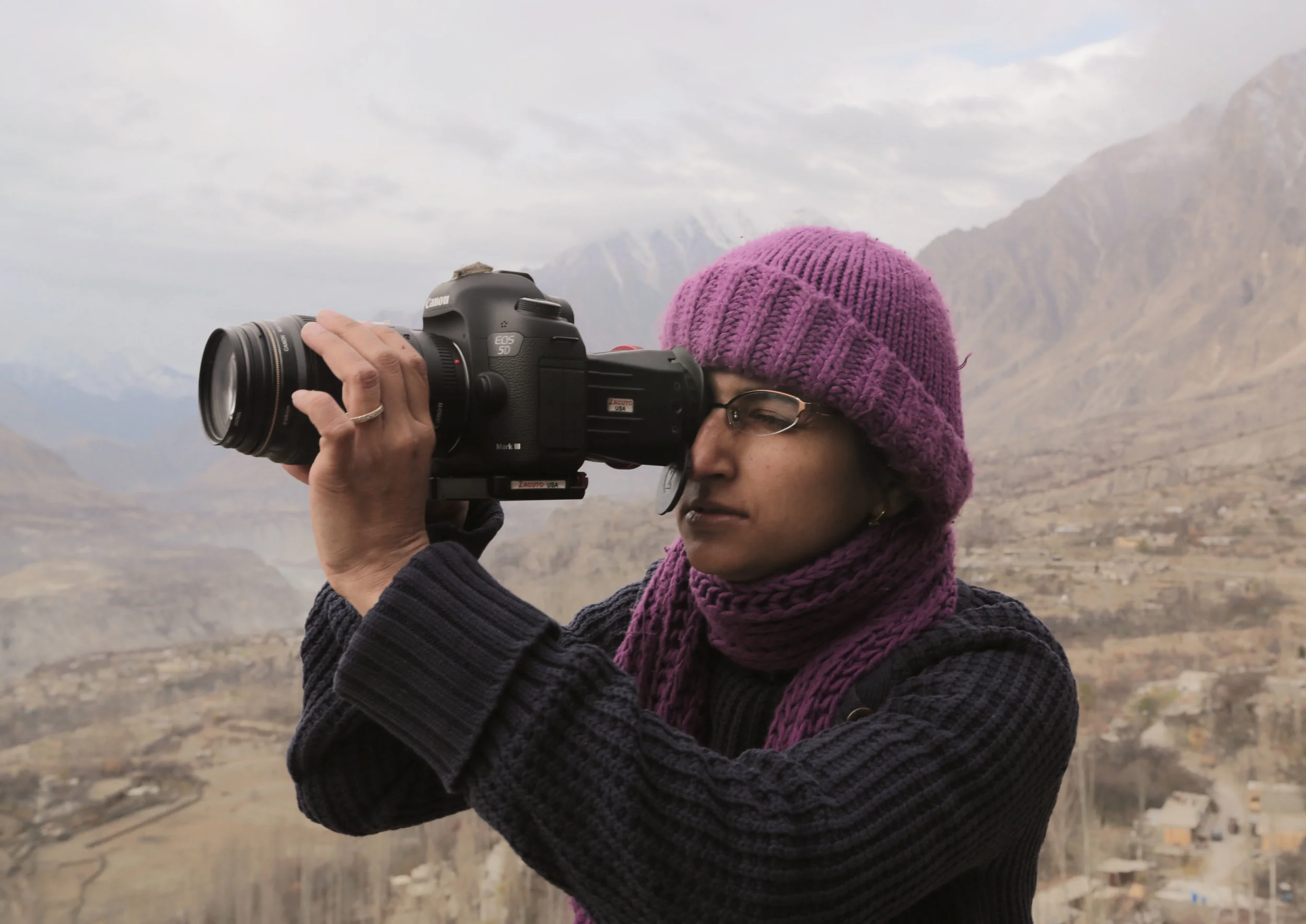
(On Wed March 21, MMEG will host two special screenings of the film “Dukhtar”, in the presence of the director Afia Nathaniel, award-winning Pakistani filmmaker and 2003 MMEG grant recipient. See program details on this website)

 Brown. Woman. Complicated.

This is the world I have grown up in. And this is the world which inspires me.

In Pakistan, I come from a family of strong women - women who have endured very tough lives in hope of a better one for their children. While growing up as girls, we could never go out and play in the streets or experience life outside as boys could. Cultural norms forbade it. So our entire world was made up of school, books and watching TV.

In the 80s, I watched a show which changed my life completely – Star Trek. I could suddenly experience the infinite possibilities of a world outside my own. It was a liberation unlike any other. My journey as a storyteller stems from this primary instinct.

This instinct came alive when I heard the story of a Pakistani mother on the run with her two young daughters. It was a surreal story of escape and survival spread over several years. What remained with me was this image of the mountains, a mother and child. A lonely road stretched before them - an uncertain future ahead of them.

The story took shape in film school at Columbia University where I was training to be a writer-director. MMEG supported my journey as a graduate film student. By the third year of my MFA, the story grew into a full-fledged road trip thriller. A mother was going to kidnap her ten-year old daughter to save her from a child marriage. She was going to be hunted down. Dukhtar was a woman’s search for dignity in a time when tradition, modernity and fundamentalism had come to a head. It was my way of connecting with home, with Pakistan. It was going to be deep and visceral. It was going to be a love song with some notes of uncomfortable truth.

Since the film deals with the issue of child marriage, I knew it was going to be hard to make this film but I had no idea how hard really. The problem – it turned out – was that it was: Brown. Woman. So it was automatically “Complicated”. The gender of its creator and its protagonist became a real problem for investors.

“There’s no hero in the film?” They would ask me, surprised. “There’s no item number in the film?” No Pakistani financier wanted to finance a film where there were no raunchy songs featuring half-clad women. The objectification of the female body by men is such a standard expectation in the Pakistani film industry that to go against it is to go against every single norm of industry protocol. The idea of a female protagonist who was going to be fully clothed and fully invested in taking on the world to protect her child managed to turn off every possible investor and corporate sponsor. They dismissed it as a “documentary”.

After several years of struggling to make this film - just when I was about to give up - something unexpected happened. An unexpected skype session…which led to an unexpected email. My Pakistani line producer, Khalid bhai said “Pack your bags and come to Karachi. We are going to make this film one way or the other.” A few days later, Dukhtar won a production award from Sorfund in Norway, one of the most prestigious European grants for feature films.

It was as if the universe had willed the film into being.

Quickly, we went into shooting mode. The mountains of the north beckoned. It was a road-trip film which meant we were literally on the road for two months in deep mid-winter navigating a tough terrain. The situation could become precarious in a flash. There were bomb blasts in certain areas, landslides in others. Our filming schedule planned for these contingencies to stay fluid and safe.

There in the mountains, as the sole female crew member in a group of 40 men, I found my voice. I found my freedom as a storyteller. The light on the landscape moved in glorious ways. And I became its slave. This was the moment I had been waiting for all those years; imagining it, preparing for it, receiving it. The frames for Dukhtar sprang from deep within. It was an unforgettable experience.

Written & Directed by: Afia Serena Nathaniel Produced by: Afia Serena Nathaniel, Muhammad Khalid Ali, Cordelia Stephens, Carsten Aanonsen, Shrihari Sathe, Thea Kerman, Noman Waheed.

Dukhtar went onto premiere at Toronto in 2014. At Toronto, our film’s opening night screening sold out within the hour and we saw long rush lines for it outside the theater. The programmers told us it was very unusual to see this kind of excitement for a first-time filmmaker. There was a real hunger in audiences to see a film from a part of the world not known for cinema. Dukhtar’s word of mouth grew from strength to strength standing tall against Hollywood and Bollywood films. Extra screenings were added - all sold out.

In Pakistan, we saw new kinds of audiences coming to cinema theatres for Dukhtar. Women, especially grandmothers, brought their entire families so they could watch the film. School teachers took their students from school to watch the film. We had woven a message of social change in the soundtrack of the film and released several music videos. A special qawwali was composed “Ya Rahem Maula Maula” sung by the fantastic Rahat Fateh Ali. Usually qawwalis are from a man’s point of view. This was going to be a feminist qawwali. Many celebrities came forward on twitter with “ISupportDukhtar” highlighting the issue of child marriage. People talked about the soundtrack, the film and hence about the issues. It was a very fulfilling moment as a storyteller.

From Busan to Stockholm to Dubai to Japan. Dukhtar continued to gain traction and critical acclaim in the international market. Suddenly, there was a tsunami of interest. Suddenly, it seemed that audiences were willing to embrace: Brown. Woman. Complicated.

In New York, Dukhtar became the “Critics’ Pick” by Village Voice followed by the People Magazine’s “Pick of the Week”. Indiewire labelled it “groundbreaking”, LA Times “a stunning, emotive work that takes to task oppressive patriarchy” with Women and Hollywood calling it a “gorgeous thriller”.

The brown female gaze had turned a male genre of the road-trip thriller on its head and made it all her own. It became Pakistan’s Official Submission for Foreign Language Film at the 87th Academy Awards®.  This is not the kind of news you expect coming from Pakistan.

Two years ago, Dr. Stacy Smith, a researcher at the USC Annenberg School for Communication and Journalism, analyzed the 1,000 highest grossing films from 2007 till 2016. She found that only 4% of the directors in that decade were women. Of these 4% there is not a single sole directing credit for a South Asian woman.

Statistics like these don’t daunt me. If anything, they urge me to do what I do best – tell stories which speak to my own truth and experiences. To continue to mine the very specific while exploring its universal aspect. To continue to fight to tell the untold perspective. We cannot change the industry overnight but we can certainly change the face of the game, one film at a time.

Dukhtar is but the start of a long journey. For out there in the universe, there is going to be more of this: Brown. Woman. Complicated.

Afia Nathaniel