Becoming a MMEG grantee isn’t easy, nor is selecting one. The hallmark of MMEG is its rigorous selection process, which ensures that only the most exceptional candidates receive a MMEG grant.
Out of 795 applications submitted last year, 38 grantees were selected from 572 applications that made it through quality control for completeness and eligibility and went on to be carefully reviewed.
Diversity makes for better decisions
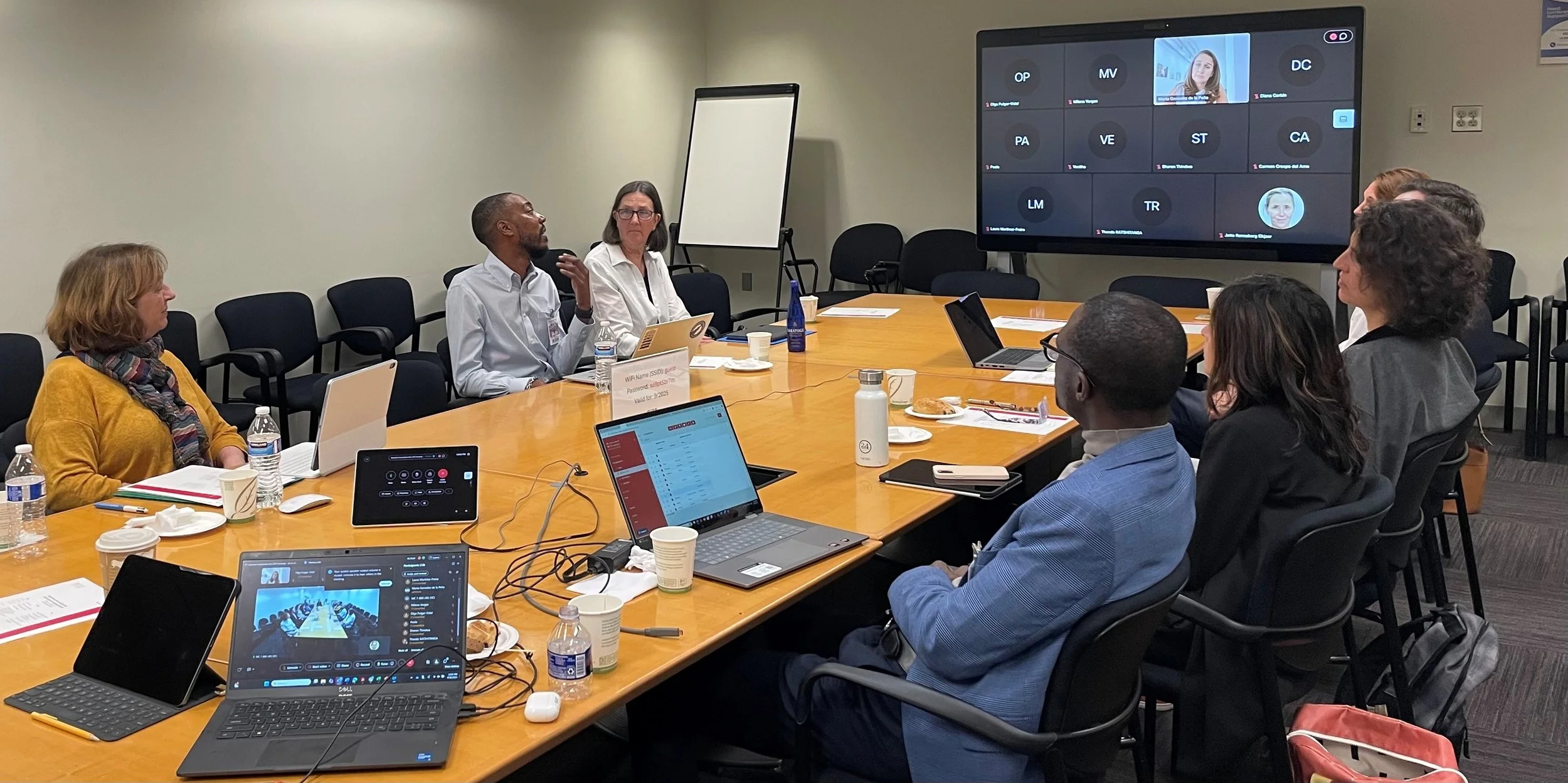
Each of MMEG’s five programs—US-Canada, South Africa, Latin America and the Caribbean, Trinity Washington University, and France—has a dedicated selection committee, which reviews applications and decides which candidates will be recommended to the Board.
Selection committees consist of about 10–20 volunteers. To ensure diversity, committee members come from different countries and academic backgrounds and have varied experience working in or with developing countries. To maintain consistency and institutional knowledge, committee members serve renewable three-year terms with mandatory cooling-off periods after serving for six years. And to ensure fresh perspectives, committees actively recruit at least three new readers each year.
Step by step
Candidates submit their applications via the Embark platform. While Embark software represents an annual capital expense for MMEG, it earns its keep by streamlining the tracking and processing of applications and their screening.
After the application deadline, selection committee members screen all submitted applications—whose information is kept in the strictest confidence—to ensure they meet the minimum requirements. Applicants must identify as a woman, be at least 25 years old, be registered in a post-secondary education institution, and come from MMEG’s country eligibility list. In addition to academic excellence and financial need, successful applicants present compelling personal narratives, clear career trajectories, and concrete plans for creating positive change in their communities, along with confidential academic and personal references.
After the initial screening process, applications undergo four review steps:
Round 1: In the first round at least three committee members read each application. Applications are given a score by each reviewer, with the Selection Committee consolidating scores and discussing any significant disparities between reviewers. The top scoring applications make it to Round 2.
Round 2: Secondary review involves three additional committee members reading each application. This round maintains the same rigorous scoring and discussion protocols to identify semi-finalists.
Round 3: Virtual interviews of the semi-finalists are conducted by at least three committee members, after which all committee members independently review the semifinalists’ applications. The full committee then meets to determine their final recommendations for Board approval.
Board presentation: Finally, the Selection Committee presents its finalists to the Board. The Board votes on the proposed slate of grantees.
Selecting the best of the best
This meticulous selection process, while time-consuming and complex, ensures that MMEG grants reach women who will maximize their educational opportunities to create lasting positive change in their communities. By maintaining such rigorous standards, MMEG continues to build a network of influential grantees working across the globe to advance women's and children's welfare in developing countries.
Through this systematic approach, MMEG transforms individual educational investments into broader social impact, demonstrating that careful selection processes can amplify the effectiveness of philanthropic initiatives.
If you’re interested in joining a selection committee, please apply at contact@mmeg.org
Click here to read an interview with Selection Committee member Ndeye Fatou Nakoulima.