Donations made with a BFCU credit or debit card will be matched by BFCU from Dec 1–31, 2025

Donations made with a BFCU credit or debit card will be matched by BFCU from Dec 1–31, 2025

Donations made to MMEG using a BankFund Credit Union (BFCU) credit or debit card will be matched by BFCU from December 1, 2025 to December 31, 2025.

Donate now

To make a donation, please click here

You are invited - December 9, at 12 noon

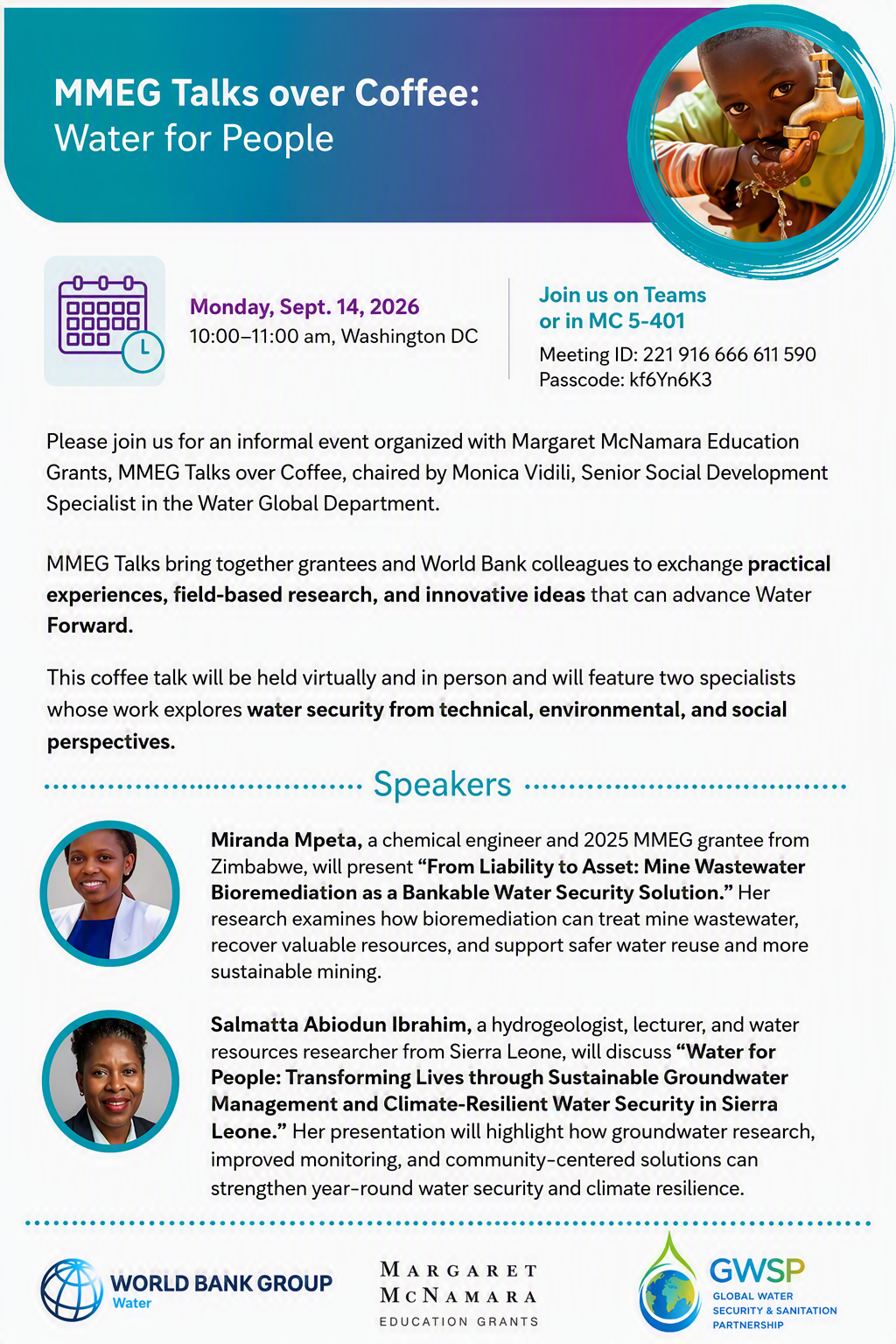
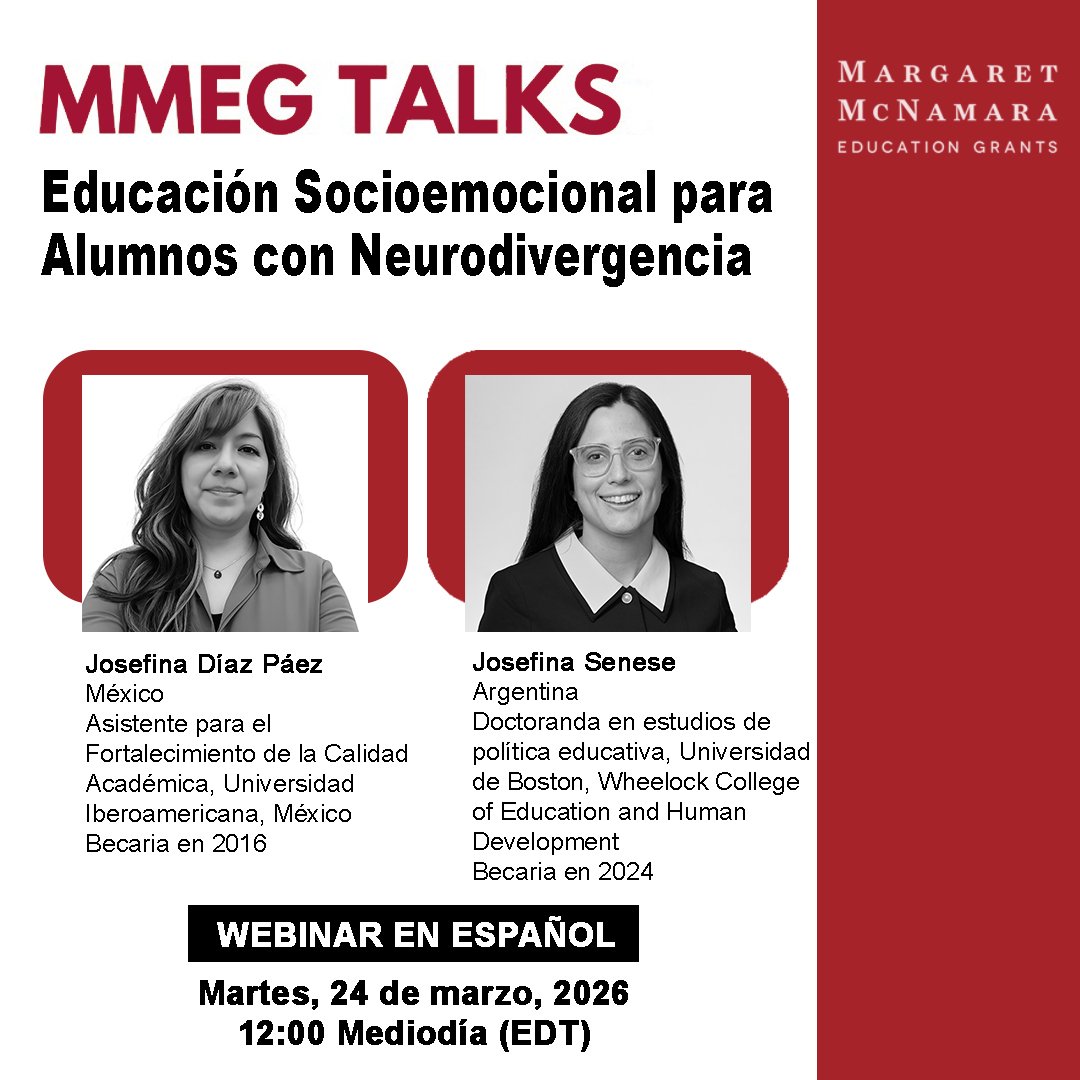
Join Us for MMEG Talks: Who Opens the Door?

Creating Youth Employment Opportunities in a Challenging World

Youth employment remains one of the most pressing global challenges. How can we create pathways for young people to thrive in today’s complex job market? In this engaging webinar, two inspiring MMEG grantees share their insights and experiences:

  • Obaa Akua Konadu-Osei (Ghana), Teaching Fellow at Maastricht University and 2021 grantee.

  • Elizabeth Shawa-Mangani (Malawi), Lecturer at the Center for Public Policy and African Studies, University of Johannesburg, and 2018 grantee.

Discover innovative strategies, real-world perspectives, and actionable ideas to empower youth and open doors to opportunity.

📅 Date: Tuesday, December 9, 2025

🕛 Time: 12:00 noon (EST)

📍 Format: Webinar

MMEG’S RIGOROUS SELECTION PROCESS

Becoming a MMEG grantee isn’t easy, nor is selecting one. The hallmark of MMEG is its rigorous selection process, which ensures that only the most exceptional candidates receive a MMEG grant.

Out of 795 applications submitted last year, 38 grantees were selected from 572 applications that made it through quality control for completeness and eligibility and went on to be carefully reviewed.

Diversity makes for better decisions

Each of MMEG’s five programs—US-Canada, South Africa, Latin America and the Caribbean, Trinity Washington University, and France—has a dedicated selection committee, which reviews applications and decides which candidates will be recommended to the Board.

Selection committees consist of about 10–20 volunteers. To ensure diversity, committee members come from different countries and academic backgrounds and have varied experience working in or with developing countries. To maintain consistency and institutional knowledge, committee members serve renewable three-year terms with mandatory cooling-off periods after serving for six years. And to ensure fresh perspectives, committees actively recruit at least three new readers each year.

Step by step

Candidates submit their applications via the Embark platform. While Embark software represents an annual capital expense for MMEG, it earns its keep by streamlining the tracking and processing of applications and their screening.

After the application deadline, selection committee members screen all submitted applications—whose information is kept in the strictest confidence—to ensure they meet the minimum requirements. Applicants must identify as a woman, be at least 25 years old, be registered in a post-secondary education institution, and come from MMEG’s country eligibility list. In addition to academic excellence and financial need, successful applicants present compelling personal narratives, clear career trajectories, and concrete plans for creating positive change in their communities, along with confidential academic and personal references.

After the initial screening process, applications undergo four review steps:

Round 1: In the first round at least three committee members read each application. Applications are given a score by each reviewer, with the Selection Committee consolidating scores and discussing any significant disparities between reviewers. The top scoring applications make it to Round 2. 

Round 2: Secondary review involves three additional committee members reading each application. This round maintains the same rigorous scoring and discussion protocols to identify semi-finalists.

Round 3: Virtual interviews of the semi-finalists are conducted by at least three committee members, after which all committee members independently review the semifinalists’ applications. The full committee then meets to determine their final recommendations for Board approval.

Board presentation: Finally, the Selection Committee presents its finalists to the Board. The Board votes on the proposed slate of grantees.

Selecting the best of the best

This meticulous selection process, while time-consuming and complex, ensures that MMEG grants reach women who will maximize their educational opportunities to create lasting positive change in their communities. By maintaining such rigorous standards, MMEG continues to build a network of influential grantees working across the globe to advance women's and children's welfare in developing countries.

Through this systematic approach, MMEG transforms individual educational investments into broader social impact, demonstrating that careful selection processes can amplify the effectiveness of philanthropic initiatives.

If you’re interested in joining a selection committee, please apply at contact@mmeg.org

Click here to read an interview with Selection Committee member Ndeye Fatou Nakoulima.

Meet selection committee member Ndeye Fatou Nakoulima

"There’s a deep sense of satisfaction in knowing that MMEG’s commitment extends beyond financial aid; it aims to inspire and motivate grantees to, in turn, give back to their communities and contribute to a greater good, creating a ripple effect of positive change.

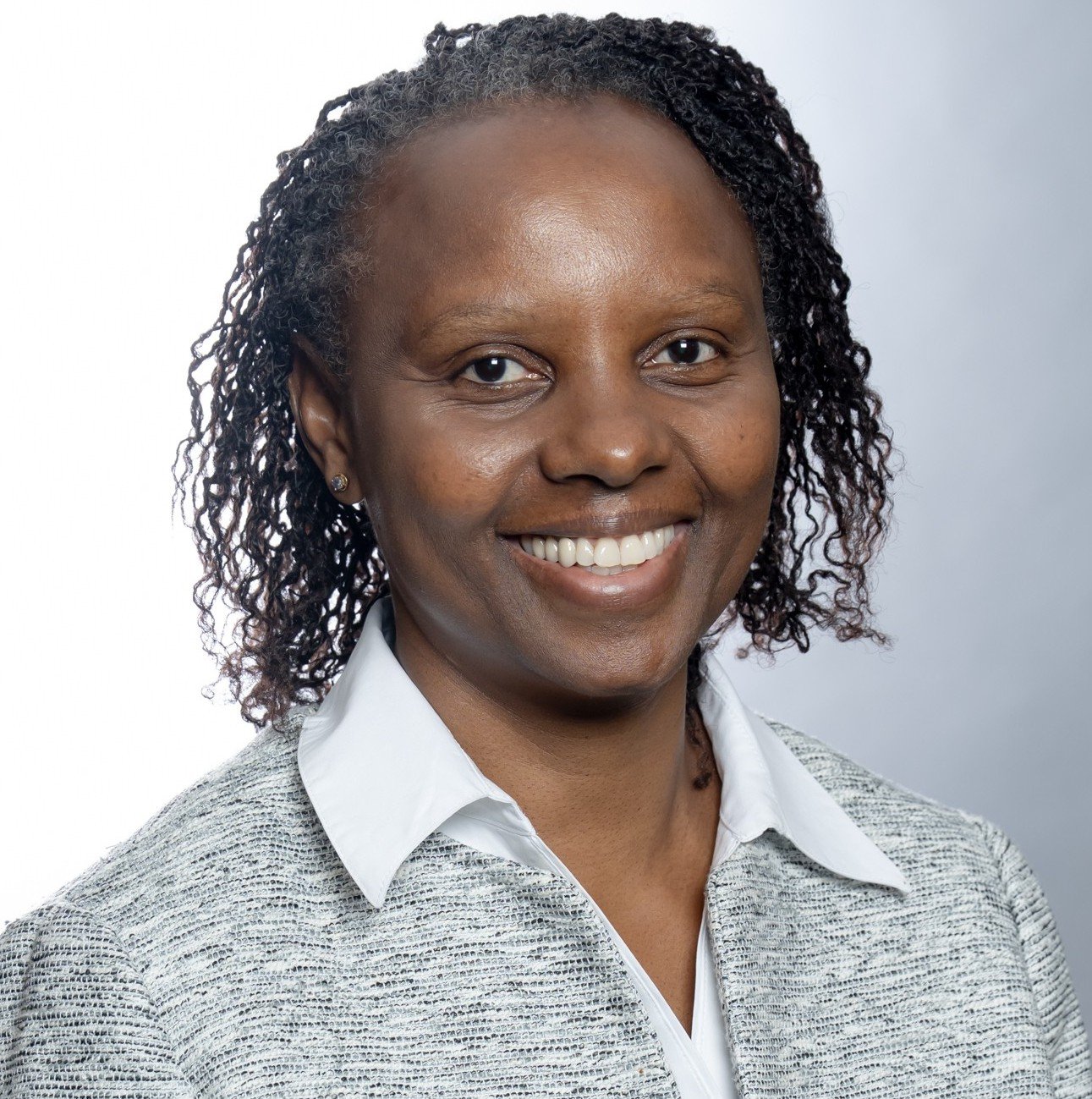
Ndeye Fatou Nakoulima, from Senegal and France, is a long-time selection committee member (or “reader”)—first with the South Africa Selection Committee and now as chair of the France Selection Committee. In this interview, she tells us about her experience. 

How did you come to volunteer as a member of the France Selection Committee. What motivates you to volunteer your time in this way?

After having had the privilege of participating in the South Africa Selection Committee, it was an immense honor for me to join the France Selection Committee. My commitment to civic action and volunteering has always been a deep conviction. I firmly believe that volunteering is a tangible and essential way to contribute positively to society, to make a real difference, and to put my skills at the service of a cause that is close to my heart. Volunteering for the France Program represents for me not only the continuation of a personal commitment, but also a chance to learn, share, and enrich myself through contact with new cultures and different challenges.

What is the most rewarding aspect of being on a selection committee?

Several aspects excite me. First, the opportunity to collaborate with dedicated committee members, each bringing their experience and dynamism. Then, the satisfaction of knowing that we will offer a significant contribution to future grantees, help that can be decisive in the realization of their life projects.

What is the most challenging part of being on a selection committee?

I would say putting aside personal bias and maintaining the greatest possible objectivity in order to select the most deserving candidates, given the very limited number of grants available.

What do you think is the best thing about the MMEG selection process? What makes it unique?

On the one hand, the diversity of our readers’ profiles offers a multitude of perspectives. On the other hand, the rigor of our processes, including several rounds of reviews and interviews with the semi-finalists, ensures that we have done our best to select the best of the best.

What do you enjoy most about meeting/talking with candidates/grantees? What do you take away from it?

It is truly a profound pleasure to witness firsthand the immense significance of this grant to the recipients. Hearing their personal stories and understanding how this support will empower them to pursue their individual journeys, whether academic, professional, or personal, is incredibly rewarding. There’s a deep sense of satisfaction in knowing that MMEG’s commitment extends beyond financial aid; it aims to inspire and motivate grantees to, in turn, give back to their communities and contribute to a greater good, creating a ripple effect of positive change.

The selection process itself is an extraordinarily inspiring experience. Each candidate we encounter is a testament to the human spirit's remarkable strength and determination. Their resilience in overcoming challenges, their unwavering engagement with their studies and communities, and their ambitious aspirations for the future are truly humbling. The applicants embody hope and potential, making the selection process not just a task, but a privilege to witness such dedication and drive.

If you are interested in volunteering as a selection committee member, please apply at contact@mmeg.org

Click here to read about MMEG’s selection committee process.

Sincere thanks to the France Program Selection Committee

Sincere thanks to the France Program Selection Committee! The France Program, MMEG’s fifth and newest program, was launched in 2023 to award grants to French-speaking women from developing countries studying in tertiary education institutions in France. The Selection Committee brilliantly fulfilled the task of shepherding the program through its third year, while ensuring a rigorous screening process that maintains MMEG’s standards for excellence. The Committee was made up of seven skilled and committed volunteers from five different countries. They brought to the selection their individual life experiences and expertise in a wide range of fields including international development, linguistics, health and pharmacology, communications, international relations, risk analysis, and human resources, as well as their collective commitment to advancing women’s education.

The Committee selected three exceptional women studying in the areas of finance, plant science and engineering, and intelligent communications systems, to receive MMEG grants.

We thank the France Program Selection Committee for its diligence and excellent selection, and for furthering MMEG’s mission to improve the lives of women and children by supporting the higher education of exceptional women.

Sincères remerciements au Comité de Sélection du France Program ! Le France Program, le cinquième et plus récent programme de bourses MMEG, a été lancé en 2023 pour accorder des bourses à des femmes francophones, provenant de pays en développement, qui étudient dans des établissements d'enseignement supérieur en France. Le Comité de Sélection a brillamment rempli la tâche de guider le programme à travers sa troisième année, tout en garantissant un processus de sélection rigoureux qui maintient les normes d'excellence de MMEG. Le comité était composé de sept bénévoles douées et engagées, originaires de cinq pays différents. Elles ont apporté à la sélection leurs expériences de vie individuelles et leur expertise dans un large éventail de domaines, notamment le développement international, la linguistique, la santé et la pharmacologie, la communication, les relations internationales, l'analyse des risques et les ressources humaines, ainsi que leur engagement collectif à faire progresser l'éducation des femmes.

Le comité a sélectionné, pour recevoir des bourses MMEG, trois femmes exceptionnelles étudiant dans les domaines de la finance, de la génétique et science des plantes, et des systèmes de communication intelligents.

How Women Leaders Are Tackling Poverty — One Layer at a Time

Insights from the latest MMEG Talks at the World Bank

By Lindsey Chang

“We cannot be serious about poverty reduction if we are not serious about inclusion. And when we think about inclusion, the key group to fully include in economic activities is female participation.”
 — Jorge Familiar, Vice President and Treasurer, World Bank

According to the World Development Report on Gender, “Gender equality is not only the right thing to do from a moral point of view, but it also makes absolute sense from an economic point of view.”

At the latest MMEG Talks, held at the World Bank, this guiding principle set the tone for an inspiring conversation on Grassroots Poverty Reduction: The Impact of Women Leaders on the Ground.

Two remarkable MMEG grantees—Anamika Priyadarshini (India) and Monica Brenda Longwe (Malawi)—shared powerful reflections on the barriers women face and the unique strengths women leaders bring to the fight against poverty.

Unpaid, Invisible, and Undervalued — Yet Driving Change

For Anamika Priyadarshini, who works with Passing Gifts, a subsidiary of Heifer International, one of the most pervasive challenges is the non-recognition of women’s economic contributions.

If you deny women’s economic contributions, you are denying their very existence,” Anamika stated.

Across Asia, women perform 70% of agricultural work, yet they are still rarely recognized as farmers. Add to this the burden of unpaid domestic and care work—women in India spend far more time on this than men—and it becomes clear how these invisible contributions limit women’s opportunities for education, training, and paid employment. Social norms also restrict women’s access to resources and keep them trapped in cycles of poverty.

Anamika’s commitment to dignity, respect, and non-judgmental approaches was shaped early on by her mother’s example as a community social worker. Later, her MMEG grant allowed her to return to India to conduct archival research on 19th-century home-based women workers in Bihar for her PhD, deepening her understanding of the historical roots of gendered labor.

“MMEG enabled me to stay true to my passion, to gather the insights I needed, and to turn my research into actionable change.”

The Missing Link: Mental Health and Poverty

For Monica Brenda Longwe, now a social and behavior change communication specialist with South Africa’s National Department of Health TB Control Program, a significant missing link in poverty frameworks is mental health.

“Poverty and mental health are two sides of the same coin. One begets the other.” Monica stated.

Monica spoke candidly about her personal journey. During her master’s studies, a donor withdrew funding, and her life was further upended by an abusive marriage. Later diagnosed with depression and anxiety, she was hospitalized. These experiences revealed to her just how deeply mental health struggles and poverty reinforce each other, especially for women.

Out of this journey, she co-founded The Fight Club Initiative (FCI), a women-led empowerment collective in South Africa and Malawi that supports survivors of gender-based violence and emotional abuse, with a focus on mental well-being, economic independence, and legal protection.

Building Better Models for Poverty Reduction

Both panelists stressed the need to move beyond data and design policies that truly work for women.

“We have tons of policies. But are they effective? Are they scalable? Are they centered on women’s realities?” Anamika said.

She also emphasized the importance of investing in social capital, and in care and child care support to make work accessible to women.

Monica called for specific interventions for women in Malawi, ones that acknowledge the unique burdens and challenges women face.

“From girlhood, women should know what love looks like—and what it does not.”

Leadership at Every Level

Marion Subah, MMEG’s very first grantee, reminded the audience that leadership is needed both at the grassroots and in ministries and institutions to make poverty reduction strategies more inclusive and effective.

What’s Next? Join the Conversation

The MMEG Talks made one thing clear: poverty reduction must be gender-aware, inclusive, and holistic. Mental health, recognition of unpaid work, social capital, and policy accountability are essential to unlocking the leadership potential of women on the ground.

Watch the MMEG TALKS here:

Thank you to the MMEG Latin America and Caribbean Selection Team 2025

Thank you to the Latin America and Caribbean (LAC) Selection Committee for completing the daunting task of selecting 10 grantees from a long list of exceptional applicants. The value of your selfless commitment cannot be overstated. 

LAC Program Selection Committee members drew on their valuable experience and exceptional qualifications to select women who faced enormous challenges: poverty, gender-based violence, conflict, unequal access to employment and education, and limited economic participation and representation in political and corporate leadership.

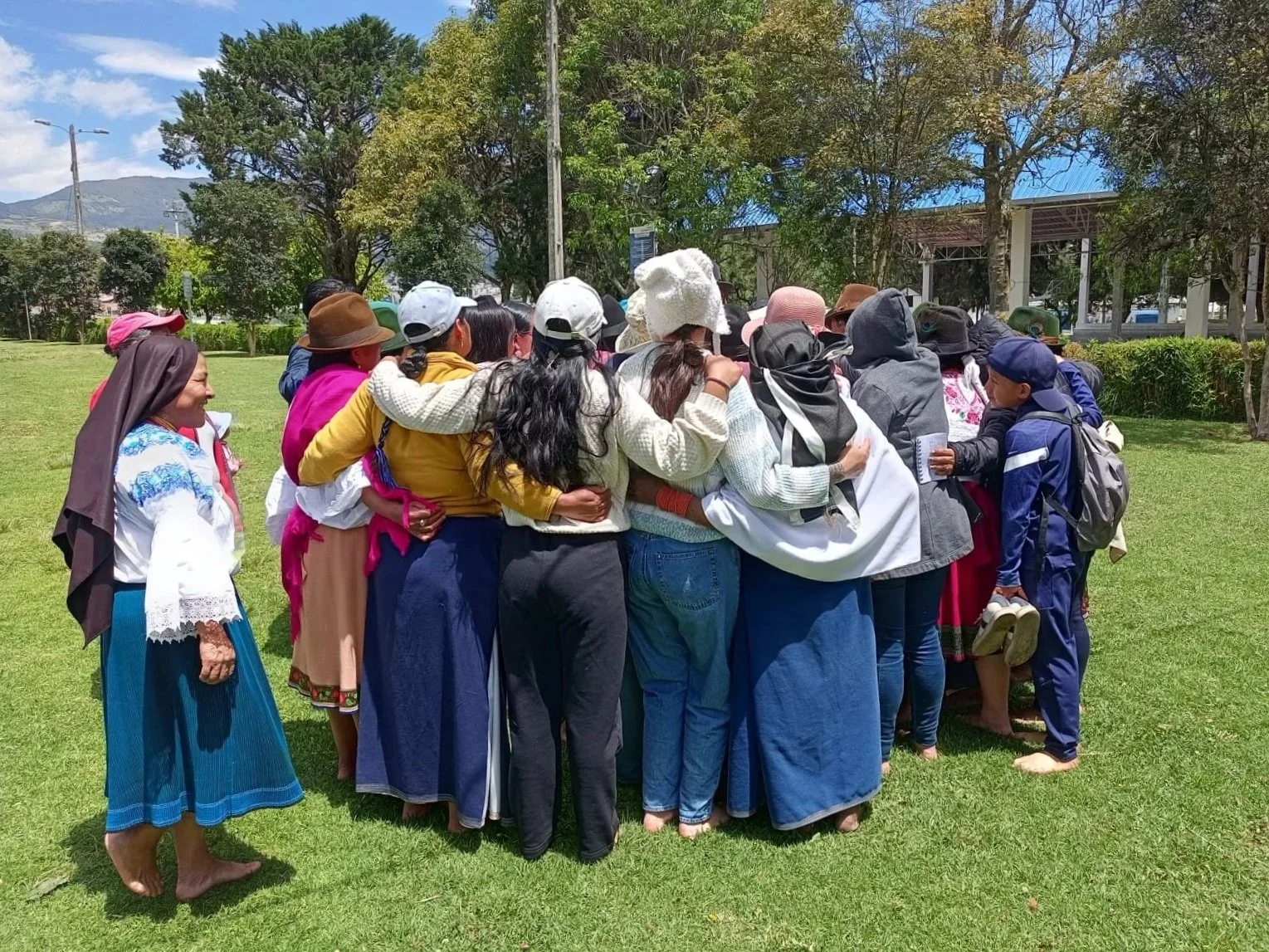
The women they selected to receive a MMEG grant stand at the intersection of women’s rights, environmental justice, and respect for indigenous cultures, while endeavoring to improve the current development work supporting women. They are fighting to build a future where women not only have access to resources and support but can also exercise their leadership on making decisions that affect their lives and environment. And they are paving the way for so many other women, both present and future, to feel seen, recognized, and appreciated. 

MMEG is an important part of that journey, supporting higher education for women who inspire others as they shape a better future for not only women and girls but for all—because increasing gender equality leads to fairer, less corrupt societies and improvements in economic growth and environmental sustainability. 

Thanks again to the Committee members for choosing to be a beacon of hope by being part of the MMEG selection process!


Gracias al Comité de Selección de Latinoamérica y el Caribe (LAC) por completar la abrumadora tarea de seleccionar a 10 becarias de una larga lista de aplicantes excepcionales. No se puede exagerar el valor de su compromiso desinteresado.

Los miembros del Comité de Selección del Programa de LAC se basaron en su valiosa experiencia y calificaciones excepcionales para seleccionar a mujeres que enfrentan enormes desafíos: pobreza, violencia de género, conflictos, acceso desigual al empleo y la educación, y participación económica y representación limitadas en el liderazgo político y empresarial.

Las mujeres que seleccionaron para recibir una beca de MMEG se encuentran en la intersección de los derechos de las mujeres, la justicia ambiental y el respeto por las culturas indígenas, al tiempo que se esfuerzan por mejorar el trabajo para el desarrollo que apoya a las mujeres en la actualidad.  Luchan por construir un futuro en el que las mujeres no solo tengan acceso a recursos y apoyo, sino que también puedan ejercer su liderazgo en la toma de decisiones que afectan sus vidas y al medio ambiente. Y están preparando el camino para que muchas otras mujeres, tanto presentes como futuras, se sientan vistas, reconocidas y apreciadas. 

MMEG es una parte importante de ese viaje, ya que apoya la educación superior para las mujeres que inspiran a otras a medida que dan forma a un futuro mejor, no solo para las mujeres y las niñas, sino para todos, porque el incremento en la igualdad de género conduce a sociedades más justas y menos corruptas, y a mejoras en el crecimiento económico y la sostenibilidad ambiental.

Gracias de nuevo a los miembros del Comité por elegir ser un faro de esperanza al ser parte del proceso de selección de MMEG!

Thank you to the MMEG Trinity Washington University Selection Team 2025

Many thanks to Trinity Washington University Program 2025 Selection Committee

MMEG’s Board of Directors is very grateful to members of the Trinity Washington University Program Selection Committee for their dedication and commitment to ensuring the success of the program. The Trinity Program is unique among MMEG’s programs in that its grants are open to all Trinity's women students, irrespective of nationality and immigration status. The program was established in 2016 to acknowledge MMEG’s location in Washington DC and it is hoped that MMEG recipients will continue to contribute to the local community. 

The Selection Committee is made up of nine members, from six different countries, with varied backgrounds and a range of experience: international development, human development, economics, nursing, sociology, food security, education, business management, and financial markets. Their collective expertise has been invaluable in overseeing the selection process. 

MMEG awarded three grants to Trinity students this year; the new grantees are studying in the fields of public health, early childhood education, and nursing. Through their statements and professional achievements, these exceptional women demonstrate ambition, vision, and perseverance in the face of adversity. They represent the values that MMEG strives to support and will doubtless be able to improve the lives of people in their communities in Washington, DC. 

The Selection Committee’s diligence ensured the success of the selection process, presenting three exceptional candidates to the MMEG Board. We congratulate the volunteers on the positive results of their hard work, and we look forward to future selection cycles.