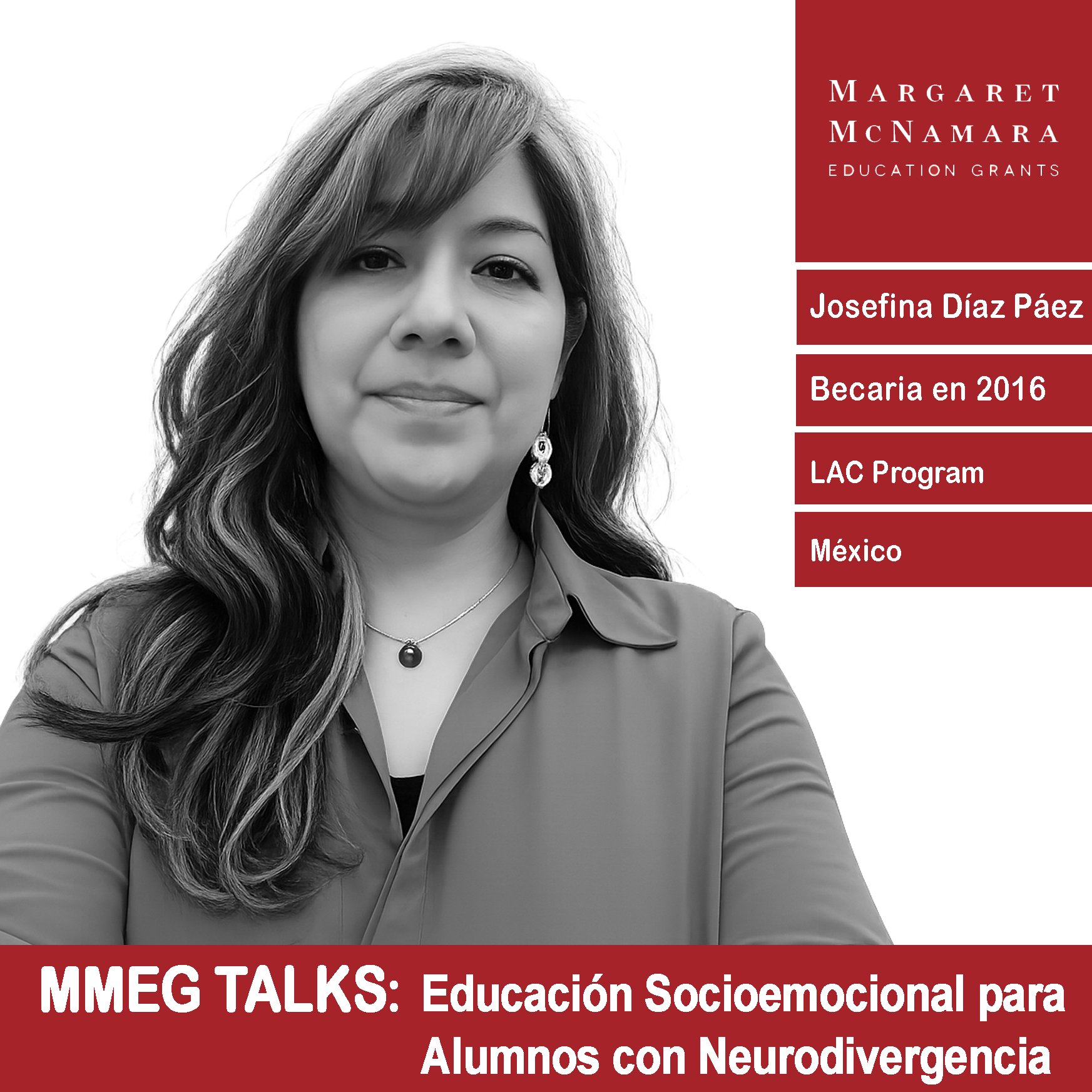
Josefina Díaz

Josefina Díaz, mamá, Mexicana, cursó la maestría en investigación y desarrollo de la educación, la especialidad en integración educativa y la especialidad en educación socioemocional, en la Universidad Iberoamericana, México. Posteriormente, la certificación en Mindfulness por Mindfulness Without Borders.

Por más de 12 años trabajó en Centro de Educación y Reencuentro Comunitario, Asociación Civil, con niños y familias en condiciones de vulnerabilidad y rezago educativo, en el Estado de México. Hizo una pausa, entre otros motivos para continuar con sus estudios de Posgrado. Actualmente participa en Fundación CTDUCA, con jóvenes con Síndrome Down, ubicada en Ciudad de México.

Uno de los temas que más apasiona a Josefina es poder ofrecer herramientas socioemocionales a jóvenes, que les permita vivir mayor bienestar emocional.

Josefina Díaz, a Mexican mother, studied a master’s degree in research and development of education, the specialty in educational integration and the specialty in socio-emotional education, at the Universidad Iberoamericana, Mexico. Subsequently, she obtained the mindfulness certification by Mindfulness Without Borders.

For over 12 years, she worked at the Community Center for Education and Reencounters, Civil Association, with children and families in conditions of vulnerability and educational lagging, in the State of Mexico. She interrupted her work to continue with her graduate studies, among other reasons. She currently participates in the CTDUCA Foundation in Mexico City, assisting young people with Down Syndrome.

One of the topics that Josefina is most passionate about is being able to offer socio-emotional tools to young people, which will allow them to live with an improved emotional well-being.

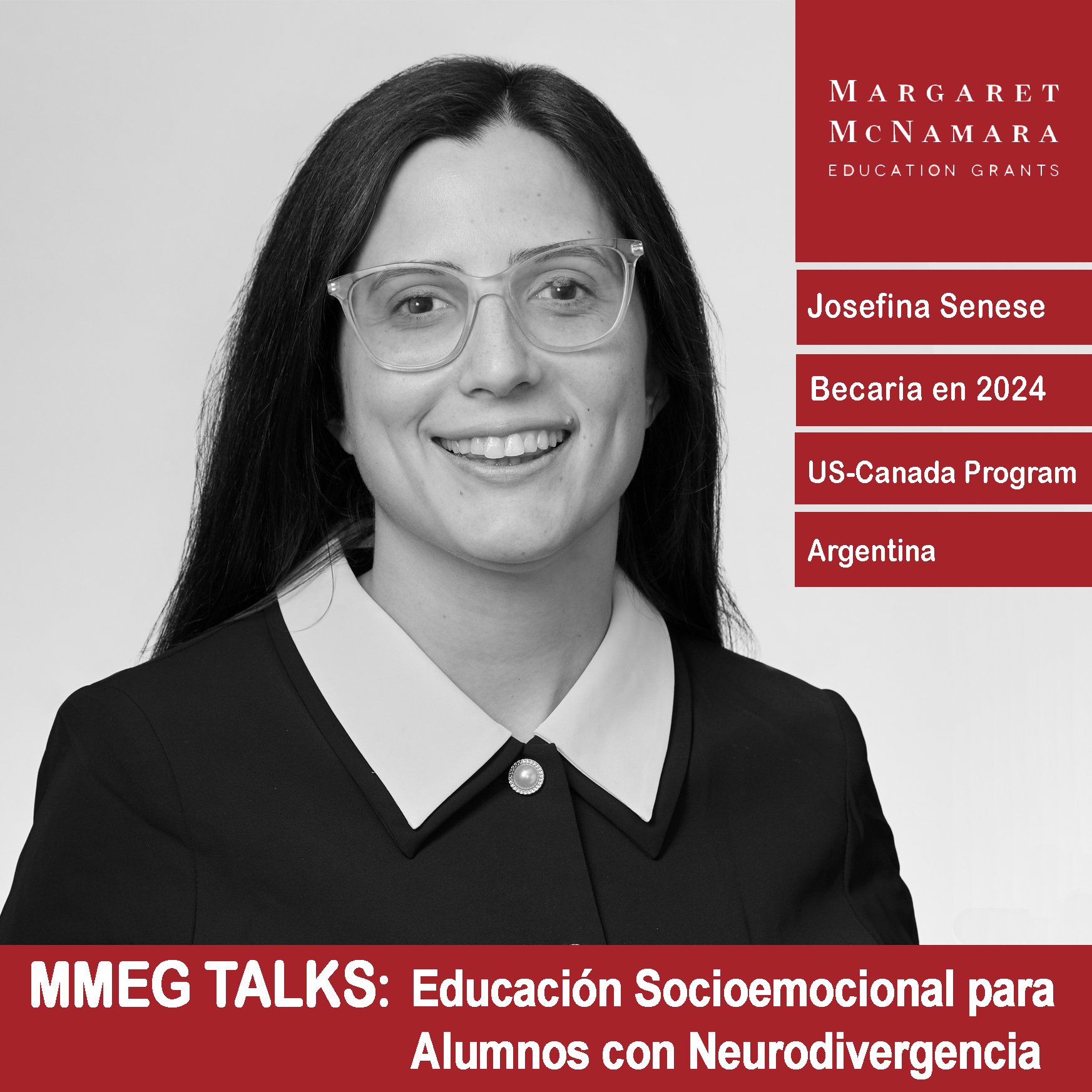
Josefina Senese

Josefina Senese, de Argentina, está cursando un doctorado en política educativa en la Universidad de Boston, donde también es asistente de investigación en el Centro de Política Educativa Wheelock (Wheelock Educational Policy Center).  

Las diversas experiencias de voluntariado de Josefina —incluyendo la impartición de sesiones gratuitas de tutoría de Inglés y matemáticas a estudiantes con discapacidades leves, su investigación sobre políticas educativas que afectan a estudiantes mapuches en Chile y el apoyo a políticas de democracia y desarrollo social en toda América Latina— ponen de manifiesto su amplio interés por la equidad educativa y su compromiso por aprovechar sus habilidades para el beneficio social.

Sus proyectos anteriores enfocados en los desafíos a los que se enfrentan los niños con discapacidad en entornos educativos incluyen colaboraciones con entidades locales de Ghana y Uganda, demostrando un enfoque colaborativo y respetuoso en la investigación, y trabajando con el Departamento de Educación de Indiana sobre el impacto de entornos inclusivos en los estudiantes con discapacidad.

Josefina Senese, from Argentina, is pursuing a doctorate in education policy at Boston University, where she is also a research assistant at the Wheelock Educational Policy Center.

Josefina’s diverse volunteer experiences—including providing free English language and math tutoring sessions to students with mild disabilities, conducting research on education policies affecting Mapuche students in Chile, and supporting democracy and social development policies across Latin America—highlight her broad interest in educational equity and her commitment to leveraging her skills for societal benefit.

Her past projects addressing the challenges faced by children with disabilities in educational settings include partnerships with local entities in Ghana and Uganda, showcasing a collaborative and respectful approach to research, and working with the Indiana Department of Education on the impact of inclusive settings on students with disabilities.

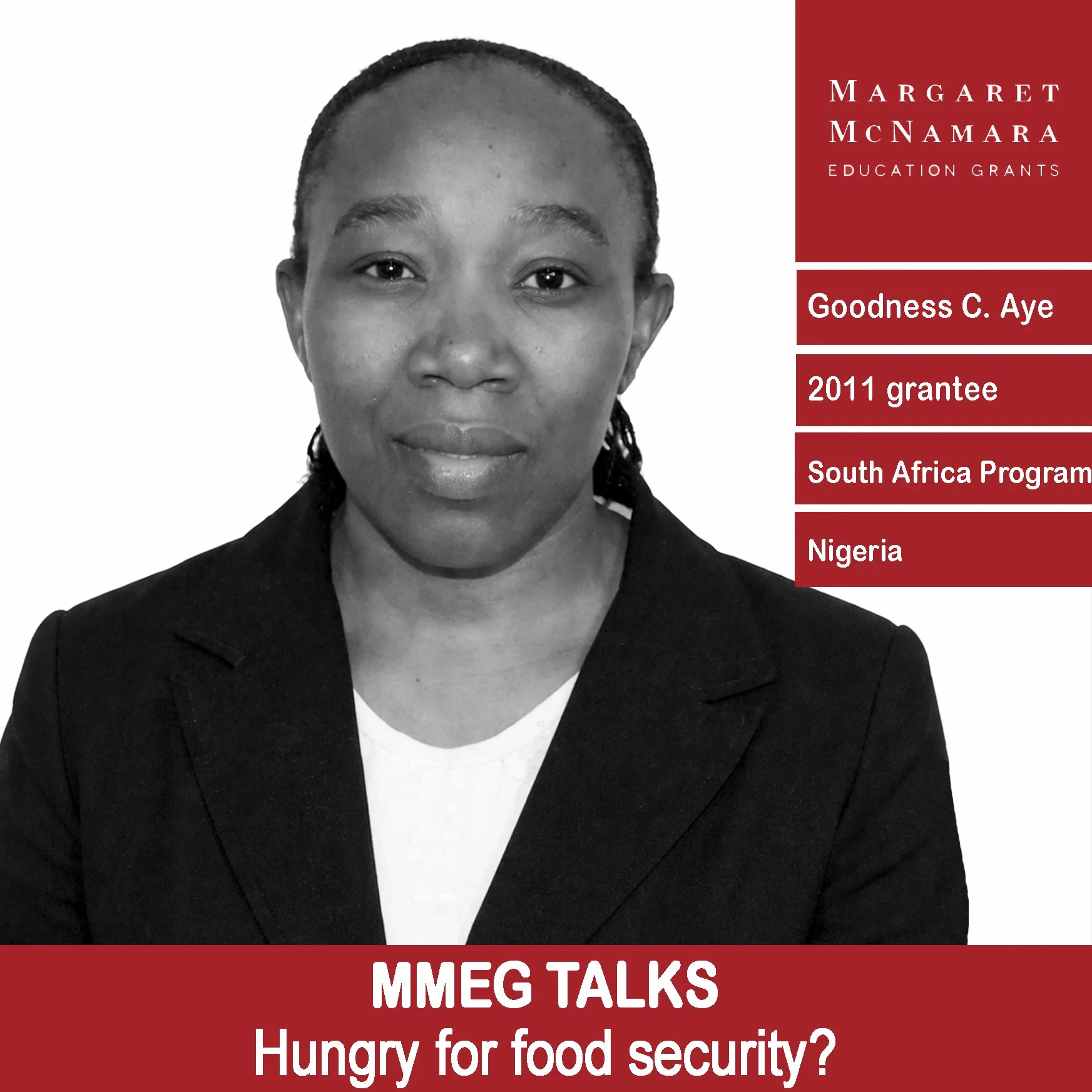
Goodness Chioma Aye

Goodness Chioma Aye, a 2011 MMEG grantee from Nigeria, is a professor of agricultural economics with over two decades of experience in applied research, teaching, and economic policy analysis focused on food security, climate change, and welfare outcomes. She holds a PhD from the University of Pretoria. Her  work examines the links between agricultural productivity, food prices, environmental change, and macroeconomic and policy uncertainty, with the objective of generating evidence to inform inclusive and resilient development strategies. Goodness is affiliated with the University of Pretoria, Federal University of Agriculture Makurdi, and Landmark University Omu-Aran, where she continues to advance research and policy engagement on sustainable food systems, climate resilience, and economic development.

Goodness has led and contributed to large, externally funded research projects supported by international partners and has published extensively in high-impact international journals. She has supervised more than 70 postgraduate students at master’s and PhD levels nationally and internationally, contributing significantly to capacity building in applied econometrics and policy-oriented agricultural research.

Goodness has held research and fellowship appointments with global development institutions including UNU-WIDER and UNESCO ANSTI–DAAD Fellowship. 

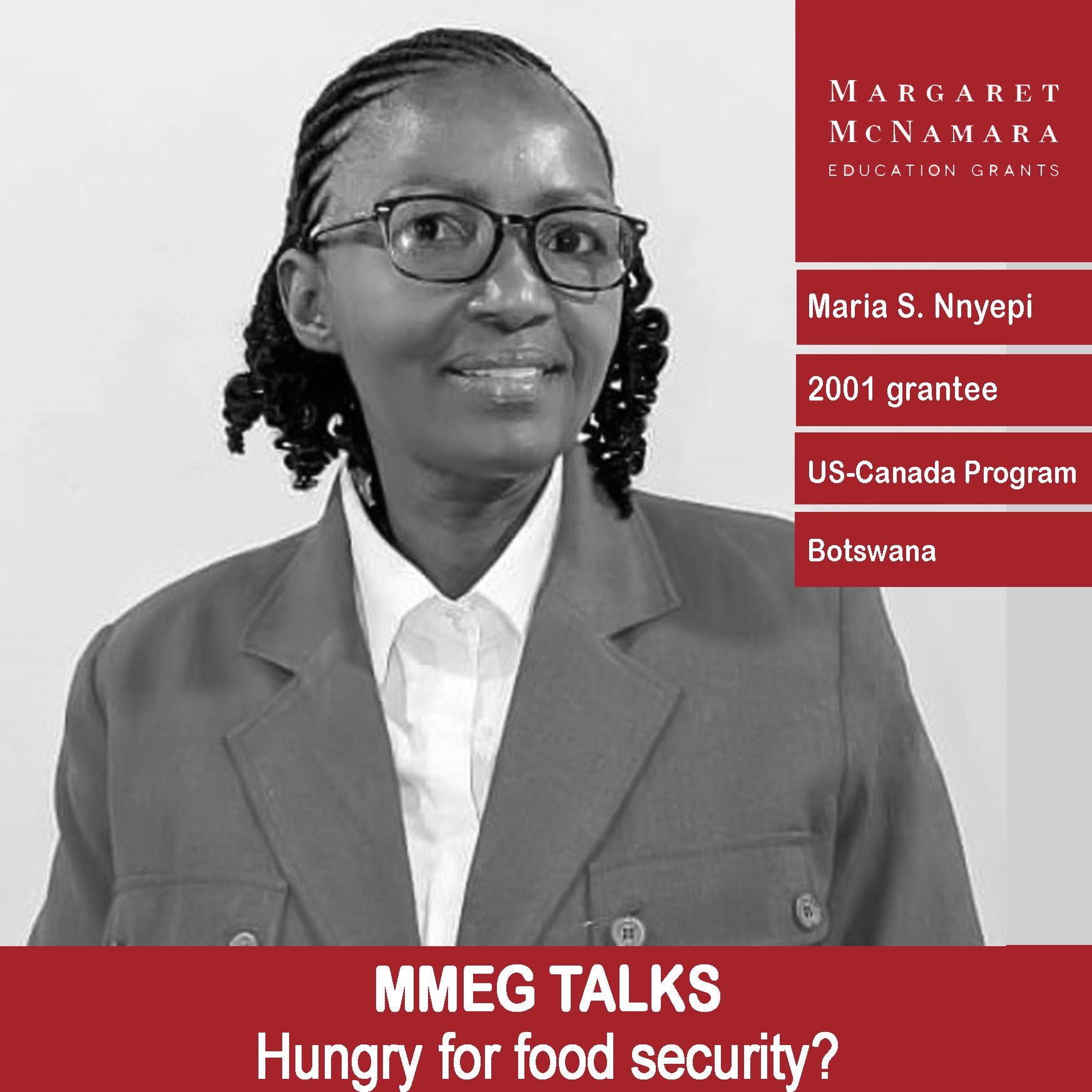
Maria S. Nnyepi

Maria S. Nnyepi, a 2001 MMEG grantee from Botswana, is a nutritionist, scholar, and investigator whose work has influenced food and nutrition policy and practice in Botswana. She has led multidisciplinary consultancy teams whose reports supported the development of the Food-Based Dietary Guidelines for Botswana and the formulation of the National Nutrition and Food Security Policy. She also led a team that completed the Child and Adolescent Overweight and Obesity Landscape Analysis for Botswana. Her research and consultancy works have strengthened national efforts to improve nutrition outcomes across the population.

Maria has served in several academic leadership roles, including Acting Deputy Vice Chancellor (Teaching and Learning), Dean, and Deputy Dean, contributing to strategic leadership, academic development, and capacity building across disciplines at the University of Botswana. Maria has published in accredited journals, supervised and examined a number of graduate students across Africa. She has also participated in national and regional nutrition and public health policy discussions. Her work reflects a longstanding commitment to academic development and to improving community wellbeing through nutrition research, training, and service.

Maria holds a PhD and an MS in human nutrition from Michigan State University and a BS in dietetics from the University of Missouri-Columbia.  

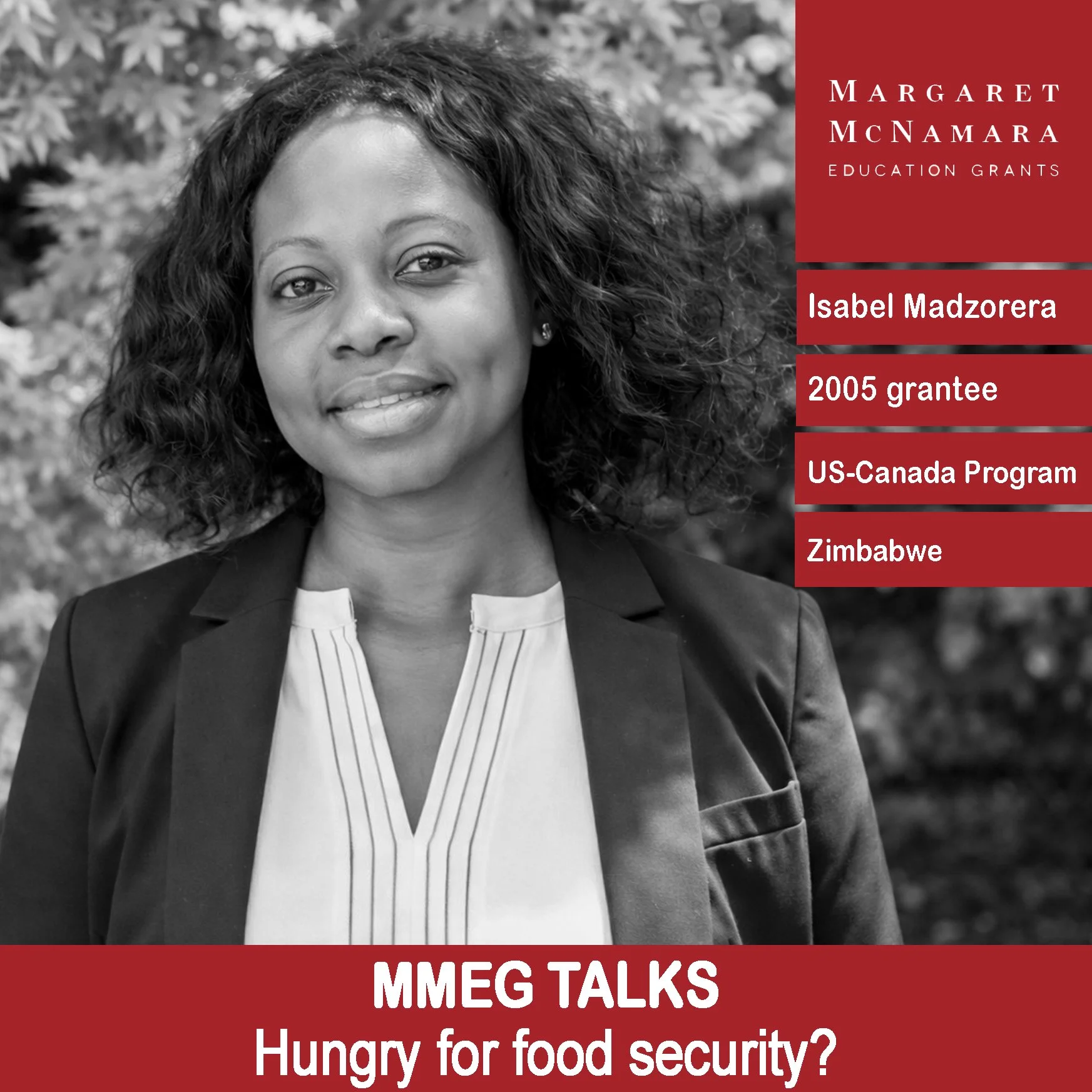
Isabel Madzorera

Isabel Madzorera, a 2005 MMEG grantee from Zimbabwe, is an assistant professor of public health nutrition at the University of California, Berkeley, in the Division of Community Health Sciences. Isabel is a nutrition epidemiologist interested in the intersection of food systems, climate change, diets, and maternal and child nutrition. Her research uses advanced nutrition epidemiologic methods to examine diet quality and ultra-processed food consumption as key modifiable risk factors for poor maternal and child health outcomes globally, including their contributions to non-communicable diseases, such as diabetes and hypertension, across diverse contexts. 

Isabel received her doctoral training in nutritional epidemiology from the Harvard School of Public Health, a master’s degree in food policy and applied nutrition from Tufts University, and a bachelor's degree in nutrition from the University of Zimbabwe.

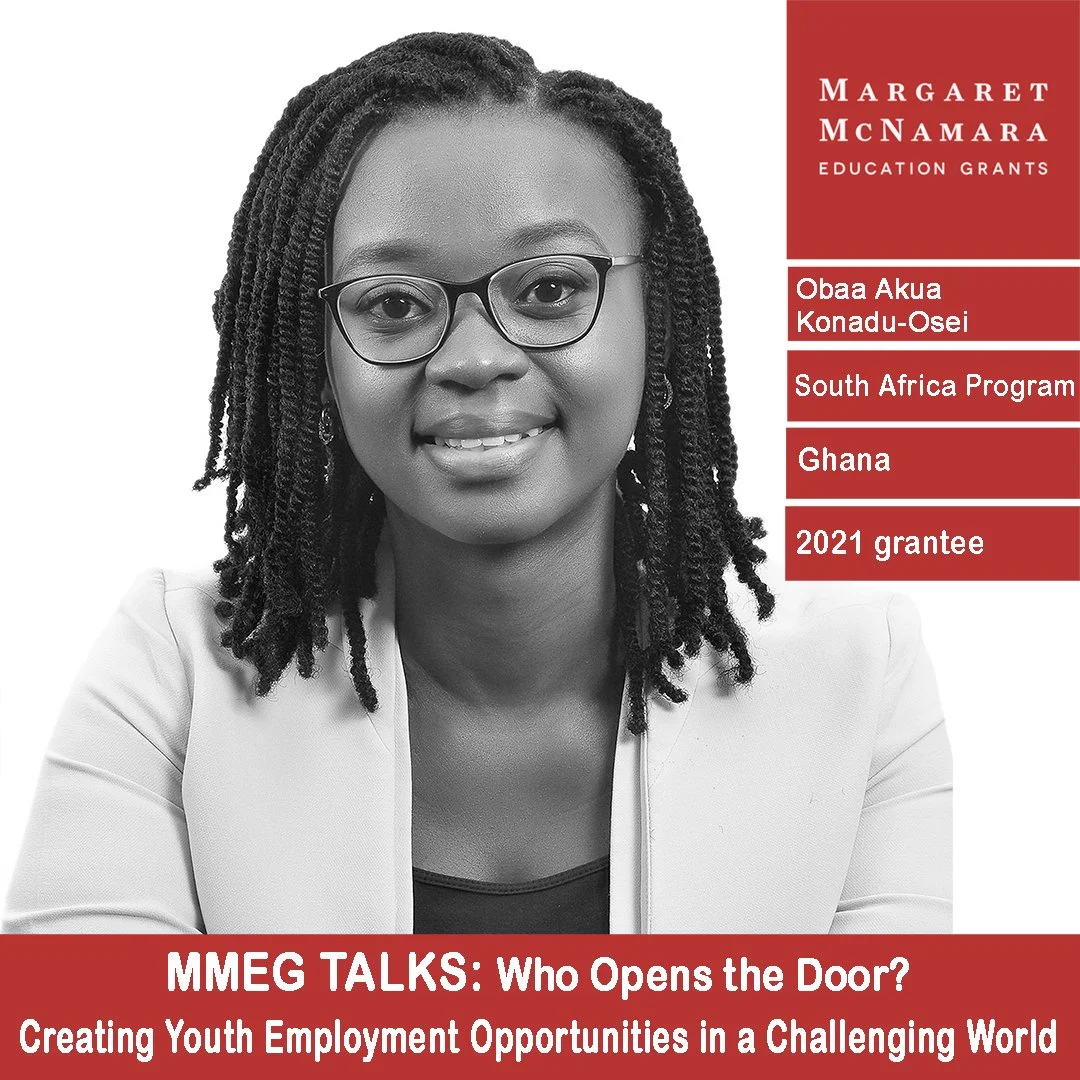
Obaa Akua Konadu-Osei

Obaa Akua Konadu-Osei, a 2021 MMEG grantee from Ghana, is an international development scholar and practitioner focusing on youth development, women’s empowerment, and human capital development in Africa. 

Obaa holds a PhD in business management and administration from the Stellenbosch University and an MSc in development planning and management from University College London, and has over 12 years’ experience across academia, civil society, and multilateral organizations. 

She has built an extensive African and international network through her youth and advocacy volunteer work, including serving as a member of the UN Generation Equality Youth Task Force and the World Economic Forum Global Shapers Community.

Obaa brings to this MMEG Talks a combination of rigorous evidence and grounded insights from researching and working alongside young people, governments, and development partners to co-create inclusive pathways into dignified work for Africa’s youth.

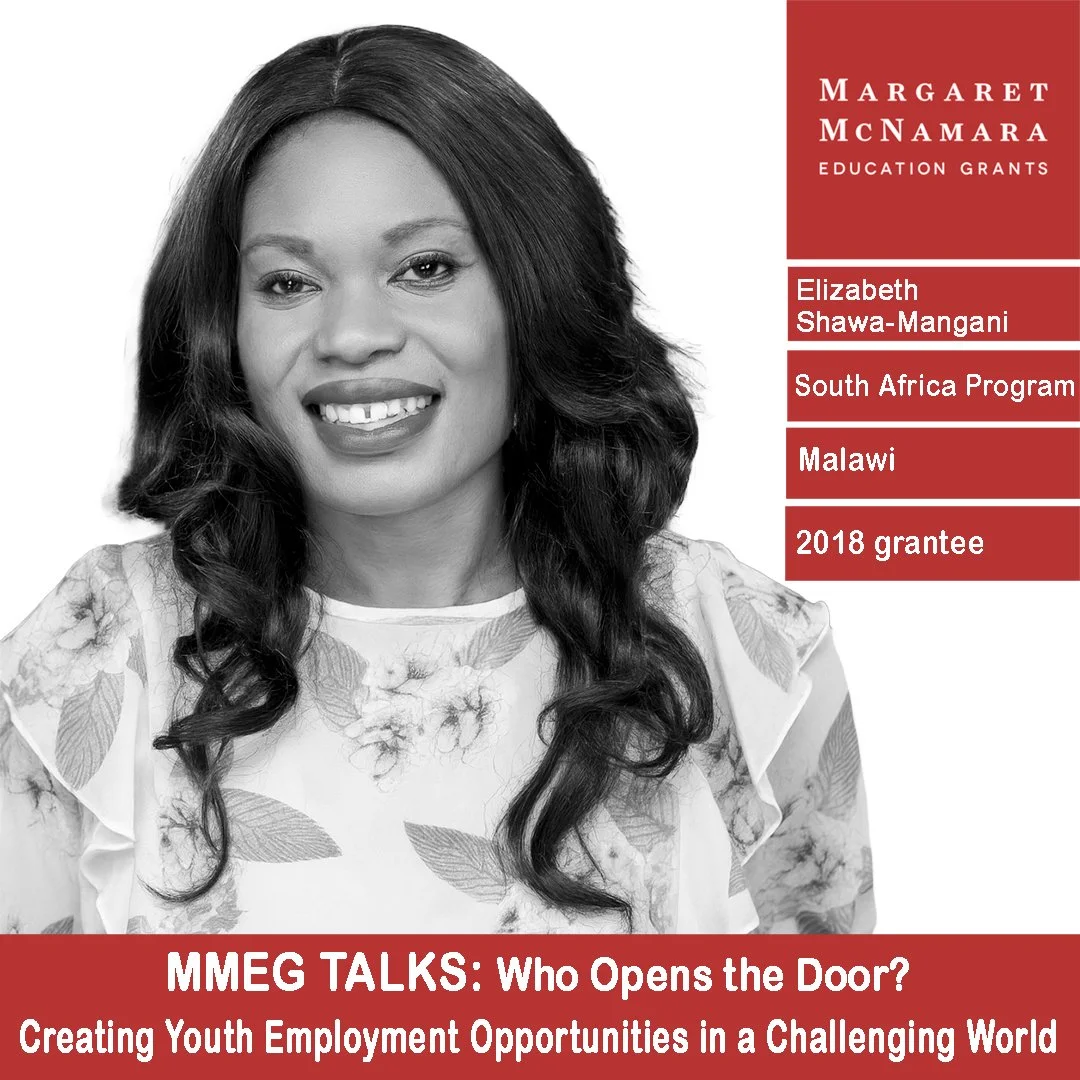
Elizabeth Shawa-Mangani

Elizabeth Shawa-Mangani, a 2019 MMEG grantee from Malawi, is a lecturer in strategic diplomacy and research practice at the University of Johannesburg’s Johannesburg Business School, Centre for Public Policy and African Studies, and a research fellow at the University of Pretoria, where she is working with the Faculty of Humanities on a development studies project titled "the Youth Unemployment Crisis, Land Reform, and Agriculture." Elizabeth is an accomplished development practitioner, with a 15-year track record in a career that spans community development, academia, research, and youth activism. 

A youth advocate on various platforms, including the African Democracy Forum, Mandela Institute of Development Studies (MINDS), World Youth Forum, and African Youth Networks Movement (AYNM), Elizabeth has published in reputable peer-reviewed journals and national newspapers on cross-cutting youth and development issues.

Anamika Priyadarshini

Anamika Priyadarshini, a 2008 MMEG grantee from India, holds a PhD in Global Gender Studies from SUNY at Buffalo. Balancing academia and practice, she has helped rural women secure fair wages, improved working conditions, and sustainable economic opportunities. Now at Heifer International’s subsidiary, Passing Gifts, she facilitates diversification of women farmers’ agricultural practices.

Read more here

Monica Brenda Longwe

Monica Brenda Longwe, a 2019 grantee from Malawi, holds a Master of Public Health from University of the Witwatersrand with a specialization in social and behavior change communication. She is a public health specialist with a strong background in public health research, health communication, and capacity strengthening and experience throughout sub-Saharan Africa.

Read more here

Maletsabisa Molapo

Maletsabisa Molapo, a 2014 MMEG grantee from Lesotho, holds a PhD from the University of Cape Town, where she also received a master’s degree. Since then, she has become dedicated to the advancement of technology to improve quality of lives.

Maletsabisa is the Executive for Research and Innovation at Telkom. She leads research and development (R&D) strategy, industry and academic partnerships, and research focused on customer experience, sensor and AI solutions, and data-driven connectivity.

Previously at IBM Research, Maletsabisa was a research manager for AI and quantum computing, where she led research projects and publications in natural language processing (NLP) and user experience (UX). Maletsabisa holds several IBM patents for inventions that improve the quality of life for people in different circumstances, including NLP for language learning, AI for infant safety monitoring, sensor-based navigation for visually impaired individuals, and adaptive UX and generative AI for chronic health treatment adherence.

Earlier in her career, Maletsabisa worked as an engineer in telecommunications, a developer for telephony systems (the technology that enables people to talk through devices), a computer science lecturer, and a research scientist specializing in NLP, digital health, and human-centered AI.

As a testament to her immense capability, she has received multiple fellowships, research grants, and awards for innovation and social impact from organizations like Google, Nokia Research, the Mandela Rhodes Foundation, Hasson Plattner Institute, the Schlumberger Foundation, and the SA Department of Science and Technology.

Priscilla Maliwichi

Priscilla Maliwichi, a 2019 MMEG grantee from Malawi, is a lecturer in information and communication technologies (ICT) and coordinator for postgraduate studies in the Department of Computer Science and Information Technology at the Malawi University of Science and Technology. She also serves as coordinator of the Centre for Artificial Intelligence and STEAM. Priscilla is passionate about promoting STEAM and the use of emerging technologies such as AI, IoT and Blockchain among girls in secondary school.

Priscilla holds a BSc in information technology and an MSc in Informatics from the University of Malawi, along with a PhD in information systems from the University of Cape Town. Her research interests include ICT for Development, health informatics, artificial intelligence, internet of things (iOt) and cybersecurity. She is a peer reviewer for several journals, including the Health Informatics Journal, PLOS Digital Health, Frontiers in Digital Health, Frontiers in Health Services, and Frontiers in Health Services.

Patience Akih

Patience Akih, a 2012 MMEG grantee from Cameroon, holds a BA and a master’s in education and an PhD in computer-integrated education and is completing a post-doctoral fellowship in education and learning at North-West University in South Africa.

Patience promotes self-directed learning so that students find education engaging and self-enlightening. She combines traditional classroom teaching with technology and online resources and cooperative or group learning. She promotes an atmosphere where students create or construct meaning actively through exploration, reflection, and problem-solving, known constructionist learning

 Patience has taught information and communication technology (ICT) for over a decade and is currently working on developing self-directed learning skills through problem-solving for first-year education students and their lecturers in the University of Pretoria.

In addition, from 2016 to 2018, she helped expand cultural and academic understanding between South Africa and Japan at the Centre for Japanese Studies at the University of Pretoria.

Patience believes passionately in her methods and the value of technology in learning and gives lectures, talks, and keynote speeches on this topic whenever possible.

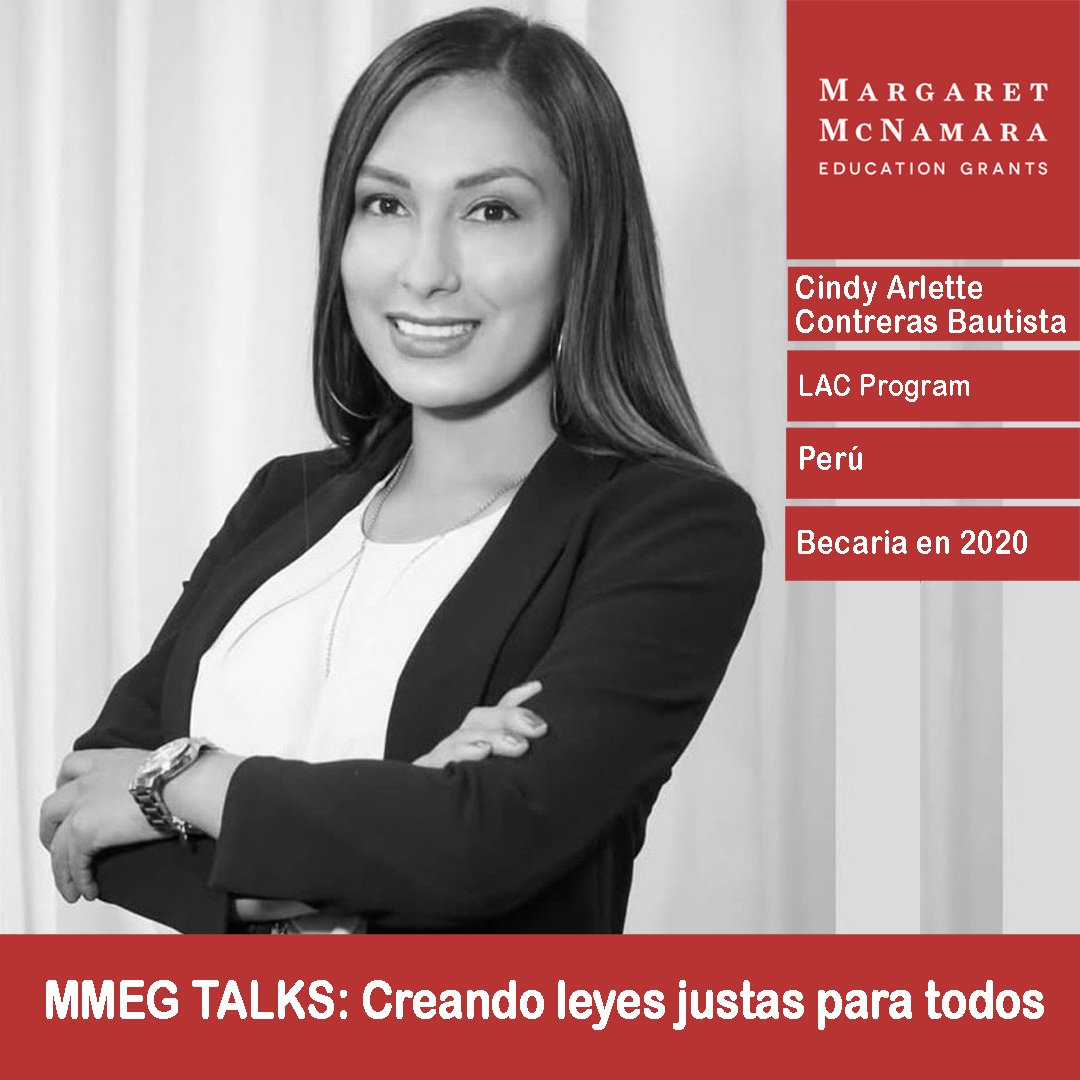
Cindy Arlette Contreras Bautista

Cindy Arlette Contreras Bautista, Cindy Arlette Contreras Bautista, abogada peruana y becaria de MMEG en 2020, es activista del movimiento «Ni una menos» y fundadora de «Agenda Mujer», que fue reconocida por la Embajada de Francia en Perú con el Premio Javier Pérez De Cuéllar, destacando el compromiso de la organización con los derechos humanos. Actualmente, Cindy es candidata a un máster en ciencias políticas y relaciones internacionales con un fuerte enfoque en derechos humanos.

En 2017, Cindy fue una de las 12 galardonadas con el «Premio Internacional Mujeres de Coraje» del Departamento de Estado de Estados Unidos y fue incluida en la lista de las 100 personas más influyentes de 2017 de la revista Time. En 2018, fue reconocida como defensora de los derechos humanos por la embajada británica en Perú e incluida en la lista de las 100 mujeres más inspiradoras de 2018 de la BBC. En 2020, Cindy fue elegida congresista de la República del Perú para el periodo parlamentario 2020-2021. Su trabajo ha tenido un fuerte impacto en acciones legislativas que promueven la igualdad en la participación política de las mujeres en igualdad de condiciones, logrando Leyes como la de Paridad y Alternancia de Género y contra el Acoso Político. Cindy es autora de más de 8 leyes en defensa de los grupos más vulnerables, así como 1 resolución legislativa y 1 reforma constitucional, entre otras.

Cindy Arlette Contreras Bautista, a Peruvian lawyer and 2020 MMEG grantee, is an activist with the "Ni una menos” ("Not One Woman Less") movement and founder of "Agenda Mujer" ("Woman's Agenda"), which was recognized by the French Embassy in Peru with the Javier Pérez De Cuéllar Award, highlighting the organization’s commitment to human rights. Cindy is currently a candidate for a master’s degree in political science and international relations with a focus on human rights. 

In 2017, Cindy was one of 12 recipients of the US State Department’s "International Women of Courage Award” and was included in Time magazine’s list of 100 most influential people in 2017. In 2018, she was recognized as a human rights defender by the British Embassy in Peru and listed in the BBC's 100 Most Inspiring Women of 2018. In 2020, Cindy was elected congresswoman of the Republic of Peru for the 2020–2021 parliamentary period. Her work has had a strong impact on legislative actions that promote equality in the political participation of women. Cindy has also participated in various national and international events in the defense and promotion of women's rights.


Beatriz Ramírez Huaroto

Beatriz Ramírez Huaroto es candidata a doctora en derecho, Tiene una maestría en derecho constitucional, y se graduó como abogada en la PUCP por la Pontificia Universidad Católica del Perú; con estudios de especialización en argumentación jurídica, derechos humanos, derecho de familia y sucesorio, así como estudios de género.

Beatriz cuenta con más de 15 años de experiencia profesional en el sector público y privado en temas relacionados con derechos, institucionalidad, igualdad de género, justicia y desarrollo. Es profesora de posgrado y licenciatura en derecho constitucional, derechos humanos, derecho de familia, derecho sucesorio y aplicación de la perspectiva de género en el ámbito jurídico. Tiene amplios intereses de investigación y ha publicado en diversos medios académicos.

Beatriz es docente a nivel de pregrado y posgrado en temas de derecho constitucional, derechos humanos, derecho familiar, derecho sucesorio, así como a la aplicación de perspectiva de género en el campo jurídico, en la Universidad Nacional Mayor de San Marcos, la Pontificia Universidad Católica del Perú, la Universidad Antonio Ruiz de Montoya, la Universidad Femenina del Sagrado Corazón y la Academia de la Magistratura.  

Beatriz Ramírez Huaroto, from Peru, is a PhD candidate in law at the Pontifical Catholic University of Peru (PUCP). She holds a master's in constitutional law and graduated as a lawyer from PUCP, with specialization in legal argumentation, human rights, family law and succession, and gender studies. 

Beatriz has over 15 years of public and private sector professional experience in matters related to rights, institutions, gender equality, justice, and development. She has a broad research profile and has published in a variety of academic outlets.

Beatriz teaches  constitutional law, human rights, family law, succession law, and the application of gender perspectives in the legal field—at the undergraduate and graduate levels—at the National University of San Marcos, PUCP, the Antonio Ruiz de Montoya University, the Women's University of the Sacred Heart, and the Academy of the Judiciary.

María de Lourdes Velasco Domínguez

María de Lourdes Velasco Domínguez es una investigadora feminista interesada en comprender cómo las instituciones públicas responden a la violencia de género y la distribución desigual del trabajo de cuidado en México y América Latina. Tiene un doctorado en ciencias sociales, especialidad en ciencia política por FLACSO-México, y una maestría en estudios de género por el Colegio de México (COLMEX). Es especialista en políticas de cuidado con perspectiva de género por FLACSO-Brasil y CLACSO. Desde 2023 es investigadora postdoctoral en el Centro Regional de Investigaciones Multidisciplinarias de la Universidad Nacional Autónoma de México (UNAM).

Su tesis doctoral fue publicada en 2023 por FLACSO-México con el título: “Judicialización estratégica de homicidios y feminicidios en México”. Sus últimos artículos son: “La influencia de la movilización feminista en la conciencia jurídica y las prácticas de los fiscales en el México subnacional”, en Mexican Law Review (2024); “Cambios en las políticas sobre cuidados y familiarización del trabajo de cuidados en México de 2018 a 2023”, en Revista de estudios de género del COLMEX (2024); y “Agendas políticas de cuidados y desigualdades sociales en América Latina”, en Revista Mexicana de Sociología (2024).

María de Lourdes Velasco Domínguez, a 2020 MMEG grantee from Mexico, is a feminist researcher interested in how public institutions respond to gender-based violence and unequal distribution of care work in Mexico and Latin America. She has a PhD in social science, specializing in political science, from FLACSO-Mexico, and a master’s in gender studies from the College of Mexico (COLMEX). She is a specialist in care policy with gender perspective via FLACSO-Brasil and CLACSO. Since 2023, she has been a postdoctoral fellow at the Regional Center of Multidisciplinary Research at the National Autonomous University of Mexico (UNAM). 

 Lourdes’s doctoral dissertation, “Judicialización estratégica de homicidios y feminicidios en México,” was published in 2023 by FLACSO-Mexico. Her most recent publications are “The Influence of Feminist Mobilization on the Legal Consciousness and Practices of Prosecutors in Subnational Mexico,” in the Mexican Law Review (2024); “Cambios en las políticas sobre cuidados y familiarización del trabajo de cuidados en México de 2018 a 2023,” in Revista de estudios de género del COLMEX (2024); and “Agendas políticas de cuidados y desigualdades sociales en América Latina,” in Revista Mexicana de Sociología (2024).

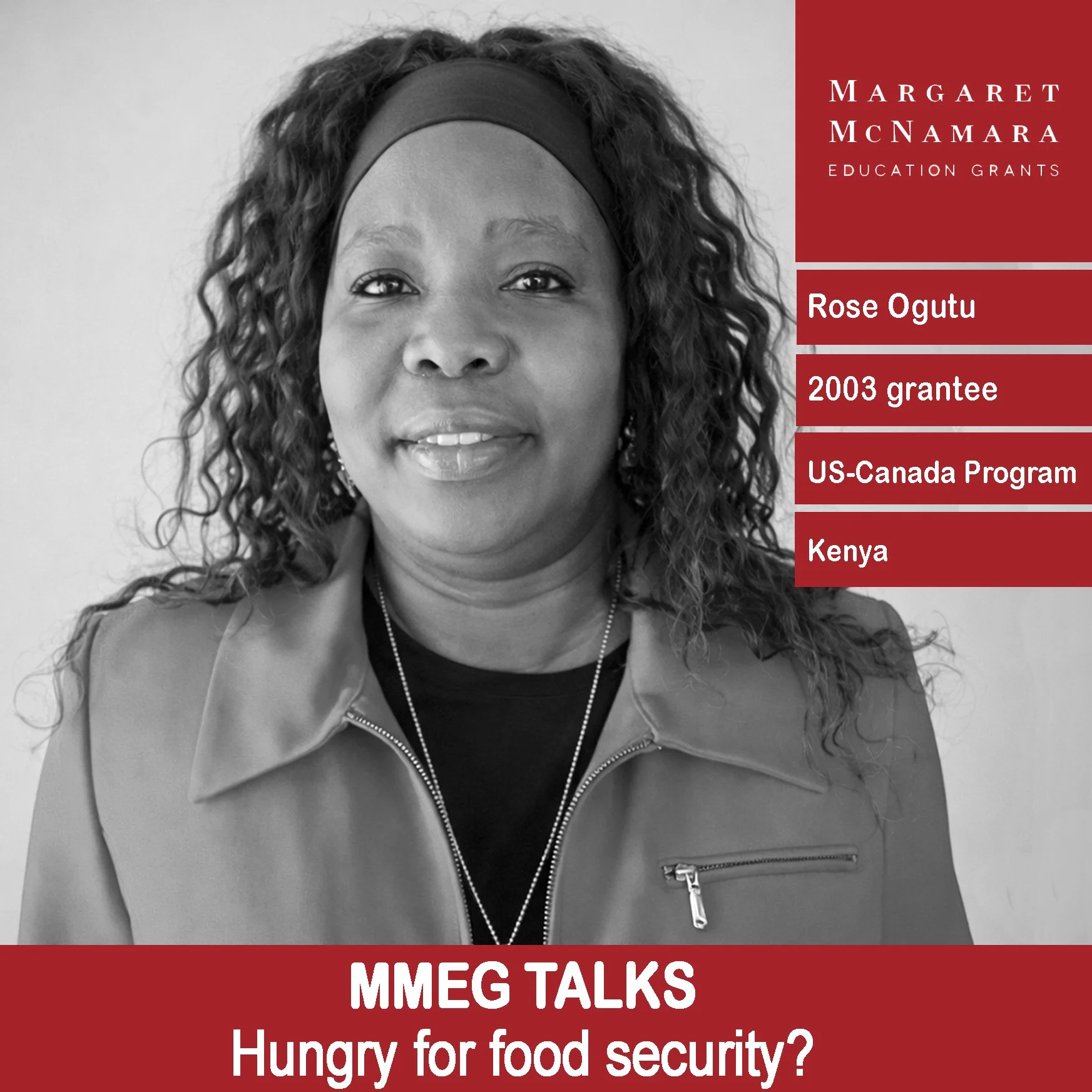
Rose Ogutu

Rose Ogutu, a 2003 MMEG recipient from Kenya, is Horticulture Specialist at Delaware State University and a Northeast Sustainable Agriculture Research Education (NESARE) Delaware State coordinator.

Rose holds a PhD in horticulture from Kansas State University, an MS in horticulture with a marketing minor from Cornell University, a BS in agriculture from University of Eastern Africa Baraton, and a diploma in agriculture and home economics from Egerton University, Kenya. She worked as a post doc at Lincoln University of Missouri researching hydroponics for limited resource growers. She was a lecturer at Bukura Agricultural College early in her career.

Rose has collaborated internationally with Rongo University, Kenya; University of Ghana; University of Calabar, Nigeria; and Fatima Jinah University in Pakistan.

In addition to leading extension and community outreach, Rose is currently involved with a National Artificial Intelligence (NAI) Institute: AI-Land Economy, Agriculture and Forestry (LEAF). This multi-institutional collaboration advances AI-driven solutions, enhancing sustainability and resiliency in Agriculture and forestry 

Rose brings to this talk considerable experience working with agriculture communities.