Amma Agyekum

Amma Agyekum, from Ghana, is completing a doctorate degree in civil engineering at the University of Massachusetts, Amherst. To address resilience and equitable access in transportation infrastructure, she aims to develop a holistic, data-driven framework for maintenance planning and policy decisions. She employs data-driven approaches and community-focused measures to influence infrastructure prioritization and maintenance policies across rural and urban communities.

Amma practices an interdisciplinary approach to civil engineering by considering community impacts alongside technical design aspects. She hopes to influence policies and metrics that prioritize infrastructure in underserved regions to benefit people, especially women and children who often navigate complex travel patterns. In addition, she hopes to help collaborate and establish an open-source infrastructure data portal and environmental justice system in Ghana for easy identification of critical transport infrastructure for prioritization and maintenance.

Amma’s commitment to community service has driven her to lead STEM outreach initiatives in high schools across the Ashanti Region. She’s partnered with WiSTEM Ghana, Esperanza, and Fortified Generation Movement to equip orphanages with educational resources and mentor high-school girls. At the University of Massachusetts, Amma continues to guide undergraduates and introduce high schoolers to engineering concepts. She hopes to continue to mentor young people to pursue careers in STEM.

“My goal is to contribute to transformative policy decisions and frameworks for resilient and equitable transportation infrastructure.”

Eugenia Agyemang

Eugenia Agyemang, from Ghana, is completing a doctorate degree in audiology at Ball State University. She will use her education to address hearing and balance problems faced by women and children in low-resource settings and to promote preventative healthcare in the realm of audiology for newborns, children, and adults in Ghana.

Eugenia is an active member of the East Central Indiana Area Health Education Center. As such, Eugenia serves the community by volunteering and providing information on blood pressure, diabetes, cholesterol, and general nutrition education. She has also assisted her university’s Department of Speech and Audiology in orienting potential students and families interested in the health programs on offer. Through her work we see a commitment to the health and well-being of women and children in her community.  

In the future, Eugenia strives to empower women and children in Ghana by establishing a newborn hearing screening program to identify children with hearing loss, as well as providing an appropriate intervention for these children. The goal is to provide hearing solutions for children and adults in Ghana. To accomplish this, she will complete her training to become a pediatric audiologist and share her skills in a teaching capacity to address the lack of auditory health education, along with working to promote policy change within the health department of Ghana. Eugenia’s work seeks to advocate for the most vulnerable in the community, a worthy and admirable pursuit.

Mai Bui

Mai Bui, from Vietnam, is completing a PhD in mathematics education at Texas State University. Her dissertation investigates how pre-service teachers learn to notice students’ mathematical thinking—a core practice at the heart of high-quality mathematics instruction. Her goal is to help teachers disregard hidden, yet common biases that “girls can’t do math,” thereby resolving the root of inequities in mathematics education. Her research promotes equitable learning environments in mathematics classrooms for girls and other marginalized groups.

With mentees

Building on her past experiences as a teacher educator at Ho Chi Minh City University of Education and as a facilitator for the Enhancing Teacher Education Program, Mai aims to integrate research on teacher education into training and curricula to positively impact over one million Vietnamese math teachers and their 18 million students.

An act of kindness by her fifth-grade teacher, who bought her a bicycle so she could stay in school, inspired her to become an educator. To pay it forward, Mai founded the non-profit organization Empowering Girls Through Education (EGE) to give girls better access to education. EGE raises funds to support educational expenses for low-income, female students in Vietnam. In the United States, Mai serves as a mentor, supporting underserved, international undergraduate and graduate students, through the I-Mentor and Supporting Undergraduates for Powerful Equitable Results in Math programs. 

Women in Math Scholarships

Through her dedicated work and passion for equitable education, Mai is a catalyst for change. She intends to continue her nonprofit organization’s efforts, further empowering girls through scholarship programs, inspiring talks, and community partnerships.

Ogechi Kalu

Ogechi Kalu, from Nigeria, is a doctoral candidate of social work at the University at Buffalo. Her research explores how Nigerian adolescents aged 12–17 appraise and cope with intimate partner violence (IPV), with an aim to develop manualized intervention programs tailored to their needs.

Radio session on domestic violence prevelence awareness

Ogechi is committed to breaking the cycle of violence for women and children by promoting safety, opportunity, and hope. She established a non-profit in Nigeria, Teens Think Africa Initiative, launching programs for women and girls such as an adult education school, after-school clubs for girls in internally displaced persons (IDP) camps in Jos, empowerment clubs in schools, and a free telecounseling platform providing mentoring and support to young girls in distress. She also co-founded three other non-profits: BBRIDGE, which hosts podcasts on domestic violence, its impact on women and children, and cultural responsiveness; Talk to Ooge, a telecounseling programs for teen victims of sexual abuse, and Endowed Women, which provide support and mentorship to women and girls. In the future, she aims to unify her work through these platforms.

India seedplanting

Ogechi’s long-term vision is to establish a trauma recovery home for women and children that goes beyond shelter – offering therapy, training, and education. She is currently partnering with the Lagos State Domestic and Sexual Violence Agency to implement research-based solutions across Nigeria, with their support in designing questionnaires and collaborating on her dissertation.

Her mission is to empower minds with knowledge and hands with skills. Ogechi’s resilience, advocacy experience, and global collaborations position her to create lasting change. 

Pamela Magande

Pamela Magande, from Zimbabwe, is studying for her PhD in public health/epidemiology at the University of South Carolina while also working towards a Maternal and Child Health Certificate. Her studies build upon her public health education and experience. This preparation will enable her to combine medical and public health knowledge in her future public health career in Zimbabwe.  

 Pamela’s doctoral dissertation evaluates the effect of multimorbidity on HIV treatment outcomes among older adults living with HIV. She anticipates presenting her research at international conferences and publishing manuscripts in peer-reviewed journals to disseminate the results to practitioners in low-resource areas.

 Pamela has significant clinical experience working as a physician in Zimbabwe with an interest in infectious diseases including HIV and tuberculosis. She was a leader in the prevention of mother-to-child transmission of HIV and cervical cancer programs in Zimbabwe. Whether it be through facilitating the opening of a cervical cancer center in Zimbabwe or seeking low-cost health interventions, Pamela strives to make advances in service delivery and community outreach to underserved populations.

 After completing her dissertation and disseminating her findings internationally, Pamela plans to return to Zimbabwe, teach at a university, conduct additional field research, and continue to mentor young women interested in pursuing careers in health-related fields. Community involvement in identifying solutions/remedies to health is a hallmark of Pamela’s approach to public health. Her current mentees could become pivotal players in the future of public health advances in Zimbabwe.

Kimberley Muchenje

Kimberley Muchenje, from Zimbabwe, is completing a PhD in sustainable plant synthetic biology engineering at California Institute of Technology (Caltech). Kimberley is an academically gifted researcher committed to community transformation through scientific solutions to agricultural challenges. An integral part of Kimberley’s studies is informed by her family’s subsistence farm’s progressively lower yields and experiences of erratic floods and droughts.   

Ignite project

In many developing countries, women produce 60% to 80% of the food yet face limiting barriers in accessing land and productivity-enhancing resources and enabling food security. Kimberley equips communities with tools to advocate for policy change and advances skills and education on adopting technologies. Kimberley mentors high-school and college students and has organized and led community transforming initiatives. Kimberley’s work with the Lab Equipment Access Program (LEAP) provided high schools and community colleges in underserved areas with scientific lab equipment, enhancing hands-on STEM education. She has coordinated equipment donations and fostered partnerships between Caltech labs and schools like SOAR High School and Van Nuys Magnet School, supporting teachers and empowering students with vital STEM learning resources.  

Research posters with mentees

Kimberley describes herself as resilient, hardworking, and energetic and says “I am a testament to the transformative power of education, even in the face of immense challenges. Today, as an empowered researcher and mentor, I am committed to catalyzing change by empowering women and children in developing countries to envision and achieve a brighter future.”    

Taka Nah Jelah

Taka Nah Jelah, from Cameroon, is completing a doctorate in medicine at Stony Brook University. Her study focuses on the role of inclusive language and diverse medical illustrations of obstetrics and gynecologic patient care, addressing the reproductive health challenges faced by black-and-brown skinned women and children in low-income settings.

With the Anglophone Crisis in Cameroon, Nah Jelah was forced out of high school and spent three years volunteering at the regional hospital, working with non-profits, helping people, and learning of healthcare struggles in her country, where people were dying from conditions that should have been treatable.

 Nah Jelah’s focus on OB-GYN, women’s health, and education ties directly to her goal of improving healthcare access for women in underserved regions, especially in sub-Saharan Africa. She is passionate about establishing women’s clinics in Cameroon that provide comprehensive, safe, and compassionate care while addressing preventable health disparities. Beyond clinical care, she wants to lead community education initiatives to empower women and girls with knowledge about their health. By combining patient care with advocacy and mentorship, she hopes to bridge gaps in care, create sustainable healthcare solutions, and inspire the next generation of healthcare providers.

 Nah Jelah creates medical illustrations highlighting black and brown skin tones, focusing on human anatomy and maternal health disparities. Using social media and her website, she advocates for health equity by providing free access to her art, aiming to address gaps in medical education. Her work promotes inclusivity and empowers underrepresented communities, particularly in maternal care.

Alice Nyirazigama

Alice Nyirazigama, from Rwanda, is a PhD student in nursing at Western University, Canada, dedicated to advancing maternal and adolescent mental health through research, education, and advocacy. Her dissertation focuses on the intersection of stigma, mental health, and child-mother attachment among adolescent mothers who have experienced unintended pregnancies due to gender-based violence – an often-overlooked issue, particularly in developing countries. Her work examines how stigma and social exclusion impact the child-mother bond and their access to essential support systems. It will inform evidence-based policies that address these mothers' overall health and social needs, both in her home country of Rwanda and globally.

Teen mothers empowerment activity

Deeply motivated by personal experience, Alice’s commitment to supporting marginalized women and children is reflected in her education, professional experience, and community engagement. She has served as a clinical instructor and assistant lecturer at the University of Rwanda, where she empowered and mentored nursing students through innovative teaching methods. As a volunteer with AFROHUN, she championed gender equity and inclusion in health education and research. 

 Alice’s long-term vision is to bridge the gap between research, policy, and practice to foster a more equitable healthcare system for marginalized women. She plans to establish community-based programs that equip adolescent mothers with skills to overcome social isolation and poverty, and ultimately aspires to lead global health initiatives through international organizations. Rooted in her family’s story, empathy, and resilience, and driven by a desire to create meaningful change, Alice brings compassion, determination, and visionary leadership to everything she does.

Teaching about Gender equity

Shahnaz Shahid Ali

Shahnaz Shahid Ali, from Pakistan, is a nurse-midwife and doctoral candidate with over two decades of experience in maternal and newborn health, and a focus on perinatal mental health. She is currently pursuing a doctorate in nursing, at Western University, Canada, with research exploring the socio-cultural factors that shape perinatal mental health service provision by midwives.

Training midwifery students

Shahnaz holds master’s and bachelor’s degrees and two diplomas in nursing and midwifery from the Aga Khan University School of Nursing and Midwifery, Pakistan. She played a leading role with mentors, leaders and colleagues at Aga Khan University School of Nursing and Midwifery, Pakistan in developing Pakistan’s first competency-based Bachelor of Science in Midwifery program, which has also informed similar programs in Afghanistan, Tajikistan, and Kyrgyzstan.

Her career includes delivering maternal and newborn care, family planning, and lactation support in underserved and disaster-affected areas. She has trained nurse-midwives, developed educational resources, and supported midwifery institutions in curriculum development.

As a volunteer with the Aga Khan University Hospital, Shahnaz conducted deliveries, supported breastfeeding, provided basic healthcare, and developed training materials for midwives at Aga Khan University and across Pakistan. At Western University, she facilitated health sessions, supported her colleagues’ research-related activities, and contributed to orientation and social events. At the Cross-Cultural Learner Center, she supported families and volunteered in community events.

Training midwifery students

Shahnaz’s future goals include promoting perinatal mental health through awareness materials, developing screening tools for midwives, and establishing care pathways to ensure timely mental health support for women. Her work continues to bridge clinical practice, education, and advocacy to improve maternal health outcomes in culturally diverse settings.

Chimdindu Ugwuanyi

Chimdindu Ugwuanyi is a Bank-Fund Credit Union sponsored grantee.

Chimdindu Ugwuanyi, from Nigeria, is completing a master’s degree in public health at Vanderbilt University. She is an extremely enthusiastic, eloquent, and engaged woman who, as a physician and aspiring researcher, has a specific interest in sexual and reproductive health and understanding the importance of body safety education among women and children.

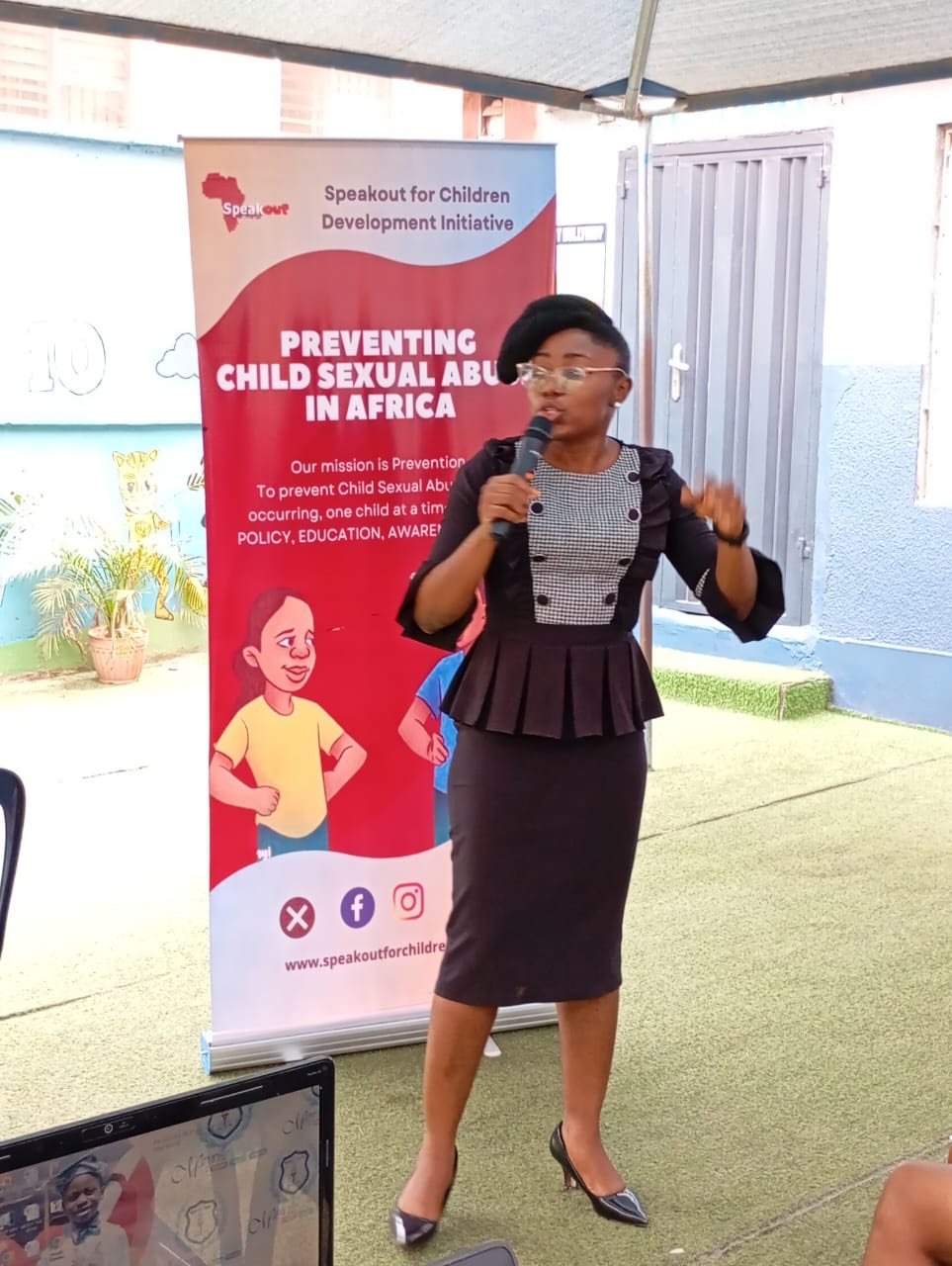
As the founder and director of Speak Out for Children development initiative, an NGO focused on preventing child sexual abuse in sub-Saharan Africa, Chimdindu designed the Body Safety Academy curriculum training for over 295 parents, teachers, and caregivers, creating educational materials for children, parents, and teachers to teach body safety skills that have reached over 15,000 children in 17 African countries. She also conducted research, organized public health awareness sessions, and wrote articles on child sexual abuse, while leading a team of 62 volunteers.

In the long term, Chimdindu will contribute to health policy reforms, fostering a culture of safety for children across Africa and beyond. As a contributor to child health, she wants to provide career solutions and pathways for younger female professionals, sharing insights on how her work has shaped her life.

 Chimdindu describes herself as a leader, a consistent person, and a determined woman. She says that she “carries her community with her”—that she represents them. She feels that many have invested in her and, as such, she must invest in others, putting herself out there to mentor and represent young girls and women.